
Central Bank Normalization and the Balancing Act: How Modestly Restrictive Policy Supports Risk Assets
Central bank normalization post-2020 has entered its final phase, with the Federal Reserve poised to deliver seven rate cuts through 2025 as it navigates the delicate balance between inflation control and labor market resilience. Amid this backdrop, a "modestly restrictive" monetary policy-advocated by policymakers like St. Louis Fed President Alberto Musalem-has emerged as a strategic framework to stabilize risk assets without triggering market selloffs. This approach, which prioritizes gradual adjustments and data-dependent decisions, aligns with current full-employment conditions and a slowing inflation trajectory, aiming to return the 2% inflation target by mid-2026, as noted in St. Louis Fed remarks.
The Case for Modest Restraint
Modestly restrictive policy seeks to mitigate downside risks in the labor market while avoiding overcorrection that could destabilize financial markets. Research indicates that such a stance reduces macroeconomic volatility, particularly countercyclical downside risks, which are more pronounced during economic downturns, according to a study on monetary policy on macro risk. For risk assets, this translates to a stable environment where investors can focus on fundamentals rather than policy shocks. For example, high-yield bonds and equities with strong growth prospects have thrived as central banks signal patience, allowing markets to absorb rate hikes without abrupt repricing, as highlighted in Capital Markets Outlook.
A key advantage of modest restraint lies in its asymmetry: while expansionary policies amplify risk-taking in commercial banks and financial markets, contractionary measures have a smaller dampening effect, according to a bank risk-taking study. This dynamic suggests that a measured tightening cycle-rather than aggressive rate hikes-can curb inflation without triggering excessive risk aversion. Indeed, a monetary policy expectations study using data from 119 Chinese commercial banks shows that loose monetary policy increases bank risk-taking by a greater magnitude than tight policy reduces it, underscoring the need for cautious normalization.
Policy Expectations and Market Behavior
The Federal Reserve's communication strategy has further amplified the effectiveness of modestly restrictive policy. Studies reveal that monetary policy expectations influence financial markets nonlinearly, with stronger effects during periods of uncertainty, as discussed in Monetary Policy Benchmarks. By signaling a patient approach to rate cuts, the Fed has tempered volatility in equity and bond markets. For instance, the S&P 500's resilience in 2024–2025 reflects investor confidence in a "soft landing" narrative, supported by stable credit fundamentals and declining Treasury yields, consistent with analysis of unwinding the balance sheet.
High-yield credit and municipal bonds have also benefited from this environment. Persistent high yields in these sectors-despite falling Treasury rates-have attracted income-seeking investors, creating a "risk-on" tilt in portfolios. This trend aligns with the Fed's goal of normalizing financial conditions without abruptly tightening liquidity, which could otherwise trigger a selloff in risk assets.
Challenges and Considerations
While modestly restrictive policy offers clear advantages, its success hinges on the Fed's ability to navigate evolving transmission mechanisms. Pandemic-era uncertainties have altered how monetary policy affects bank portfolios and capital structures, complicating traditional models of risk assessment. Additionally, the asymmetry between upside and downside risks means that even small miscalculations in policy timing could amplify instability. For example, a premature pivot to easing could reignite inflationary pressures, while delayed action might strain labor markets.
Global monetary conditions further complicate the calculus. As inflation eases and supply chains stabilize, central banks face pressure to prioritize growth over inflation control. This balancing act requires continuous recalibration, particularly as fiscal policy increasingly complements monetary normalization.
Conclusion
The path to normalization underscores the Fed's dual mandate: maintaining price stability while safeguarding employment. A modestly restrictive stance, informed by real-time data and asymmetric risk dynamics, provides a framework to achieve both. For investors, this approach creates a favorable environment for risk assets, where gradual policy adjustments and stable expectations reduce the likelihood of abrupt market corrections. As the Fed edges closer to its 2% inflation target, the focus will remain on sustaining labor market strength and ensuring that financial stability remains a cornerstone of policy design.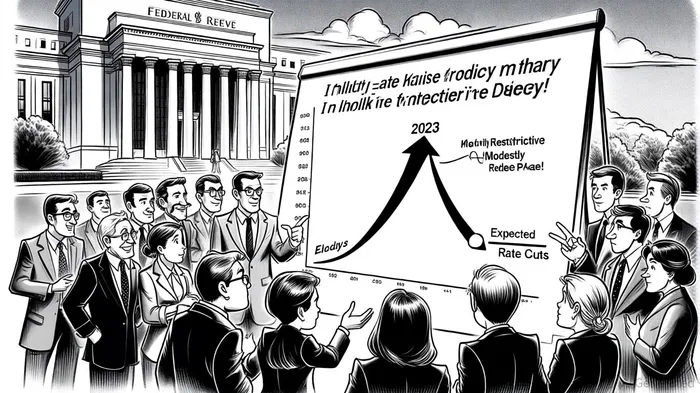







Comentarios
Aún no hay comentarios