
Central Bank Independence Under Threat: Implications for Global Markets and Investment Strategy
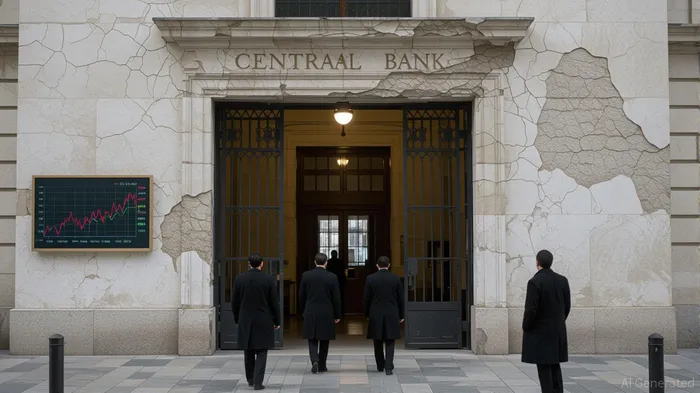
The global economy is at a crossroads. Central banks, once seen as the bedrock of macroeconomic stability, now face unprecedented political pressures that threaten their independence. From Donald Trump’s public demands for Federal Reserve rate cuts to Turkey’s “Erdoganomics” and Argentina’s fiscal manipulation of its central bank, the consequences of politicizing monetary policy are stark: hyperinflation, currency collapses, and eroded investor trust. These cases underscore a critical truth: when central banks lose their autonomy, markets pay the price.
The Cost of Political Interference
Political interference in central banks has direct and measurable economic consequences. In Turkey, President Recep Tayyip Erdoğan’s insistence on lowering interest rates despite 80% annual inflation has led to a lira that has lost 80% of its value since 2020 [1]. Similarly, Argentina’s government has used its central bank to finance deficits, pushing inflation to 292% in 2024 [5]. These examples highlight how political agendas can override technical expertise, creating inflationary spirals and currency crises.
The U.S. is not immune. Former President Trump’s public criticism of Federal Reserve Chair Jerome Powell and his threats to remove Powell over policy disagreements created market volatility, as seen on blockchain prediction platforms like Polymarket [2]. Such actions signal to investors that monetary policy may be subject to short-term political whims, undermining long-term stability.
The IMF and OECD: Independence as a Pillar of Stability
The IMF and OECD have consistently shown that central bank independence is a linchpin of economic resilience. A 2024 IMF report found that countries with stronger central bank independence experience lower inflation and greater investor confidence [3]. For instance, Brazil’s 2021 reforms, which reinforced its central bank’s autonomy, enabled effective inflation control despite political turbulence [3]. Conversely, Hungary’s gradual erosion of central bank independence under Viktor Orbán has led to persistent inflation and a weakened forint [5].
The OECD further emphasizes that institutional frameworks—such as fixed-term appointments and transparent governance—are critical to insulating central banks from political cycles [4]. These safeguards ensure that monetary policy remains focused on long-term stability rather than short-term electoral gains.
Investor Implications: Diversification and Hedging
For investors, the erosion of central bank independence demands a recalibration of strategies. First, diversification across geographies and asset classes is essential. Markets in countries with weak institutional safeguards—like Turkey or Argentina—are prone to sudden devaluations and capital flight. Second, inflation hedging through commodities, real estate, or TIPS (Treasury Inflation-Protected Securities) becomes critical in environments where price stability is at risk [6].
Third, investors must monitor political developments closely. Legal battles over central bank governance, such as the 2025 U.S. litigation pause on Fed stress-testing rules, create regulatory uncertainty that can ripple through financial markets [6]. Staying ahead of these shifts requires a proactive approach to risk management.
The Path Forward: Safeguarding Autonomy
The global trend toward defending central bank independence—evidenced by Austria’s appointment of Martin Kocher and the ECB’s technocratic stance—offers hope. However, these efforts must be institutionalized. Investors should advocate for policies that strengthen transparency, such as the IMF’s Central Bank Transparency Code [3]. In the U.S., maintaining the Fed’s autonomy amid political rhetoric will be crucial to preserving its credibility.
The stakes are high. Central bank independence is not just a technicality; it is a cornerstone of economic resilience. When political leaders prioritize short-term gains over long-term stability, the costs—measured in lost wealth, currency collapses, and market chaos—are borne by all.
Source:
[1] Central Bank Independence Under Siege: Implications for Fixed-Income Markets and Inflation Expectations [https://www.ainvest.com/news/central-bank-independence-siege-implications-fixed-income-markets-inflation-expectations-2508/]
[2] Under pressure? Central bank independence meets blockchain prediction markets [https://theconversation.com/central-banks-should-be-independent-of-government-but-our-research-shows-they-are-under-political-pressure-238466]
[3] Central Bank Independence: Why It's Needed and How to ... [https://www.imf.org/en/News/Articles/2024/06/17/sp061424-central-bank-independence]
[4] Central bank independence in an era of volatility [https://www.ecb.europa.eu/press/key/date/2025/html/ecb.sp250127~16c35af0c0.en.html]
[5] When Central Banks Fall: The Cost of Losing Monetary Independence in the U.S. and Beyond [https://ca.rbcwealthmanagement.com/john.vidas/blog//4618328-When-Central-Banks-Fall-The-Cost-of-Losing-Monetary-Independence-in-the-US-and-Beyond]
[6] Political Risk and Central Bank Independence: Legal Battles with the Fed Signal Market Turbulence [https://www.ainvest.com/news/political-risk-central-bank-independence-legal-battles-fed-signal-market-turbulence-2508/]







Comentarios
Aún no hay comentarios