
Central Bank Independence Under Siege: Trump's Fed Moves and the Future of U.S. Monetary Policy
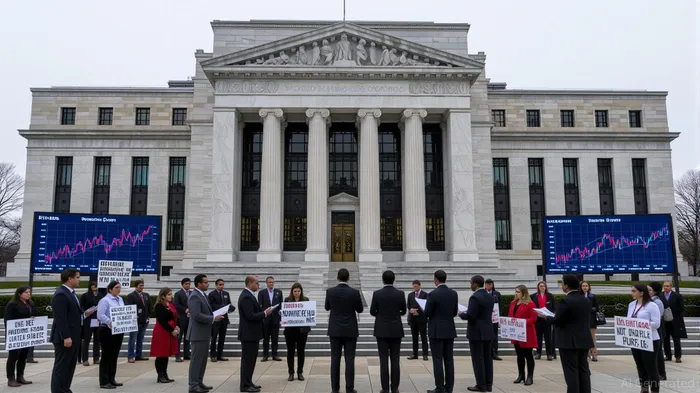
The U.S. Federal Reserve, long a fortress of economic independence, now faces its most direct challenge in decades. President Donald Trump's 2025 appointments and policy pushes—ranging from the nomination of Stephen Miran to the narrowing of the shortlist for the next Fed chair—have ignited a debate about the central bank's role in a politically charged era. For investors, the implications are profound: shifts in monetary policy could reshape asset valuations, inflation trajectories, and global capital flows.
The Nixon Paradox: History Repeats Itself?
Political pressure on the Fed is not new. The 1971 Nixon-Burns episode, where President Richard Nixon coerced the Fed into expansionary policy ahead of the 1972 election, offers a cautionary tale. Arthur Burns, a Republican ally, acquiesced, leading to a surge in inflation that defined the 1970s. A 2023 study by Drechsel found that such political pressure could permanently elevate the U.S. price level by over 8%. Today, Trump's public criticism of Fed Chair Jerome Powell and his push for rate cuts echo this historical pattern.
Stephen Miran, a Trump appointee to the Fed Board of Governors, has already signaled a willingness to challenge the Fed's traditional stance on tariffs and currency policy. His advocacy for a weaker dollar to offset trade deficits and his skepticism of central bank independence—detailed in a Manhattan Institute report—suggest a potential realignment of the Fed's priorities.
The Fed Chair Shortlist: Continuity vs. Chaos
The next Fed chair will likely determine the trajectory of U.S. monetary policy. Trump's shortlist includes:
- Christopher Waller: A moderate who supports immediate rate cuts and has dissented from recent rate holds.
- Kevin Hassett: A staunch Trump loyalist with a history of aligning with the administration's economic agenda.
- Kevin Warsh: A former Fed governor with a hawkish past but recent dovish pivots.
Markets have already priced in some of these dynamics. The Nasdaq 100 surged 3.7% to a record high in early August 2025, driven by AI-driven investment and speculative optimism. However, a Waller appointment would likely reinforce market confidence, while a Hassett or Warsh nomination could trigger volatility.
Asset Valuations: Stocks, Bonds, and Gold in the Crosshairs
- Equities: A dovish Fed under Waller or Miran could prolong the AI-driven bull market. The S&P 500 and Nasdaq have thrived on loose financial conditions, but a shift toward politically motivated policy could introduce uncertainty. Sectors like technology and industrials may benefit from rate cuts, while financials could face pressure if yields rise.
- Bonds: The bond market is in a tug-of-war. Two-year Treasury yields reversed higher to 3.76% in August 2025, reflecting mixed signals about rate cuts. A Fed perceived as losing independence could push long-term yields higher, eroding bond prices.
- Gold: The Bloomberg Gold Index rose 10.1% in a single week, driven by central bank diversification (e.g., China's gold purchases) and inflation concerns. Gold's role as a hedge against dollar devaluation and political instability is likely to grow.
Investment Implications and Strategic Recommendations
For investors, the key takeaway is to prepare for a Fed that may prioritize political goals over economic data. Here's how to position portfolios:
- Diversify into Gold and Alternatives: Central banks' shift away from the dollar and Trump's pro-tariff agenda make gold a compelling hedge. Private equity and real estate, now more accessible via 401(k) reforms, also offer growth potential.
- Rebalance Fixed Income Exposure: Short-duration bonds or inflation-protected securities (TIPS) could mitigate risks from rising yields. Avoid overexposure to long-term Treasuries if the Fed's independence is compromised.
- Monitor Equity Sectors: Tech and AI-driven industries remain strong, but sectors sensitive to interest rates (e.g., utilities, real estate) may face headwinds.
The Fragile Balance of Power
The Fed's independence has been a cornerstone of U.S. economic stability. Yet Trump's appointments and policy agenda—rooted in a belief that tariffs and a weaker dollar can boost growth—threaten to erode this foundation. While markets have shown resilience, the long-term risks of politicized monetary policy are clear. Investors must navigate this uncertainty with a mix of caution and agility, recognizing that the Fed's next chapter could redefine the rules of the game.
As the 2026 Fed chair election looms, one truth remains: the battle for the soul of the Federal Reserve is far from over.







Comentarios
Aún no hay comentarios