
Central Bank Independence Under Populist Threat: Lessons from History and Strategic Asset Allocation for 2025
The Federal Reserve's independence has long been a cornerstone of U.S. economic stability, yet recent populist pressures threaten to erode this foundation. As political leaders increasingly challenge the Fed's autonomy, the parallels to the inflationary chaos of the 1970s grow harder to ignore. This article examines historical precedents, analyzes the macroeconomic risks of politicized monetary policy, and outlines defensive asset allocation strategies to mitigate long-term volatility.
Historical Precedents: Nixon, Burns, and the Great Inflation
The 1960s–70s provide a cautionary tale of political interference in monetary policy. President Richard Nixon's 1971 directive to Federal Reserve Chair Arthur Burns to ease monetary policy-despite rising inflation-marked a pivotal moment in the "Great Inflation" era. This pressure led to excessive money supply growth, fueling inflation that peaked at over 14% by the early 1980s. Studies show that political pressure shocks, such as Nixon's, can raise inflation by more than 8% within six months. 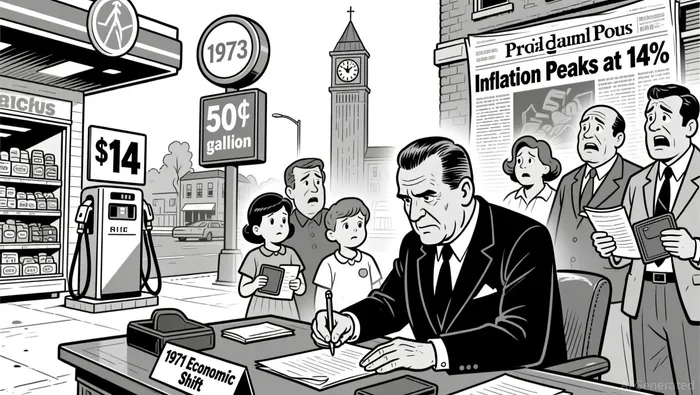 The Fed's compromised independence during this period not only destabilized price expectations but also eroded public trust in monetary institutions.
Modern Threats: Populism and the 2025 Fed Crisis
Today, similar risks loom. U.S. President Donald Trump has openly criticized the Federal Reserve, demanding that the next chair prioritize lowering interest rates to 1% within a year and consult him on policy decisions. Such rhetoric mirrors Nixon's tactics and signals a potential return to politically driven monetary policy. Vontobel analysts warn that if the Fed's independence is undermined, investors may begin pricing in higher inflationary expectations, leading to elevated inflation risk premiums and long-term interest rates. Morgan Stanley has echoed these concerns, noting that a politicized Fed could trigger a weaker dollar, misallocated capital, and speculative bubbles akin to the 2008 crisis.
The stakes extend beyond U.S. borders. The Fed's independence underpins the dollar's status as the world's reserve currency and the credibility of U.S. Treasury markets. Any erosion of this trust could trigger capital outflows, dollar depreciation, and a revaluation of global financial assets as investors recalibrate risk premiums.
Macroeconomic Implications: Inflation, Volatility, and Capital Misallocation
Political interference in monetary policy historically correlates with higher inflation and economic instability. During the 1970s, the Fed's inability to resist political pressure led to stagflation-a toxic mix of high inflation and stagnant growth. Today, a similar scenario could unfold if the Fed prioritizes short-term political goals over long-term price stability.
Market volatility is another critical risk. When monetary policy becomes a political tool, investors lose confidence in the predictability of interest rates and inflation. This uncertainty drives capital toward speculative assets and away from productive investments, distorting capital allocation. Morgan Stanley has already observed early signs of this shift, with gold surging over 8% following the controversial attempt to remove Fed Governor Lisa Cook-a move seen as a proxy for broader institutional instability.
Defensive Asset Allocation: Hedging Against Policy-Driven Instability
Given these risks, investors must adopt defensive strategies to preserve wealth and purchasing power. Morgan Stanley recommends reducing exposure to small-cap and unprofitable tech stocks, which are highly sensitive to interest rate fluctuations and economic shocks. Instead, portfolios should prioritize:
- Inflation-Linked Assets: Gold, Treasury Inflation-Protected Securities (TIPS), and commodities have historically served as hedges against inflation and currency devaluation. Gold's recent performance underscores its role as a safe haven in times of institutional uncertainty.
- Quality Large-Cap Stocks: Companies with strong balance sheets and consistent cash flows are better positioned to weather macroeconomic turbulence.
- Real Assets and International Equities: Real estate, infrastructure, and global equities offer diversification and protection against dollar depreciation.
- Intermediate-Duration Investment-Grade Bonds: These provide stability while offering modest returns in a low-yield environment.
Conclusion: Preserving Independence, Protecting Portfolios
The Federal Reserve's independence is not just a technicality-it is a safeguard against the cyclical return of inflationary chaos. As populist leaders increasingly challenge this independence, investors must act proactively. By learning from the mistakes of the 1970s and adopting defensive, diversified strategies, portfolios can withstand the macroeconomic turbulence of a politicized Fed. The message is clear: in an era of policy-driven instability, preparation is the best defense.







Comentarios
Aún no hay comentarios