
Central Bank Divergence in EMEA: Navigating Fed Tightening and ECB's Lagging Response
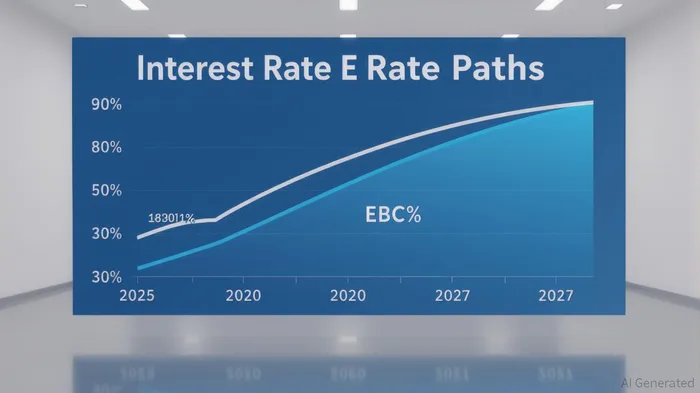
The global investment landscape in 2025 is being reshaped by a stark divergence in monetary policy between the U.S. Federal Reserve (Fed) and the European Central Bank (ECB). While the Fed has signaled a cautious easing path, prioritizing inflation control amid a resilient labor market, the ECB is accelerating rate cuts to combat deflationary pressures and stagnant growth. This transatlantic split creates both risks and opportunities for investors in the EMEA region, demanding a nuanced approach to asset allocation, currency exposure, and duration management.
Policy Divergence: Fed's Caution vs. ECB's Aggression
According to the Federal Open Market Committee (FOMC), the Fed's 2025 projections anticipate a gradual reduction in the federal funds rate from 3.6% to 3.1% by 2027, reflecting a “balanced approach to normalization” that prioritizes inflation stability over rapid rate cuts[1]. This cautious stance is underpinned by the U.S. economy's resilience, including a robust labor market and persistent inflation, which has kept the Fed's forward guidance hawkish despite global uncertainties[4].
In contrast, the ECB faces a far more challenging environment. Analysts at Julius Baer note that disinflationary forces—such as falling energy and rent costs—are pushing the eurozone toward a “more accommodative stance,” with the ECB expected to cut rates by 25 basis points at each meeting in 2025[3]. By mid-2025, the deposit rate could fall to 2%, a stark contrast to the Fed's slower pace[1]. This divergence is rooted in structural differences: the U.S. economy's growth momentum versus Europe's uneven recovery, compounded by political fragmentation and trade policy risks[4].
Investment Implications: Currency, Duration, and Sector Rotation
Currency Exposure: The ECB's aggressive rate cuts are likely to weaken the euro, creating a tailwind for eurozone investors seeking exposure to dollar-denominated assets. Conversely, U.S.-based investors may see diminished returns from eurozone equities as the currency depreciates[4]. J.P. Morgan's EMEA Investment Outlook 2025 recommends maintaining a lower duration in EUR standard and ultra-short strategies compared to USD counterparts, given the eurozone's inverted yield curve and higher volatility[1].
Duration Strategies: Active duration management is critical in 2025. In the U.S. and UK, where central banks are expected to cut rates (twice for the Fed and four times for the BOE), extending durations in cash strategies could capture higher yields[1]. For example, the UK's short-term mortgage market and weak growth environment make its rate cuts more predictable, offering value in longer-duration UK cash instruments[1]. Meanwhile, European investors should prioritize flexibility, as trade uncertainties—such as potential U.S. tariffs—could amplify volatility[2].
Sector Rotation: The ECB's focus on growth support may benefit sectors like manufacturing and energy, which are critical to the eurozone's export-driven economy. However, these sectors remain vulnerable to global trade disruptions[2]. In the U.S., sectors tied to domestic demand—such as technology and consumer discretionary—are likely to outperform, supported by the Fed's inflation-focused but growth-agnostic approach[4].
Conclusion: Strategic Positioning in a Divergent World
The Fed-ECB policy split underscores the importance of dynamic portfolio adjustments. Investors should overweight USD and UK cash strategies, adopt shorter durations in EUR assets, and favor U.S. growth sectors while hedging against eurozone trade risks. As the ECB's rate cuts accelerate and the Fed remains cautious, the key to success lies in agility—leveraging divergent monetary paths to balance risk and return.







Comentarios
Aún no hay comentarios