
Central Bank Communication Risks: Lessons from Yellen and Challenges in the Bessent Era
Yellen's 2014 Gaffe: A Cautionary Tale
In March 2014, Yellen told reporters that a "considerable" period-interpreted as six months-would pass before the Fed raised rates. The market reacted swiftly: stocks tumbled, and bond yields surged as investors scrambled to reassess the Fed's credibility, according to the CNBC report. This episode underscored how even subtle phrasing can derail market confidence. Yellen quickly adapted, adopting a more deliberate tone, but the damage highlighted the fragility of investor trust in central bank messaging.
The Bessent Era: Political Pressure and Conflicting Signals
Fast-forward to 2025, and the Fed faces a new set of challenges. Treasury Secretary Scott Bessent, a former critic of Yellen's policies, has found himself defending the status quo in debt issuance while navigating a Trump administration agenda that prioritizes aggressive fiscal policies, as described in a Advisorperspectives article. Meanwhile, Fed Governor Stephen Miran-a Trump appointee-has become a wildcard. His recent push for a 50-basis-point rate cut at the December meeting, far exceeding market expectations of 25 bps or a hold, has sent shockwaves through financial markets, as reported by a MarketMinute piece.
Miran's stance reflects a broader tension: the Fed's traditional independence is being tested by political pressures. His argument that structural factors like stablecoin demand are lowering the neutral interest rate, as noted in the MarketMinute piece, clashes with the Fed's consensus-driven approach. The result? A widening gap between official statements and market expectations, as evidenced by CME FedWatch data showing only a 3% probability of a 50+ bps cut, as noted in the MarketMinute piece. This disconnect breeds uncertainty, a toxic environment for investors.
Market Volatility: A New Normal?
The fallout is already visible. The VIX, or "fear index," has spiked to the 99th percentile of historical volatility levels, according to a St. Louis Fed report, while 10-year Treasury yields have swung wildly in response to conflicting signals.
Meanwhile, Bessent's own statements have added fuel to the fire. His assertion that Trump's proposed $2,000 "" may have already materialized through tax cuts like the "no tax on tips" policy, as noted in a Barrons article, has muddied the waters for investors trying to parse fiscal policy's impact. Compounding this, the ongoing government shutdown-warned by Bessent to slash quarterly growth by half, as described in a Fox Business article-has disrupted critical economic data releases, leaving the Fed to "drive in the fog," as noted in the Fox Business article.
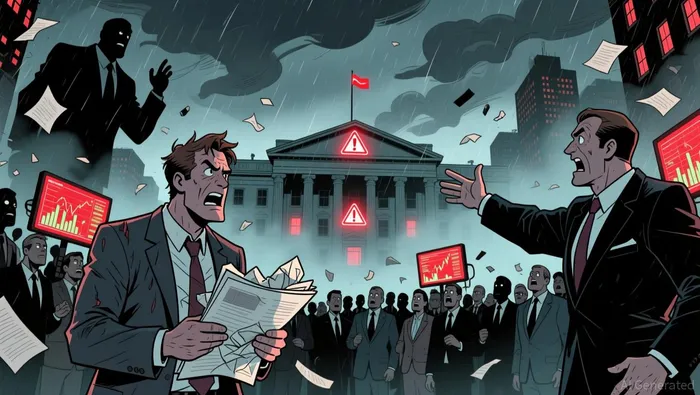
Investor Takeaways: Navigating the Fog
For investors, the lesson is clear: communication risks are no longer confined to the Fed's own statements. Political agendas, inconsistent messaging from officials, and external shocks like government shutdowns create a perfect storm of uncertainty. Here's how to position your portfolio:
1. Hedge Against Volatility: like utilities and consumer staples may offer refuge as markets grapple with erratic policy signals.
2. Monitor Fed Dissent: Watch for divergences between members' public comments and the central bank's official stance. Miran's aggressive stance is a red flag.
3. : With Trump's tariffs sparking global retaliatory measures, as noted in the St. Louis Fed report, international markets could offer safer havens.
The Bottom Line
Central bank communication has always been an art, but in 2025, it's becoming a political battleground. Yellen's 2014 misstep taught us the cost of ambiguity; today's environment, shaped by Bessent and Miran, reminds us that political influence can amplify those risks exponentially. Investors must stay agile, prioritizing resilience over short-term gains in a landscape where clarity is a rare commodity.







Comentarios
Aún no hay comentarios