
Celltrion's Share Buyback: A Strategic Move for Value Creation
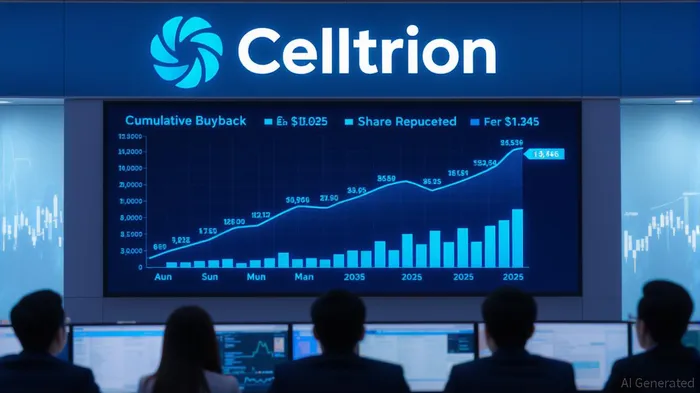
In 2025, Celltrion has emerged as a standout example of strategic capital allocation through its aggressive share buyback program. By repurchasing over KRW 650 billion in shares across multiple tranches, the biopharmaceutical giant has signaled its commitment to maximizing shareholder value while navigating a volatile market environment. This analysis examines how Celltrion's buyback strategy reflects disciplined capital management and bolsters investor confidence, offering insights into its broader implications for the company's financial health and market positioning.
Capital Allocation Efficiency: Prioritizing Shareholder Returns
Celltrion's buyback program underscores its focus on optimizing capital structure. On February 19, 2025, the company announced its first tranche of KRW 100 billion ($75.2 million), repurchasing 554,632 shares [3]. This was followed by a second KRW 100 billion buyback in May 2025, acquiring 649,351 shares [3]. By July, Celltrion had secured KRW 1 trillion in funding specifically for stock repurchases and potential M&A activities, a move that highlights its proactive approach to deploying cash reserves [2].
The scale of these buybacks suggests a deliberate strategy to allocate capital where it generates the highest returns. With a total of KRW 650 billion spent on share repurchases by August 2025, Celltrion has effectively reduced its outstanding share count by 0.48% year-to-date (based on cumulative repurchases of 1.6 million shares) [1]. This reduction not only enhances earnings per share (EPS) but also signals to investors that the company views its stock as undervalued—a critical message in a sector prone to price swings.
Investor Confidence: A Signal of Resilience
Share buybacks are more than a financial tactic—they are a psychological tool to reinforce investor trust. Celltrion's repeated repurchase efforts, including a KRW 100 billion cancellation of treasury shares in May 2025 [3], demonstrate confidence in its long-term value proposition. By reducing the float of shares, the company aims to stabilize its stock price amid broader market uncertainties, a strategy that resonates with investors seeking defensive plays in a high-volatility environment.
The timing of these buybacks also reflects strategic foresight. For instance, the July 2025 tranche saw Celltrion repurchase 564,226 shares for KRW 99,963.62 million, completing 0.24% of its total shares [1]. This activity occurred during a period of market instability, reinforcing the perception that the company is actively managing downside risks. According to a report by Marketscreener, Celltrion's management explicitly stated its intention to continue buybacks as long as market conditions remain volatile, further cementing its reputation as a shareholder-centric entity [2].
Strategic Implications and Future Outlook
Celltrion's buyback program is not an isolated action but part of a broader capital allocation framework. The company's decision to allocate KRW 1 trillion to both share repurchases and M&A opportunities indicates a balanced approach to growth and value preservation. While M&A could diversify its biopharma portfolio, the buybacks ensure that existing shareholders directly benefit from the company's financial strength.
However, the effectiveness of this strategy hinges on execution. If Celltrion continues to repurchase shares at prices below intrinsic value, the program will likely enhance returns. Conversely, overpaying for shares could erode value. Given the company's disciplined approach—cancelling treasury shares and targeting specific price ranges—the current trajectory appears favorable.
Conclusion
Celltrion's 2025 share buyback program exemplifies strategic capital allocation and a deep understanding of investor psychology. By prioritizing shareholder returns through multiple tranches and securing substantial funding for future initiatives, the company has positioned itself as a resilient player in a competitive sector. As market uncertainties persist, Celltrion's commitment to buybacks not only stabilizes its stock price but also reinforces long-term confidence in its value proposition. For investors, this represents a compelling case study in how disciplined capital management can drive sustainable growth.







Comentarios
Aún no hay comentarios