
CellCore Seizes Nitrocellulose Supply Gap with Two-Year Infrastructure Lead and Pre-Sold Capacity
Nitrocellulose is not just a chemical; it is a strategic commodity whose supply chain is now a central front in a geopolitical contest. Its role as the essential ingredient in modern artillery propellant places it squarely within the defense industrial base, where supply security is a matter of national and alliance deterrence. This transforms nitrocellulose from a niche industrial material into a commodity with its own volatile cycle, driven by defense spending, concentrated production, and the shifting tides of international relations.
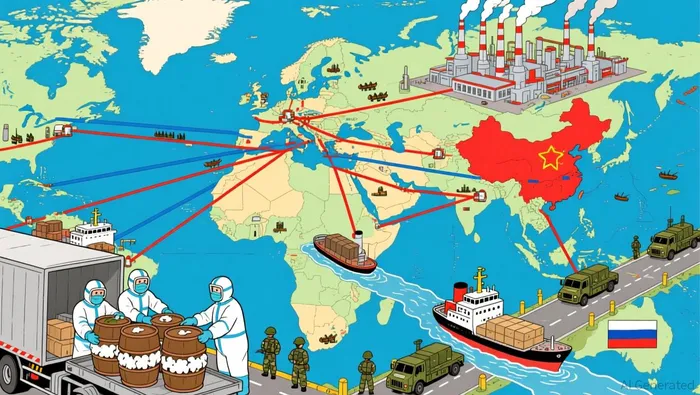
The defining feature of this cycle is China's overwhelming dominance. The country exports more than half of the global share of nitrified cotton, the primary feedstock, and accounts for over 70 percent of Europe's imports. This concentration creates a severe bottleneck for the West. As Secretary of State Antony Blinken recently highlighted, China is providing nitrocellulose to Russia, underscoring how control over this upstream input can be leveraged for strategic coercion. This dynamic mirrors Beijing's past use of rare earths and its recent restrictions on gallium and germanium, demonstrating a pattern of "military-civil fusion" where commercial sectors are activated for strategic effect.
Against this backdrop of Chinese control, a critical structural shortfall has emerged in Europe. The continent's fragmented production capacity, led by firms like Rheinmetall and Eurenco, can generate only around 4,500 to 10,000 tonnes annually. This is far below the combined demand from its own defense surge targets and the need to support Ukraine. The resulting gap is at least 10,000 tonnes annually, with some estimates pushing it higher. This shortfall is not a temporary imbalance but a chronic vulnerability, as Europe's supply has long relied on imports and civil-use plants poorly suited for the rigorous standards of military propellants.
The commodity's inherent volatility is baked into its production. It is derived from cotton linters, a byproduct of the textile industry, which means its supply is tied to agricultural cycles and concentrated in a few key regions. This physical dependency, layered atop the geopolitical concentration, creates a perfect storm for price swings and supply instability. For an investor, this sets the macro stage: nitrocellulose operates in a cycle defined by defense budgets and geopolitical risk, not just industrial demand. The cycle is currently in a phase of acute stress, with demand surging from a war in Europe and a strategic pivot away from Chinese suppliers, while supply remains constrained and geopolitically charged. This creates a window of opportunity for any player that can navigate the complex interplay of raw material sourcing, production scaling, and sovereign trust.
CellCore's Cycle-Positioned Advantage: Infrastructure and Demand Lock
For a commodity cycle defined by acute supply stress and geopolitical urgency, a two-year head start on infrastructure is a rare and powerful moat. CellCore has built that advantage by securing a site in Saskatchewan with pre-existing road access, rail connectivity, water, and power. This foundational work means the company is not starting from scratch; it has already locked in the physical platform needed for production. As CEO David Brough noted, the company has been "heads-down building while others have been planning," giving it a tangible operational lead that competitors must now chase.
That lead is immediately translated into commercial security. CellCore has secured binding supply agreements, including at least one that collectively exceed its initial annual production capacity of 6,000 metric tonnes. In a market where demand is outstripping supply, this pre-emptive lock on customers is a critical buffer. It provides revenue visibility and de-risks the capital-intensive build-out, ensuring that the facility's output has a committed buyer from day one. The contracts span NATO allies, reflecting the urgency of the global supply crisis and the confidence partners have placed in CellCore's ability to deliver sovereign capacity.
Furthermore, the company's choice of technology aligns with the sovereign production standards now in vogue. CellCore will utilize modern, closed-loop technology, which is not only more environmentally responsible but also a hallmark of the clean, traceable manufacturing processes that defense ministries increasingly demand. This design choice directly addresses the quality and security concerns that come with replacing Chinese-sourced feedstocks, positioning CellCore as a trusted alternative that meets the rigorous benchmarks for military-grade materials.
The bottom line is that CellCore is not merely entering a cycle; it is leveraging its head start to position itself as a foundational player within it. By combining a two-year infrastructure lead with pre-sold capacity and sovereign-aligned technology, the company has built a concrete competitive moat. This setup allows it to capture value from the current cycle's stress while establishing a long-term platform for growth, all while delivering on a strategic national imperative.
The Path to Cycle Capture: Catalysts, Risks, and Financial Impact
CellCore's strategic head start provides a strong foundation, but its ultimate success hinges on navigating a complex web of catalysts and risks that will determine whether it captures value from the current commodity cycle. The primary driver is the acceleration of Western defense spending and the formalization of procurement frameworks that prioritize domestic suppliers. Canada's new Defence Industrial Strategy, backed by a pledge of over half a trillion dollars in security and economic investment, is a powerful catalyst. This strategy explicitly aims to raise the share of defense acquisitions awarded to Canadian firms to 70%, creating a direct, long-term demand signal. The launch of the Defence Investment Agency with its "BUILD–PARTNER–BUY" framework is designed to cut red tape and speed up procurement, directly addressing the historical bottleneck that has hindered domestic industry growth. For CellCore, this means a clear path to securing long-term contracts from Canadian and allied governments, translating its sovereign production promise into commercial reality.
Yet a major geopolitical risk complicates this favorable backdrop. The strategy's effectiveness is undermined by a critical loophole: Turkey continues to be a major exporter of nitrocellulose to Russia. This dynamic creates a fragile and unpredictable supply chain for the West, as efforts to build sovereign capacity are partially offset by a key NATO ally's continued trade with the adversary. It underscores the volatility of the cycle and introduces a persistent risk that Western supply chain security initiatives could be undermined by geopolitical exceptions. This risk adds a layer of uncertainty to the demand forecast, as the urgency for alternative suppliers may fluctuate based on diplomatic pressures and enforcement actions.
Ultimately, CellCore's financial impact will depend on its ability to navigate this complex defense procurement landscape. The company must transition from securing pre-sales to winning formal, multi-year contracts under the new strategic frameworks. This requires not just technical capability but also deep engagement with government agencies, demonstrating compliance with new accreditation processes, and building trust as a reliable partner. The company's success is therefore a function of both its operational lead and its political acumen. If it can leverage its two-year head start to become a designated "Canadian champion" under the new strategy, it stands to capture a significant share of the projected $180 billion in defense procurement opportunities. The path forward is clear, but the journey demands more than just a factory; it requires becoming an indispensable node in a restructured, sovereign supply chain.







Comentarios
Aún no hay comentarios