
Celestica's Strategic Position in the AI-Driven Data Center Revolution
A New Era of AI Infrastructure: Celestica's Innovations
Celestica's recent product launches underscore its commitment to redefining data center efficiency. The SD6300 ultra-dense storage expansion system, introduced in 2023, maximizes storage density per rack, enabling hyperscalers to optimize floor space while handling data-intensive tasks like AI data ingest and archiving. This system directly addresses the growing challenge of rising costs and spatial constraints in AI environments.
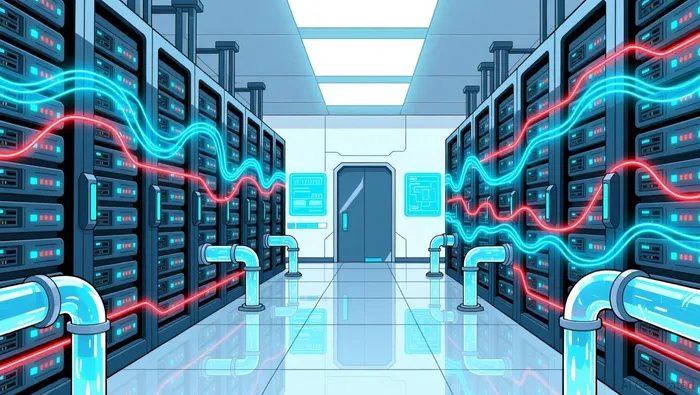
Complementing this is the DS6000 and DS6001 1.6TbE data center switches, engineered with Broadcom's Tomahawk 6 (TH6) chipset. These switches deliver 102.4Tbps of switching capacity, doubling the performance of Celestica's previous 800G solutions. The DS6000 is tailored for traditional air-cooled data centers, while the DS6001 operates in hybrid cooling environments, reducing energy consumption by up to 40%. Both models support AI routing features and open-source network operating systems (NOS), offering flexibility for enterprise and edge deployments.
Celestica's emphasis on liquid cooling further cements its leadership. As AI workloads push traditional air cooling to its limits, the company's modular designs and co-engineering partnerships with hyperscalers and silicon providers ensure solutions that align with sustainability and performance goals. This approach not only extends product lifecycles but also reduces electronic waste-a critical factor in an industry grappling with environmental scrutiny.
Competitors' Strategies: A Comparative Lens
While Celestica's innovations are compelling, it is essential to evaluate its position against key rivals. Dell Technologies, for instance, has introduced the Dell AI Data Platform (DAIDP), which integrates with NVIDIA's AI infrastructure to streamline data workflows. Dell's KV Cache offloading technology, leveraging PowerScale and ObjectScale, has demonstrated a 19x improvement in Time to First Token (TTFT) performance for AI inferencing. However, Dell's focus on software optimization and storage integration does not match Celestica's hardware-centric approach to ultra-dense storage and high-bandwidth switching.
Hewlett Packard Enterprise (HPE) has also made strides with its HPE Alletra Storage MP B10000, offering six times greater capacity density and 65% lower power consumption compared to competitors. HPE's six-phase AI implementation roadmap emphasizes scalability and customization through hybrid deployment models. Yet, its reliance on phased strategies and broader enterprise services may slow its ability to respond to the rapid, high-density demands of AI workloads compared to Celestica's agile, product-first approach.
Inspur, a Chinese data center solutions provider, emphasizes integrated services spanning consultation to O&M, positioning itself as a one-stop shop for scalable, efficient infrastructures. While Inspur's solutions cater to diverse industries, its lack of proprietary hardware innovations like Celestica's SD6300 or DS6000 series limits its differentiation in the AI-specific market.
Why Celestica Outpaces the Competition
Celestica's competitive edge lies in its end-to-end customization and scalability. By co-designing solutions with hyperscalers and silicon partners, the company ensures its products align with the precise performance and reliability requirements of AI workloads. This contrasts with Dell's and HPE's more generalized approaches, which prioritize broad enterprise compatibility over niche AI optimization.
Moreover, Celestica's 1.6TbE switches and liquid cooling systems directly tackle the bottlenecks of traditional data centers. For example, the DS6001's hybrid cooling design reduces energy costs while maintaining high performance-a critical advantage as AI workloads intensify. In contrast, Dell's DAIDP and HPE's B10000 rely on software-driven efficiency gains, which, while valuable, cannot fully offset the physical limitations of air cooling in ultra-dense environments.
The company's modular, future-ready architecture also sets it apart. By designing products with extensible lifecycles, Celestica minimizes obsolescence risks-a key concern in an industry where technological advancements are rapid and disruptive. This contrasts with Inspur's service-centric model, which lacks the hardware innovation needed to keep pace with AI's exponential growth.
Investment Outlook: A Leader in the AI Infrastructure Race
With global hyperscale capital expenditure projected to grow by 40% in 2026, Celestica's strategic focus on AI-driven infrastructure positions it to capture significant market share. Its recent HPS contract for 1.6T switches and advancements in 800G technology further validate its ability to meet the surging demand for high-performance networking.
While Dell, HP, and Inspur offer robust solutions, Celestica's combination of ultra-dense storage, cutting-edge switching, and liquid cooling creates a unique value proposition. For investors, this translates to a company not only adapting to the AI revolution but actively shaping its infrastructure. As AI workloads become the backbone of digital transformation, Celestica's forward-looking strategies make it a compelling long-term bet.







Comentarios
Aún no hay comentarios