
Celebrity’s Xcel Debut and Cruise Industry Growth: Navigating New Horizons
The cruise industry is setting sail into a new era of innovation and expansion, fueled by the debut of Celebrity Cruises’ Celebrity Xcel℠ and strategic itineraries targeting emerging destinations. While operational challenges like onboard incidents and mechanical issues persist, the sector’s forward momentum—driven by $1.2 billion in new ship investments and a 285-destination portfolio—signals a promising outlook for investors.
The X Factor: Celebrity’s Game-Changer
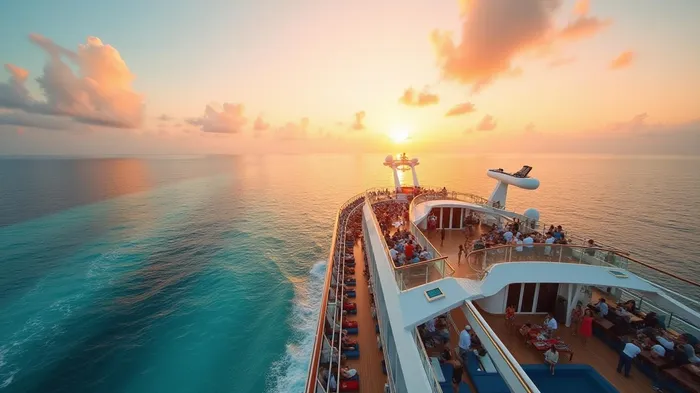
Celebrity Cruises’ Celebrity Xcel℠, the latest addition to its Edge® Series, marks a pivotal moment for the industry. Slated to debut in the Caribbean in late 2025, the ship promises “game-changing” amenities, including reimagined entertainment spaces and culinary innovations. The vessel’s year-round Miami base aligns with the company’s strategy to capitalize on the Caribbean’s dry season, where temperatures of 25–30°C attract travelers seeking beach-centric vacations.
The Xcel℠’s launch is part of a broader $1.2 billion investment in new ships by Celebrity’s parent company, Carnival Corporation (CCL), which also includes sister brands like Holland America and Princess Cruises. This commitment to modernization reflects a bid to outpace competitors like MSC Cruises, whose Easter 2025 deals and private island Ocean Cay MSC Marine Reserve have drawn cost-conscious travelers.
Expanding Horizons: Destinations and Demand
The 2025–2026 cruise season is defined by geographic diversification. For the first time, round-trip itineraries from Iceland—including stops in Djupivogur—offer travelers access to Arctic landscapes, while Montenegro’s Bar and Norway’s Trondheim open up lesser-trodden European routes. In total, over 285 destinations across 70 countries will be served, up from 200+ in 2024, signaling a shift toward niche markets to counter declining Caribbean overcrowding.
MSC Cruises has similarly prioritized flexibility, offering cruises ranging from 2–23 nights in 2025. Its Mediterranean itineraries, timed for April’s mild weather, have proven popular, with cities like Rome and Venice seeing overnight stays to accommodate evening excursions. Meanwhile, Celebrity’s Perfect Day at CocoCay in the Bahamas continues to draw families, leveraging its private-island exclusivity.
Stormy Seas: Operational Challenges
Despite the optimism, cruise lines face persistent hurdles. Recent incidents—including a 7.9% passenger illness outbreak aboard Viking Polaris and a fire on the Ocean Navigator caused by debris in its oil system—highlight risks tied to health monitoring and maintenance. Security concerns, such as a drug bust on Royal Caribbean’s Harmony of the Seas, further underscore the need for robust onboard protocols.
These issues are not isolated: a CDC report noted that 28 passengers fell ill during the Viking Polaris voyage, while federal investigators linked the Ocean Navigator fire to poor mechanical oversight. Such incidents could pressure regulators to enforce stricter safety standards, potentially raising costs for cruise operators.
Investment Outlook: Sailing Toward Growth
The cruise sector’s resilience hinges on balancing innovation with risk mitigation. Carnival’s $1.2 billion Edge® Series expansion and MSC’s focus on flexible itineraries position both as leaders in a market projected to grow at 5.2% annually through 2030, according to Allied Market Research.
Investors should prioritize companies with strong liquidity and destination diversification. Carnival’s deep pockets and multi-brand strategy give it an edge, while MSC’s private-island investments and aggressive pricing could attract budget-conscious travelers. Conversely, smaller players with limited geographic reach may struggle to compete in a market increasingly dominated by scale.
Conclusion: Charting a Course for Returns
The cruise industry is at a crossroads. While new ships like the Celebrity Xcel℠ and expanded itineraries to Iceland and Montenegro signal growth, operational risks—from health outbreaks to mechanical failures—demand vigilance. For investors, the sector’s long-term fundamentals remain strong, driven by rising disposable incomes and a global middle class eager to explore.
Focus on firms with innovative products (e.g., private islands), geographic flexibility, and robust safety protocols. Carnival and MSC Cruises currently lead in these areas, but their stock performance will depend on executing these strategies while navigating regulatory and operational headwinds. With the 2025–2026 season poised to welcome millions of passengers, the cruise industry’s next chapter could be its most profitable yet—if it stays afloat in stormy seas.





Comentarios
Aún no hay comentarios