
Celebrity Wealth as a Barometer for Consumer and Entertainment Market Trends
Personal Brand Equity: The New Currency of Influence
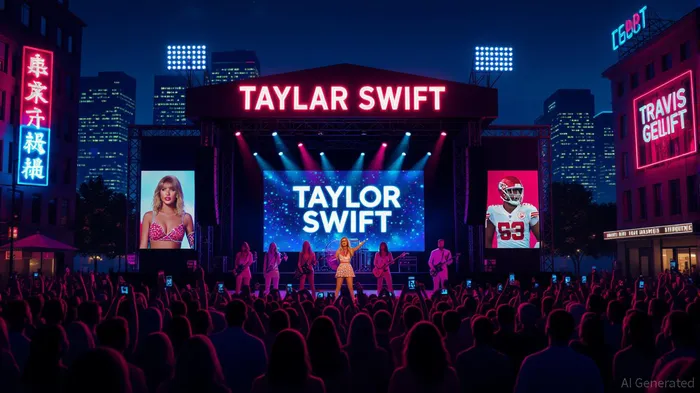
Taylor Swift's estimated $2 billion net worth in 2025 is a testament to the monetization of personal brand equity. Her ability to re-record her early albums, coupled with the Eras Tour's $4.1 billion revenue, has transformed her from a musician into a global brand. According to a report by Forbes, Swift's direct-to-consumer merchandise sales and partnerships with brands like AppleAAPL-- and Capital OneCOF-- have amplified her reach, generating recurring revenue streams. This aligns with 2025 industry data showing that 99% of buyers prioritize thought leadership in decision-making, and 73% trust it more than traditional marketing according to research.
Travis Kelce's estimated $90 million net worth similarly reflects the value of personal branding in sports. Beyond his NFL salary, Kelce's podcast New Heights (a $100 million deal with Amazon's Wondery) and endorsements with Bud Light and State Farm demonstrate how athletes are diversifying income through media and brand collaborations. Industry insights reveal that 74% of Americans trust recommendations from individuals with established personal brands according to data, a metric that directly elevates Kelce's marketability.
Streaming Economics: The Engine of Modern Music Monetization
The global music streaming market's growth to $18.3 billion in H1 2025 underscores its role as a cornerstone of artist wealth. Taylor Swift's The Life of a Showgirl album, which sold 1.2 million vinyl copies in its first week and broke Spotify's pre-save record, exemplifies how streaming platforms and physical sales can coexist profitably. Bloomberg notes that her ownership of her master recordings-secured through re-recording-has amplified her royalty earnings, a strategy increasingly adopted by artists seeking to capitalize on streaming's dominance.
For investors, the U.S. music streaming market's projected expansion to $23.69 billion by 2030 signals long-term potential. Swift's concert film, earning $261 million globally, further illustrates the synergy between streaming and content diversification. As platforms like Spotify and Apple Music continue to dominate, investments in streaming infrastructure, data analytics, and artist-led ventures could yield substantial returns.
Athlete Monetization: Beyond the Field
Travis Kelce's career highlights a paradigm shift in athlete earnings. His 2024 contract extension with the Kansas City Chiefs, which includes a $34.25 million deal, reflects the NFL's inflationary salary trends. However, Kelce's true financial power lies in off-field ventures: co-founding 1587 Prime steakhouse, investing in Alpine F1, and leveraging his relationship with Swift to amplify media exposure.
The 2025 data on athlete endorsements-where Kelce's partnerships with Pfizer and Experian add millions annually according to analysis-aligns with a broader trend of athletes becoming entrepreneurs. For investors, this signals opportunities in sports-tech, athlete branding agencies, and co-owned ventures. The NFL's growing emphasis on media rights (e.g., Kelce's Amazon deal) also points to the value of integrating sports talent into content creation pipelines.
Investment Implications: Aligning with Cultural and Technological Shifts
The convergence of personal branding, streaming, and athlete diversification presents three key investment themes:
1. Brand-First Artist Management: Supporting artists and athletes who prioritize brand equity through strategic partnerships and content creation.
2. Streaming Infrastructure: Targeting platforms and technologies that enable high-quality, data-driven streaming experiences.
3. Athlete-Driven Enterprises: Backing ventures co-founded by athletes, which leverage their influence to disrupt traditional industries (e.g., Kelce's steakhouse or Swift's re-recording strategy).
As market research shows, the global music streaming market grows at a 15.9% CAGR and personal branding becomes a $66.62 billion industry by 2029, investors must prioritize adaptability. The success of Swift and Kelce demonstrates that celebrity wealth is no longer confined to their primary professions but is a reflection of their ability to harness market trends.
Conclusion
Taylor Swift and Travis Kelce's 2025 net worth surges are not anomalies but symptoms of a larger economic transformation. Their strategies-rooted in brand ownership, streaming innovation, and diversified revenue streams-offer a blueprint for investors seeking to capitalize on the intersection of entertainment, technology, and consumer behavior. In an era where personal brand equity and digital platforms drive value, the entertainment and sports industries remain fertile ground for those who understand the power of cultural capital.







Comentarios
Aún no hay comentarios