
Celebrity Influence and Brand Partnerships in Luxury Fashion: Red Carpet Missteps and Investment Implications
The intersection of celebrity culture and luxury fashion has long been a powerful driver of brand equity and market dynamics. High-profile red carpet appearances, particularly at events like the Golden Globes, offer designers a global stage to amplify their visibility. However, the 2026 Golden Globes highlighted both the opportunities and risks of celebrity partnerships, as fashion choices by stars such as Jennifer Lopez (Armani), Kevin O'Leary (Miu Miu), and Jenna Ortega (Saint Laurent) sparked mixed public reactions. This article examines how these moments-whether celebrated or critiqued-intersect with broader market trends to shape brand equity and stock performance for luxury houses.
The 2026 Golden Globes: A Mixed Bag of Fashion Moments
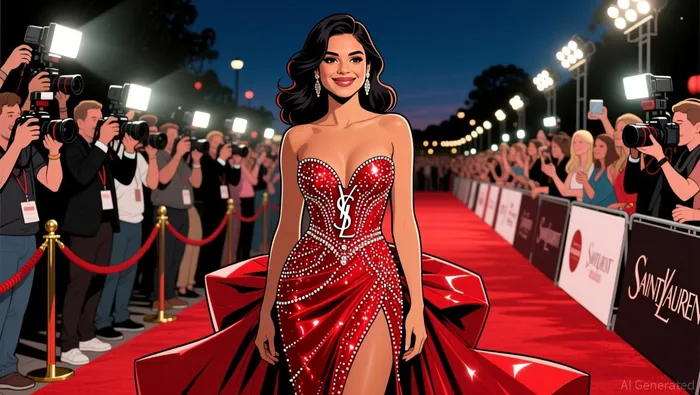
Jennifer Lopez's Armani ensemble at the 2026 Golden Globes drew praise for its elegance but faced criticism for lacking originality, reflecting a broader debate about the brand's ability to innovate while maintaining its heritage. Kevin O'Leary's Miu Miu outfit, meanwhile, was widely panned for its unconventional color palette and cut, with social media users expressing confusion over the design choices. In contrast, Jenna Ortega's Saint Laurent dress was lauded for its modern silhouette and striking red hue, reinforcing the brand's reputation for bold, contemporary aesthetics. These divergent reactions underscore the dual-edged nature of celebrity exposure: while it amplifies visibility, it also magnifies scrutiny.
Brand Equity and the Long Game
Despite the immediate public reactions, the financial impact of these red carpet moments on Armani, Miu Miu, and Saint Laurent appears limited. According to a report by J.P. Morgan, Miu Miu is projected to see over 20% sales growth in 2026, driven by its appeal to younger consumers and strategic creative direction. Similarly, Saint Laurent's brand equity has been bolstered by its position as the "hottest brand" on the Lyst Index, dethroning Miu Miu in late 2025. Armani, however, faces ongoing challenges related to supply chain governance and ethical oversight, which have drawn regulatory scrutiny and could indirectly affect its market position. These examples suggest that while celebrity appearances generate short-term buzz, long-term brand equity is shaped by factors such as innovation, sustainability, and alignment with consumer values.
Stock Performance and Market Trends
The luxury sector's resilience in 2026 has been underpinned by strong brand heritage, pricing power, and global demand, even as economic uncertainty persists. For instance, Kering's partnership with L'Oréal has reinforced the value of niche and couture brands like Gucci and Bottega Veneta, signaling investor confidence in creative-driven strategies. Aspirational consumers are increasingly price-sensitive, with many shifting toward accessible luxury brands that offer perceived value. This trend poses challenges for high-end labels like Armani and Saint Laurent, which must balance exclusivity with affordability to retain market relevance.
Investment Implications: Beyond the Red Carpet
For investors, the 2026 Golden Globes illustrate the importance of looking beyond isolated fashion moments to assess a brand's broader strategic positioning. Key considerations include:1. Supply Chain and Ethical Governance: Brands with transparent, sustainable practices-such as Saint Laurent's recent supply chain reforms-are better positioned to mitigate reputational risks.2. Creative Leadership: Miu Miu's success underscores the value of visionary creative direction in capturing younger demographics.3. Consumer Sentiment Shifts: As price fatigue grows, brands must recalibrate their value propositions to align with evolving expectations.
While celebrity missteps may generate headlines, the luxury sector's financial health is ultimately tied to macroeconomic factors, brand innovation, and consumer trust. For example, J.P. Morgan analysts have highlighted Prada and Brunello Cucinelli as "overweight" investments, citing their dominance in high-end ready-to-wear and jewelry categories. These insights suggest that investors should prioritize brands with robust governance, adaptive creative strategies, and a clear understanding of their target markets.
Conclusion
The 2026 Golden Globes served as a microcosm of the luxury fashion industry's evolving dynamics. While celebrity fashion choices can amplify brand visibility, their financial impact is often indirect and mediated by broader market forces. Investors seeking to capitalize on the sector's potential must look beyond red carpet moments to evaluate a brand's long-term resilience, innovation, and alignment with shifting consumer priorities. In an era of heightened scrutiny and economic uncertainty, the most successful luxury brands will be those that balance heritage with agility, ensuring their relevance in an increasingly competitive landscape.







Comentarios
Aún no hay comentarios