
When Celebrities Meet Meme Stocks: Retail Investor Frenzy and the American Eagle Case Study
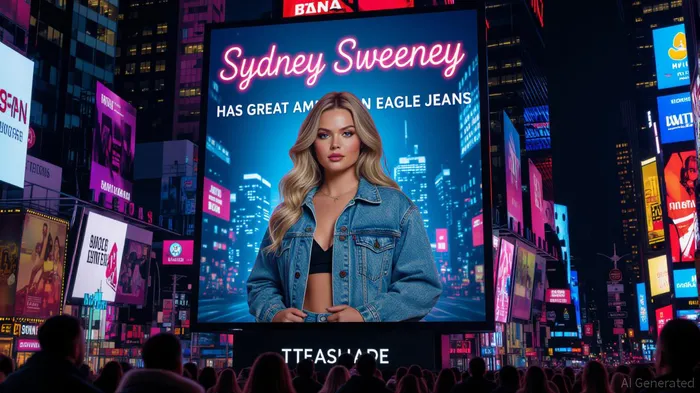
In 2025, the intersection of celebrity culture and retail investor behavior has become a defining feature of meme stock volatility. The case of American Eagle OutfittersAEO-- (AEO) and its high-profile campaign starring actress Sydney Sweeney exemplifies how celebrity endorsements can ignite speculative fervor, transforming a stock into a social media-driven trading phenomenon. For investors, understanding the mechanics behind these surges—and the risks they entail—is critical to navigating an increasingly unpredictable market.
The AEOAEO-- Surge: A Meme Stock Catalyst
On July 24, 2025, AEO's stock price surged nearly 10% during regular trading hours and spiked over 17% in after-hours sessions, adding $400 million to its market capitalization. This volatility followed the launch of the brand's fall 2025 campaign, which featured Sweeney in a provocative denim-centric ad. The campaign, described as the most expensive in the company's history, included immersive elements like 3D billboards, AI-powered virtual try-ons, and a limited-edition denim jacket. Sweeney's involvement, amplified by her social media presence and recent roles in shows like Euphoria and The White Lotus, created a viral buzz that spilled into financial markets.
Retail investors on platforms like Reddit's WallStreetBets and Stocktwits quickly framed the campaign as a “meme stock play,” citing AEO's high short interest (over 13% of shares sold short) as a catalyst for a potential short squeeze. The stock's rally mirrored earlier meme stock frenzies, such as those seen with GameStopGME-- and AMCAMC-- in 2021, where coordinated retail buying drove prices to unsustainable levels.
The Psychology of Retail-Driven Volatility
The AEO case highlights how celebrity endorsements can act as a “social proof” mechanism for retail investors. Sweeney's involvement provided a narrative that resonated with Gen Z consumers and traders, who viewed the campaign as a sign of the brand's cultural relevance. This narrative-driven approach bypasses traditional financial analysis, prioritizing momentum and sentiment over fundamentals.
Retail investors, often influenced by FOMO (fear of missing out), treated the stock as a speculative asset rather than a long-term investment. The stock's low price (trading around $10–$12) and high short interest made it an attractive target for coordinated buying efforts. By the end of the first trading day, AEO's shares had traded $513 million in volume—a 169% increase from the previous day—demonstrating the power of social media to concentrate retail demand.
Broader Implications for Meme Stock Behavior
The AEO rally is part of a broader 2025 meme stock resurgence, with companies like GoProGPRO--, Krispy KremeDNUT--, and Kohl'sKSS-- experiencing similar surges. These stocks share common traits: recognizable brands, low stock prices, and high short interest. For example, GoPro's stock price spiked 25% in early July after a TikTok influencer endorsed its new action camera, while Kohl's saw a 12% jump following a viral post about its clearance sales.
This pattern underscores a shift in retail investor behavior. Unlike traditional investors who prioritize earnings and revenue, meme stock traders rely on social cues, celebrity endorsements, and collective action. The result is a market where stock prices can surge or crash based on narratives rather than fundamentals—a dynamic that poses both opportunities and risks.
Investment Advice: Balancing Speculation and Caution
For investors, the AEO case offers two key lessons:
Short-Term Opportunities, Long-Term Risks: Meme stock rallies can create short-term gains, but these are often unsustainable. AEO's stock dipped 4% the day after its initial surge, settling at $11.52. While the rally briefly elevated the company's valuation to over $2 billion, its long-term prospects remain tied to its core business performance. Analysts at JefferiesJEF-- and Morgan StanleyMS-- have downgraded AEO, citing macroeconomic headwinds and weak consumer demand.
Due Diligence Matters: Retail investors often treat celebrity endorsements as a form of “due diligence,” but this ignores the company's financial health. AEO, for instance, has reported a 35% year-to-date decline in its stock price and a 5% revenue drop in its latest quarter. While the Sweeney campaign may boost short-term sales, the company's profitability and debt load remain unresolved challenges.
For those considering meme stock trades, it's crucial to:
- Monitor Short Interest: High short interest (like AEO's 13%) can amplify volatility but also increase the risk of a sharp reversal if sentiment shifts.
- Diversify Exposure: Avoid overcommitting to a single stock, as meme-driven rallies often collapse rapidly.
- Set Exit Points: Use stop-loss orders to limit losses if the stock reverses course.
Conclusion: The Future of Retail-Driven Markets
The AEO case illustrates how celebrity endorsements and social media can reshape market dynamics. While these factors can create lucrative short-term opportunities, they also highlight the speculative nature of meme stock trading. For investors, the key is to balance participation in these trends with a disciplined, fundamentals-driven approach. As the 2025 meme stock wave continues, the line between retail enthusiasm and financial prudence will remain a critical consideration for navigating an increasingly volatile market.





Comentarios
Aún no hay comentarios