
Cava Group: Overreaction to Same-Store Sales Miss Creates a Strategic Buy Opportunity
The stock market's reaction to CavaCAVA-- Group's Q2 2025 earnings report was as dramatic as it was disproportionate. A 24% pre-market plunge in share price followed the announcement of a 2.1% same-store sales growth—a figure that, while below the prior year's 14.4% surge, still reflects a company navigating macroeconomic headwinds with resilience. This overreaction, however, may present a rare opportunity for value investors to acquire a business with strong unit economics, a clear long-term vision, and a defensible position in the fast-casual dining sector.
The Overreaction: A Miss That Wasn't
Cava's same-store sales growth of 2.1% in Q2 2025 was met with skepticism, particularly as the company revised its full-year guidance downward. Yet, this figure must be contextualized. The 20.3% year-over-year revenue increase to $278.2 million—driven by 16 new restaurant openings and a 26.3% restaurant-level profit margin—demonstrates operational strength. The 2.1% same-store sales growth, while modest, outperformed the industry average for fast-casual chains in a period marked by inflationary pressures and shifting consumer behavior.
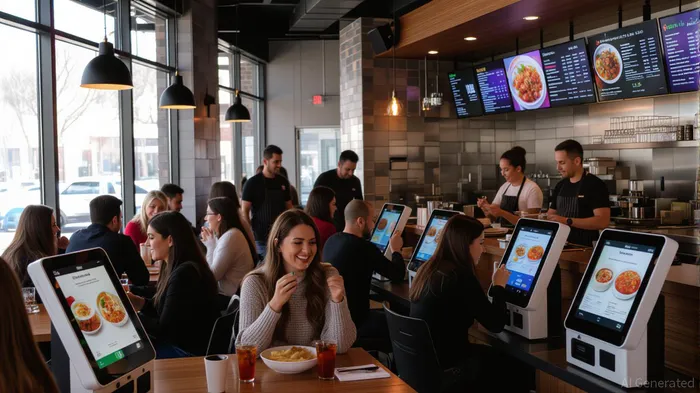
The market's fixation on same-store sales—a metric that often overshadows broader financial health—ignored Cava's ability to scale profitably. The company's digital revenue mix of 37.3% underscores its adaptability to evolving consumer preferences, while its 400th restaurant milestone (achieved in Q2) signals a scalable model. With a goal of 1,000 locations by 2032, Cava's unit economics remain compelling, particularly as average unit volumes (AUVs) exceed $3 million.
Industry Context: A Pressured Sector, but Not a Doomed One
The restaurant industry in 2025 is a study in contrasts. While total sales are projected to reach $1.5 trillion, operators face a trifecta of challenges: inflation, labor costs, and a cautious consumer. Quick Service (QSR) and Fast Casual segments have struggled, with QSR reporting negative same-store sales in April 2025. Yet, Cava's performance highlights a critical truth: not all fast-casual players are created equal.
Cava's focus on health-conscious, customizable meals—coupled with its digital-first strategy—positions it to outperform peers. The company's 26.3% profit margin, despite input costs from new menu items like grilled steak, is a testament to its pricing power and cost discipline. Meanwhile, the industry's average net profit margin of 3–5% makes Cava's 26.3% at the restaurant level a standout.
Financial Health: A Debt-to-Equity Ratio That Suggests Prudence
Cava's balance sheet further supports a bullish case. As of Q2 2025, the company's debt-to-equity ratio stood at 0.72, a manageable level that allows for continued expansion without overleveraging. This contrasts with peers in the fast-casual space, where aggressive debt-fueled growth has led to volatility. Cava's adjusted EBITDA of $42.1 million in Q2, with a full-year guidance range of $152–159 million, also suggests a business generating consistent cash flow.
The key question for investors is whether the 24% stock price drop reflects a realistic reassessment of Cava's prospects or an overcorrection. The latter seems more likely. The company's 20.3% revenue growth and 16.7% increase in total restaurants year-over-year indicate a business that is not only surviving but thriving in a competitive landscape.
Strategic Buy Opportunity: A Long-Term Play on Resilience
For value investors, the current valuation offers an entry point to a company with a durable competitive advantage. Cava's brand recognition, digital infrastructure, and unit economics create a moat that few fast-casual rivals can match. The recent stock price dip, while painful for short-term holders, may be the market's way of undervaluing a business poised to capitalize on the shift toward health-conscious dining and tech-enabled convenience.
Investors should also consider Cava's strategic milestones. The opening of its 400th restaurant in Q2 is not just a number—it's a validation of the model's scalability. With 68–70 new locations expected in 2025, the company is on track to achieve its 1,000-restaurant target by 2032, a goal that could drive decades of compounding growth.
Conclusion: Buy the Dip, Not the Noise
The market's reaction to Cava's Q2 results was an overreaction, not a reckoning. While the same-store sales growth was below expectations, the company's broader financial performance—robust revenue growth, strong margins, and a disciplined balance sheet—paints a picture of a business well-positioned for the future. In a pressured restaurant sector, Cava's combination of operational excellence and long-term vision makes it a compelling buy for investors with a multi-year horizon.
The current valuation, discounted by short-term pessimism, offers a rare opportunity to invest in a company that is not just surviving but strategically expanding its footprint. For those willing to look beyond the noise, Cava GroupCAVA-- represents a strategic buy opportunity in a sector where patience and perspective are rewarded.





Comentarios
Aún no hay comentarios