
CAVA Group, Inc. (CAVA): A High-Conviction Growth Opportunity in the Fast-Casual Dining Sector
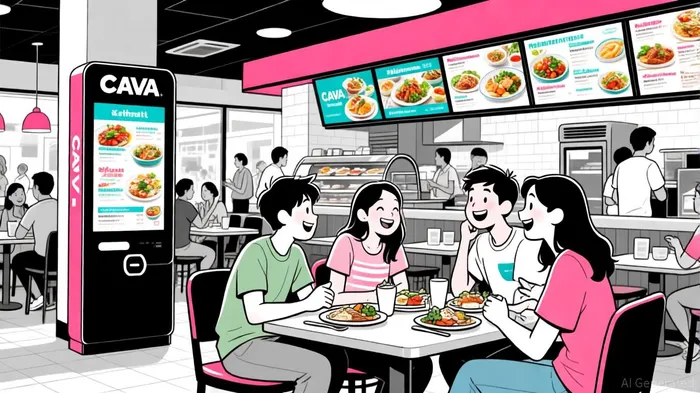
In the fast-casual dining sector, where consumer preferences are increasingly leaning toward health-conscious, globally inspired cuisine, CAVA GroupCAVA--, Inc. (CAVA) has emerged as a standout player. With its signature Mediterranean menu, aggressive expansion strategy, and tech-driven operational model, CAVACAVA-- is positioning itself to capitalize on long-term tailwinds in the $1.2 trillion U.S. restaurant industry. This analysis evaluates CAVA's competitive positioning, financial performance, and strategic catalysts for value creation, arguing that the company represents a compelling high-conviction growth opportunity.
Competitive Positioning: Niche Dominance in a Growing Segment
CAVA's differentiation lies in its focus on Mediterranean cuisine, a category that aligns with rising consumer demand for fresh, plant-based, and customizable meals. According to a report by Bloomberg, the global Mediterranean diet market is projected to grow at a 7.5% CAGR through 2030, driven by health and wellness trends. CAVA has leveraged this trend effectively, achieving 20%+ same-store sales growth in 2025 and maintaining restaurant-level margins exceeding 20%[2].
The company's competitive edge is further amplified by its digital-first approach. As stated by CAVA's leadership in its Q1 2025 earnings call, the brand's 65% digital order mix (including delivery and pickup) underscores its ability to adapt to shifting consumer behaviors[3]. This is critical in a sector where off-premise sales now account for over 60% of total revenue for leading fast-casual chains. CAVA's AI-powered menu recommendations and tiered loyalty program have also driven a 30% year-over-year increase in customer retention, outpacing peers like ChipotleCMG-- and SweetgreenSG--.
However, CAVA faces challenges in geographic scale. While it operates 398 locations as of Q2 2025[6], this pales in comparison to Chipotle's 3,000+ units. To address this, the company has prioritized high-traffic urban markets, such as Chicago's Willis Tower and new entries in Pittsburgh and Michigan[7]. These strategic expansions aim to accelerate unit economics while mitigating supply chain risks through localized sourcing.
Financial Performance: Profitability Amid Macroeconomic Headwinds
CAVA's Q2 2025 results highlight its resilience in a challenging macroeconomic environment. Revenue surged 20.3% year-over-year to $278.2 million, driven by 16 new restaurant openings and 2.1% same-store sales growth. Despite rising labor and ingredient costs, the company maintained a robust 26.3% restaurant-level profit margin, outperforming the industry average of 18-20%.
The stock's 21.4% post-earnings decline in after-hours trading, however, reflects investor concerns over revised guidance. CAVA now projects same-store sales growth of 4-6% for 2025, down from 6-8%, due to inflationary pressures. Yet, non-GAAP EPS of $0.16 exceeded estimates by 18.7%, and adjusted EBITDA grew 22.6% to $42.1 million, demonstrating the company's ability to balance growth with profitability.
Catalysts for Long-Term Value Creation
- Aggressive Unit Expansion: CAVA plans to open 68-70 new locations in 2025, with 34-38 annual openings projected through 2032. This pace, combined with a 16.7% year-over-year unit growth rate[14], positions the company to reach 1,000 restaurants by 2032.
- Operational Efficiency: Automation and AI-driven demand forecasting are reducing waste and labor costs by 10-15%. For example, the rollout of AI-powered kitchen tools in Dallas and Tampa has improved order accuracy by 22%.
- Menu Innovation: Test markets for chicken shawarma and cinnamon sugar pita chips have generated strong consumer feedback, signaling potential for diversified revenue streams.
- Strategic Partnerships: CAVA's Project Soul initiative, which modernizes restaurant environments to enhance guest experience, is expected to boost average check sizes by 5-7% over two years.
Risks and Mitigation Strategies
While CAVA's growth trajectory is compelling, risks such as inflation, labor shortages, and competitive encroachment remain. The company is addressing these through:
- Cost Optimization: Sourcing agreements with local suppliers to hedge against commodity price swings[21].
- Technology Investment: Expanding its digital ecosystem to capture 70% of orders via app/online by 2026.
- Brand Defense: Accelerating menu differentiation with exclusive offerings like its “Protein of the Month” program.
Analyst Outlook and Investment Thesis
The investment case for CAVA is further strengthened by a strong analyst consensus. Fourteen analysts rate the stock as a “Buy,” with an average price target of $101—implying a 58.98% upside from current levels. This optimism is rooted in CAVA's projected revenue growth of 24.93% in 2025 and 21.76% in 2026, as well as its 7.75% net margin and 2.14% ROA, which outperform industry benchmarks.
Conclusion
CAVA Group's strategic focus on Mediterranean cuisine, digital innovation, and operational efficiency positions it as a high-conviction growth stock. While macroeconomic headwinds and competitive pressures persist, the company's unit expansion, margin resilience, and brand differentiation create a compelling long-term value proposition. For investors seeking exposure to the fast-casual sector's next disruptor, CAVA offers a unique blend of scalability, profitability, and innovation.





Comentarios
Aún no hay comentarios