
Cautious Tightrope: South Korea’s Geopolitical Juggernaut and the Investment Crossroads
The geopolitical landscape of 2025 has thrust South Korea into the center of a high-stakes game of economic and political balancing. Fitch Ratings has flagged the nation’s vulnerability as a “middle power” straddling the U.S.-China trade war, with tariffs, political instability, and domestic economic headwinds testing its creditworthiness. For investors, this is a moment of reckoning: can Seoul navigate these risks to sustain growth, or will it succumb to the pressures of a fractured global order?
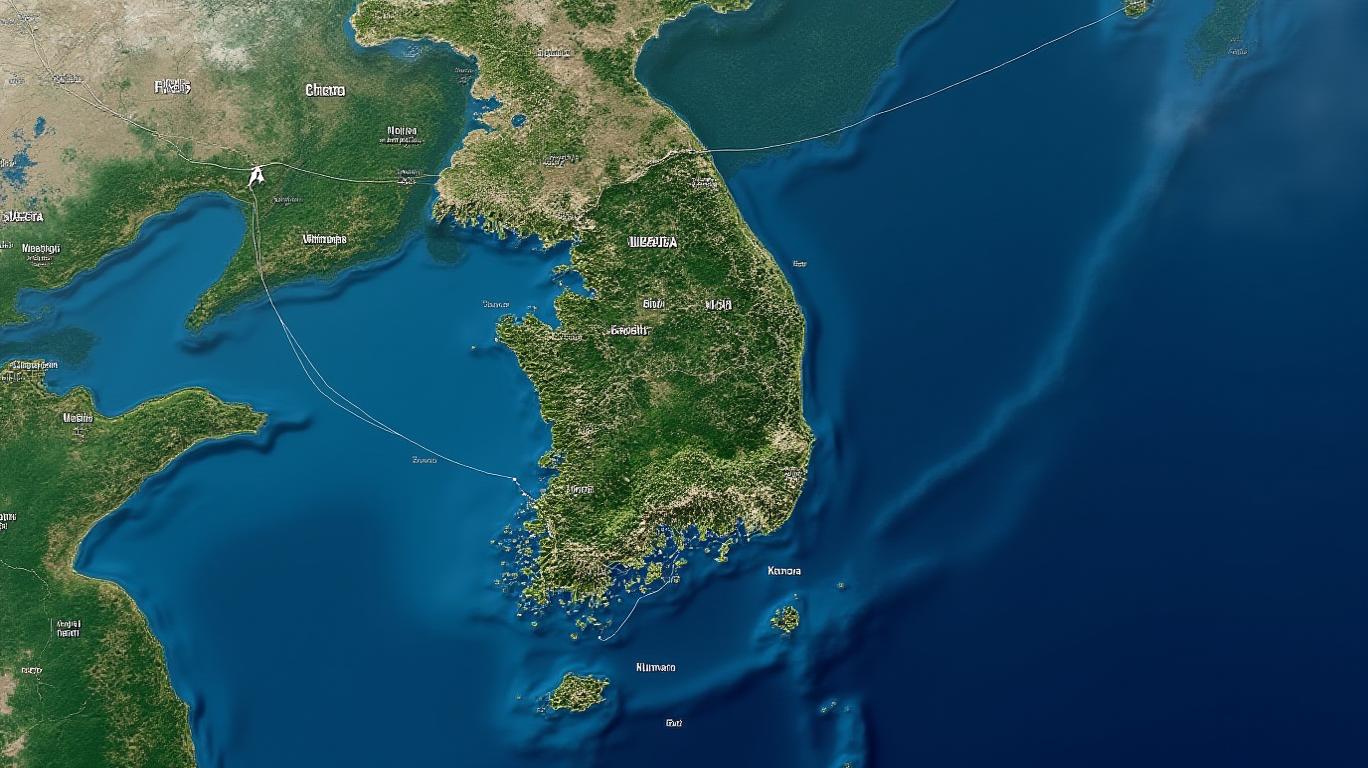
Geopolitical Positioning: A Nation in the Crossfire
South Korea’s economy, deeply reliant on exports (accounting for 45% of GDP), is now caught in a vise. The U.S. imposed 25% tariffs on $7.5 billion of South Korean goods in 2024, while U.S.-China tariffs exceeding 100% have effectively severed trade between Seoul’s two largest partners. This has sent shockwaves through industries like semiconductors and automobiles, which rely on just-in-time supply chains now disrupted by protectionism.
Fitch Ratings’ Asia-Pacific director, Jeremy Zook, has labeled this a “critical test” for Seoul’s policymakers. The agency’s highlights a worrying trend: corporate debt now stands at 111.5% of GDP, with construction and manufacturing sectors reeling from fixed investment declines (down 0.9% QoQ in Q4 2024).
Economic Outlook: Growth Under Siege
Fitch revised its 2025 GDP growth forecast to 1.7%, down from an initial 1.9%, citing a perfect storm of factors:
- Export contractions: Shipments to China fell 4.9% YoY early in 2025, while U.S. tariffs threaten 20% of South Korean exports (equivalent to 7% of GDP).
- Domestic demand stagnation: Retail sales have contracted for four straight quarters, and business sentiment hit a four-year low in January 2025.
- Political uncertainty: The June 3 presidential election—triggered by former President Yoon Suk Yeol’s failed martial law bid—has stalled trade negotiations with the U.S., complicating efforts to reduce tariffs.
The KOSPI’s 12% underperformance relative to the S&P 500 since mid-2024 reflects investor anxiety. While the Bank of Korea’s projected rate cuts to 2.25% by year-end may boost consumption, the central bank’s hands are tied by inflation risks tied to global commodity prices.
Political Crossroads: Can Seoul Pivot?
The snapSNAP-- election adds another layer of complexity. A potential new administration could recalibrate foreign policy, from trade deals to security alliances. Fitch notes that fiscal flexibility remains a lifeline: South Korea retains “headroom” for supplementary budgets, though public finances—once a credit strength—are now neutral.
However, downside risks loom large. A second Trump administration could escalate U.S. tariffs, while China’s economic slowdown (Fitch downgraded its rating to “A” in 2025) threatens South Korea’s export-dependent growth model.
Investment Implications: Navigating the Storm
For investors, the path forward requires a granular approach:
1. Sector selection: Focus on firms with diversified supply chains or exposure to resilient sectors like healthcare or renewable energy (e.g., Samsung SDI (006400.KS) in batteries).
2. Monetary policy plays: The BoK’s easing cycle could benefit financials and real estate, though caution is warranted given corporate debt risks.
3. Geopolitical hedges: Consider ETFs like EWY (iShares MSCI South Korea ETF) paired with U.S.-listed tech stocks (e.g., Intel (INTC)) to balance exposure to trade tensions.
Conclusion: A Fragile Equilibrium
South Korea’s 2025 outlook hinges on its ability to mitigate three existential risks: geopolitical instability, corporate debt overhang, and political gridlock. With GDP growth projected to limp along at 1.7%, and corporate debt at an alarming 111.5% of GDP, the margin for error is razor-thin.
Yet there are mitigating factors. Fitch acknowledges fiscal headroom for stimulus, and the BoK’s rate cuts could stabilize consumption. If Seoul can negotiate tariff relief and stabilize its political landscape, a rebound is feasible—but the stakes are high. Investors should proceed with caution, favoring companies with global reach and balance-sheet resilience while keeping a wary eye on U.S.-China trade dynamics.
In this high-wire act, South Korea’s fate is not just economic—it’s a referendum on whether globalized supply chains can survive in an era of superpower rivalry. For now, the tightrope holds—but the next step could be the hardest.







Comentarios
Aún no hay comentarios