
CATL's European Gambit: Geopolitical and Labor Risks Cloud EV Battery ROI
Strategic Alliances and Market Access
CATL's collaboration with Stellantis represents a calculated move to secure a foothold in the EU's rapidly growing EV market. The 50-50 joint venture, set to begin production in late 2026, will supply LFP batteries for Stellantis' B and C segment vehicles, leveraging the lower cost and safety profile of LFP chemistry. This partnership builds on CATL's existing operations in Germany and Hungary, where the company has established a second European plant in Debrecen. The Hungarian government has allocated €800 million in public funds to support the project, underscoring its strategic importance for maintaining EU market access amid rising protectionism.
Yet, the Hungarian facility is emblematic of the broader risks CATL faces. While the country's geographic centrality and access to Russian energy resources make it an attractive hub for East Asian manufacturers according to analysis, the same factors expose the company to geopolitical volatility. Hungary's continued reliance on Russian energy-despite EU and NATO pressure-has drawn scrutiny, and any shift in transatlantic relations could disrupt supply chains or trigger regulatory pushback.
Environmental and Labor Policy Challenges
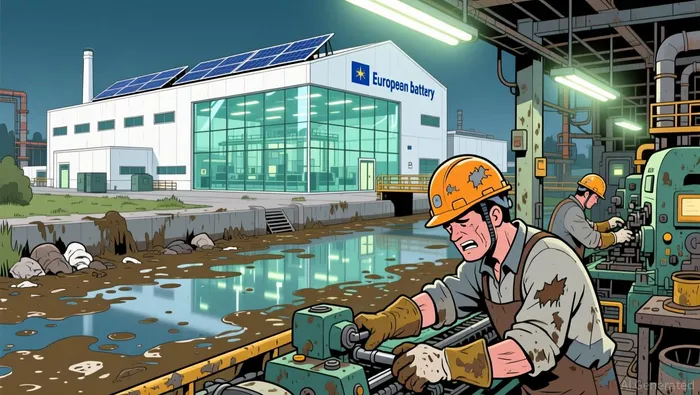
The environmental and social costs of CATL's expansion further complicate its ROI. Battery manufacturing generates toxic waste that risks contaminating land, water, and air, particularly in regions with lax enforcement of environmental regulations. In Hungary, where industrial policies have been relaxed to attract foreign investment, these concerns are amplified. For instance, the 2018 labor law changes-infamously labeled the "Slave Law" for their erosion of worker protections-have created a low-wage, flexible labor environment that raises ethical red flags according to experts. While such policies reduce operational costs, they also heighten reputational risks in a market increasingly sensitive to sustainability and labor rights.
Capital Allocation Risks and ROI Uncertainty
The interplay of these factors creates a high-stakes environment for capital allocation. CATL's European investments require balancing the immediate benefits of EU market access against long-term risks such as regulatory crackdowns, environmental liabilities, and shifting geopolitical dynamics. For example, the EU's proposed Carbon Border Adjustment Mechanism could penalize manufacturers unable to meet stringent emissions targets, potentially eroding margins for CATL's carbon-neutral Zaragoza plant. Meanwhile, Hungary's labor policies, while cost-effective, could invite scrutiny from global investors prioritizing ESG criteria.
Conclusion
CATL's European expansion is a bold bet on the future of the EV industry, but its success hinges on navigating a minefield of geopolitical and regulatory challenges. While partnerships like the one with Stellantis offer clear strategic advantages, the company's reliance on politically sensitive locations like Hungary introduces significant uncertainty. Investors must weigh these risks carefully, as the path to ROI will depend not only on technological and operational execution but also on the evolving landscape of European policy and global geopolitics.





Comentarios
Aún no hay comentarios