
"Cathay Pacific's Annual Profit Rises 1% on Higher Passenger Volumes"
Generado por agente de IAJulian West
miércoles, 12 de marzo de 2025, 12:22 am ET2 min de lectura
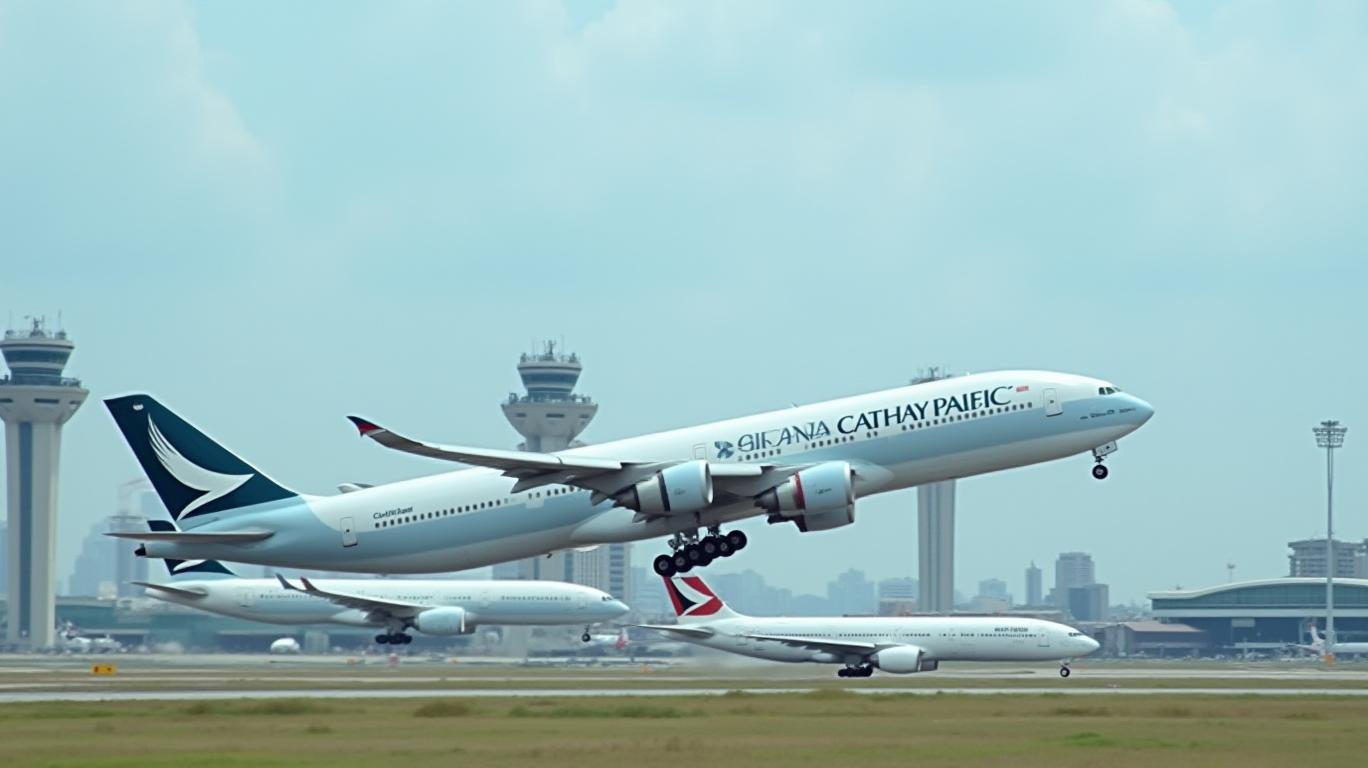
Cathay Pacific, the Hong Kong-based airline, has reported a modest 1% increase in annual profit, driven primarily by a significant surge in passenger volumes. This growth, while modest, is a testament to the airline's strategic initiatives and its resilience in the post-pandemic aviation landscape. Let's delve into the factors contributing to this performance and what it means for investors.
Strategic Network Expansion
One of the key drivers behind Cathay Pacific's increased passenger volumes is its strategic network expansion. The airline has been proactive in launching new routes and seasonal services, which have attracted a diverse range of customers. For instance, the non-stop service between Hong Kong and Riyadh has been well-received, drawing passengers from multiple markets, including Hong Kong, Chinese Mainland, Saudi Arabia, and Indonesia. This strategic route expansion has not only increased passenger traffic but also enhanced the airline's market connectivity, making it a more attractive option for both leisure and business travelers.
Premium Cabin Focus
Cathay Pacific has also placed a strong emphasis on premium cabin passengers. Premium cabin passenger numbers reached their highest level since the pandemic, driven by exhibitions, conventions, and the Canton Fair. This focus on premium travel has helped in increasing revenue passenger kilometres (RPKs) by 19.1% year-on-year, despite a slight decrease in the passenger load factor by 1.6 percentage points to 83.1%. This strategy is particularly effective in boosting revenue and profitability, as premium passengers tend to spend more on ancillary services and in-flight amenities.
Capitalizing on Peak Travel Periods
The airline has been proactive in capitalizing on peak travel periods. For example, October’s robust performance was driven by strong leisure and business travel demand, with notable traffic during the National Day ‘Golden Week’ and Chung Yeung Festival. This strategic timing has allowed the airline to maximize passenger volumes during high-demand periods, contributing to its overall financial performance.
Cargo Operations Growth
Cathay Pacific's cargo operations have also seen significant growth, with the airline transporting 142,323 tonnes of cargo in October 2024, a 14.3% increase from the previous year. The cargo load factor improved by 0.8 percentage points to 61.5%, with available cargo tonne kilometres (AFTKs) increasing by 8.4% year-on-year. This growth in cargo operations is driven by the airline's strong position in the global air freight market, particularly in the Asia-Pacific region, and its ability to adapt to changing market demands.
Future Outlook
Cathay Pacific anticipates a strong Christmas travel period, with Japan expected to be a top outbound destination. The airline also expects significant inbound travel from North America, the United Kingdom, and Europe, reflecting the continued recovery of international travel patterns. These projections indicate that the airline's network expansion is likely to continue driving financial performance and market position in the coming months.
Risk Mitigation
While Cathay Pacific's performance is encouraging, investors should be aware of potential risks. The airline's modest 1% profit increase suggests that while passenger volumes are rising, the airline is still facing challenges in converting this growth into significant profitability. Additionally, the airline's reliance on premium cabin passengers and peak travel periods could make it vulnerable to economic downturns or changes in travel patterns.
Conclusion
Cathay Pacific's 1% annual profit increase, driven by higher passenger volumes, is a positive sign of the airline's recovery and expansion in the post-pandemic aviation landscape. The airline's strategic network expansion, focus on premium cabin passengers, and capitalization on peak travel periods have all contributed to this growth. However, investors should remain cautious and monitor the airline's performance closely, as the aviation industry continues to navigate the challenges of the post-pandemic era.



Divulgación editorial y transparencia de la IA: Ainvest News utiliza tecnología avanzada de Modelos de Lenguaje Largo (LLM) para sintetizar y analizar datos de mercado en tiempo real. Para garantizar los más altos estándares de integridad, cada artículo se somete a un riguroso proceso de verificación con participación humana.
Mientras la IA asiste en el procesamiento de datos y la redacción inicial, un miembro editorial profesional de Ainvest revisa, verifica y aprueba de forma independiente todo el contenido para garantizar su precisión y cumplimiento con los estándares editoriales de Ainvest Fintech Inc. Esta supervisión humana está diseñada para mitigar las alucinaciones de la IA y garantizar el contexto financiero.
Advertencia sobre inversiones: Este contenido se proporciona únicamente con fines informativos y no constituye asesoramiento profesional de inversión, legal o financiero. Los mercados conllevan riesgos inherentes. Se recomienda a los usuarios que realicen una investigación independiente o consulten a un asesor financiero certificado antes de tomar cualquier decisión. Ainvest Fintech Inc. se exime de toda responsabilidad por las acciones tomadas con base en esta información. ¿Encontró un error? Reportar un problema


SOBRE NOSOTROS
Nuestra historiaAutores de noticiasBase de conocimientosPolítica de privacidadTérmino de usoDescargo de responsabilidad de corretaje de tercerosTérminos de uso de AIMEDivulgaciones de riesgos de AInvest AICarrerasCONTÁCTENOS
Email: support@ainvest.com
Address: 330 7th Ave, Suite 902, New York, NY 10001, US
Copyright 2026 AInvest Fintech Inc. All rights reserved.


Comentarios
Aún no hay comentarios