
Cash Dominance in American Portfolios: The Stealth Erosion of Wealth and How to Combat It
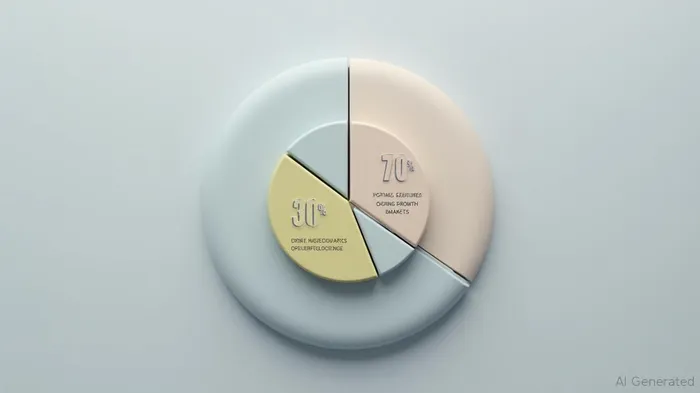
The average American portfolio is drowning in cash. According to Empower's analysis of retirement and investment accounts, nearly 30% of assets sit in cash or money market funds like VMFXX or SPAXX, far exceeding the liquidity needs of most investors. While these low-risk assets offer stability, their dominance masks a silent threat: the steady erosion of purchasing power due to inflation and the costly opportunity cost of missing out on growth. This article unpacks why over-reliance on cash is a long-term wealth killer—and how to reallocate strategically for sustainable gains.
The Cash Conundrum: Why 30% Is Too Much
The 30% cash allocation cited in Empower's data reflects a blend of inertia and fear. Many investors hold excess cash as a “buffer” against market volatility or to cover short-term expenses. Yet, with inflation averaging 2.3–2.4% annually in 2025 (per the latest CPI data), cash holdings yielding near-zero interest rates are losing ground. For example, a $100,000 cash stash at a 0.5% yield would lose $1,900 in real value over five years if inflation stays at 2.3%.
Meanwhile, the opportunity cost of sitting on cash is staggering. Over the past decade, the Vanguard Total Stock Market Index Fund (VTSAX) has averaged ~9% annualized returns, while the S&P 500 ETF (VOO) has returned ~10%. Even during market downturns, these assets have historically rebounded faster than cash.
The Risks of Cash Overload
- Inflation's Silent Theft: As shown in the , prices have risen by over 20% since 2020. Cash-heavy portfolios cannot keep pace.
- Opportunity Cost: The gap between cash yields (0.5%) and equity returns (7–10%) creates a “wealth divide.” Over 30 years, $100,000 in VTSAX would grow to $1.3 million, while cash would yield just $114,000 (assuming 2% inflation).
- Psychological Lock-In: Excess cash can breed complacency. Investors may avoid risk altogether, missing out on compounding gains.
The Case for Rebalancing: Growth Without Abandoning Liquidity
The solution isn't to eliminate cash entirely but to strategically reduce its dominance while maintaining emergency liquidity. Here's how:
Step 1: Assess Liquidity Needs
- Emergency Fund: Keep 3–6 months of expenses in cash or a high-yield savings account.
- Long-Term Assets: Shift excess cash (beyond the emergency fund) into growth-oriented investments.
Step 2: Reallocate to Tax-Efficient Growth Vehicles
- Index Funds/ETFs: Consider VTSAX or VOO for broad market exposure.
- Target-Date Funds: For hands-off investors, a fund like the Fidelity Freedom Fund (FFFXX) automatically rebalances risk as you age.
- Sector-Specific Plays: Allocate a sliver to high-growth sectors like tech or healthcare via ETFs like XLK (Technology) or XLV (Healthcare).
Step 3: Diversify with Inflation-Hedging Assets
- TIPS (Inflation-Protected Securities): Funds like VTIP protect against rising prices.
- Real Estate: REITs such as VNQ offer dividends and inflation-linked returns.
Step 4: Automate and Monitor
- Use dollar-cost averaging to reduce timing risk.
- Rebalance annually to ensure cash doesn't creep back above 10–15% of the portfolio.
Addressing the "But What If the Market Crashes?" Concern
Markets are unpredictable, but panic-driven decisions often amplify losses. Historical data shows that staying invested through downturns yields better long-term outcomes. For instance, an investor who missed the 10 best days in the S&P 500 over 20 years would see returns drop from ~9% to ~5% annualized (per ).
Conclusion: Cash as a Tool, Not a Destination
Holding cash is prudent for liquidity, but letting it dominate your portfolio is financial suicide. By reallocating excess cash to growth assets while maintaining a lean emergency fund, investors can combat inflation, reduce opportunity costs, and build lasting wealth. The 30% cash benchmark is a red flag—it's time to trade it for a 10–15% liquidity buffer and let growth engines like VTSAX or VOO do the heavy lifting.
The path to prosperity isn't in parking money safely—it's in deploying it wisely.







Comentarios
Aún no hay comentarios