
The Case for Precious Metals in a Weakening Dollar Era
The U.S. dollar, long the cornerstone of global finance, is losing its grip. In 2025, the U.S. Dollar Index (DXY) weakened significantly, driven by expectations of Federal Reserve rate cuts and shifting trade policies under the Trump administration. This decline has created a perfect storm for precious metals, as investors and central banks alike seek refuge from inflation, currency devaluation, and geopolitical instability. With gold and silver surging to record highs, the case for strategic portfolio reallocation into these assets has never been stronger.
Inflation, Debt, and the Dollar's Decline
Global inflation remained stubbornly elevated in 2025, with the U.S. Federal Reserve struggling to bring inflation down to its 2% target. Meanwhile, the U.S. national debt expanded, with the M2 money supply reaching $22 trillion-a 42% increase from 2020. The Congressional Budget Office (CBO) projects a 2026 federal deficit of $1.7 trillion, or 5.5% of GDP, as interest costs on the national debt consume 3.2% of GDP. These trends have fueled concerns about currency debasement, prompting central banks to diversify reserves away from the dollar.
Emerging markets, in particular, have accelerated their shift. Countries like Poland, Singapore, and Turkey now aim to hold 20–30% of their foreign exchange reserves in gold. This de-dollarization trend is not merely speculative-it is structural. As of October 2025, central banks purchased 53 metric tons of gold in a single month, the highest quarterly average since 1971. Goldman Sachs Research forecasts that this pace will continue, with central banks acquiring 70 tonnes of gold monthly in 2026-four times pre-2022 levels.
Gold and Silver: A Dual Tailwind 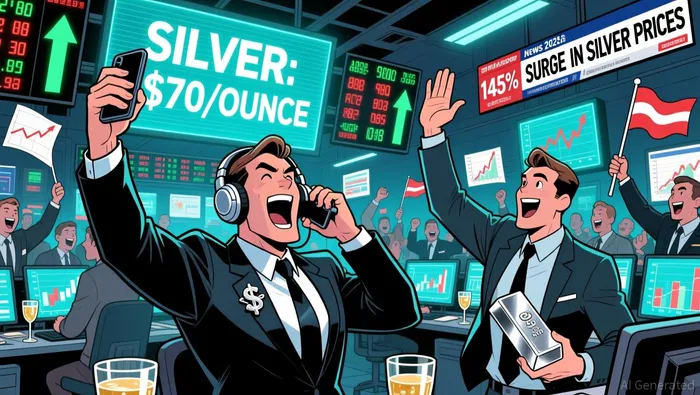
Gold's 2025 performance was nothing short of extraordinary. The metal closed the year above $4,400 per ounce, having risen by 68% and hitting 50 new all-time highs. This rally was driven by a confluence of factors: a weaker dollar, central bank demand, and ETF inflows. For 2026, structural forces-Fed easing, geopolitical tensions, and global debt concerns-suggest gold could test $5,000 per ounce.
Silver, meanwhile, outperformed gold in 2025, surging 145% to $70 per ounce. Industrial demand from solar panels and electric vehicles, coupled with China's export controls, tightened supply. The silver-to-oil price ratio now stands at 1.2, far above its historical average of 0.27. Analysts project further gains in 2026, as the Fed's rate-cutting bias and dollar weakness amplify demand.
Strategic Reallocation: Why Now?
Investors must act decisively. The structural bull cycle for precious metals is underpinned by three pillars:
1. Central Bank Demand: With 76% of central banks expecting to increase gold holdings over the next five years, physical demand remains robust.
2. Currency Debasement: The U.S. debt-to-GDP ratio is projected to rise in 2026, exacerbating concerns about the dollar's long-term purchasing power.
3. Safe-Haven Appetite: Geopolitical risks-from Middle East tensions to U.S.-China trade friction-have made gold and silver critical hedges. According to industry analysis, the demand for these assets is growing.
ETF inflows further reinforce this trend. Global gold ETFs added record assets in 2025, with momentum carrying into 2026. Silver ETFs, though smaller, have also seen a resurgence, reflecting growing retail and institutional confidence.
Conclusion
The weakening dollar era demands a rethinking of traditional asset allocations. Gold and silver are no longer speculative plays-they are essential components of a resilient portfolio. With central banks doubling down on gold, inflation persisting, and U.S. debt climbing, the case for precious metals is both compelling and urgent. As 2026 unfolds, investors who prioritize these assets will be best positioned to navigate the volatility ahead.







Comentarios
Aún no hay comentarios