
The Case for Locking in High CD Rates Before the Fed's Next Move: Strategic Timing and Inflation Protection in 2025
The Federal Reserve's ongoing rate-cutting cycle has created a rare window of opportunity for savers to secure high-yield certificates of deposit (CDs) before anticipated declines in both interest rates and purchasing power. With the Fed's federal funds rate now at 3.50%-3.75% as of Q4 2025 and inflation stubbornly hovering near 3.0%, locking in current CD rates offers a dual advantage: capital preservation against inflation and a hedge against the Fed's projected rate reductions in 2026. This article unpacks the strategic case for acting now, supported by granular data on monetary policy, inflation trends, and market dynamics.
The Fed's Rate-Cutting Path: A Clock Ticking for Savers
The Federal Reserve's December 2025 policy statement confirmed a third rate cut of the year, bringing the federal funds rate to 3.50%-3.75%. While the Fed signaled a cautious approach to further cuts, it left the door open for one additional reduction in December 2025, with median projections pointing to a terminal rate of 3.25%-3.50% by year-end 2026. This trajectory implies that savers who delay locking in rates risk missing out on today's relatively attractive CD yields.
For context, the national average for a 12-month CD has already fallen to 1.68% as of October 2025, down from 1.81% a year earlier according to data. However, high-yield CDs from online banks and credit unions still offer APYs as high as 4.10% according to forecasts. These rates are expected to drift lower over the next 6–12 months as banks adjust to the Fed's easing cycle. 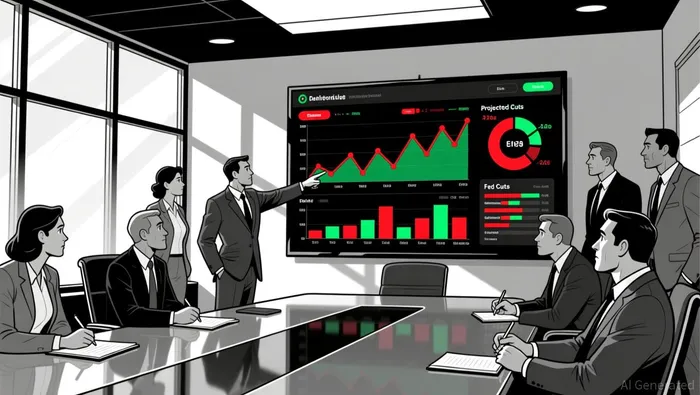 Savers who act now can secure yields that outpace the projected decline in market rates, effectively creating a "floor" for returns in a low-interest-rate environment.
Inflation: The Silent Erosion of Savings
While the Fed's rate cuts may seem like a boon for borrowers, they pose a significant risk to savers. The latest U.S. inflation data for the 12 months ending September 2025 stood at 3.0%, up from 2.9% in the prior period. This figure, combined with the cancellation of October's inflation report due to a government shutdown, underscores the uncertainty surrounding near-term inflation trends.
Looking ahead, projections are mixed but generally bearish for savers. The New York Fed's DSGE model forecasts core PCE inflation at 1.9% for 2026, while the Fed's own December 2025 statement projects core inflation easing to 2.5%. However, Deutsche Bank Research warns of a more inflationary outlook, predicting CPI inflation to rise to 3.9% in 2026 due to persistent cost-push shocks like tariffs.
Strategic Timing: CD Laddering and Inflation Hedging
The optimal strategy for savers is to lock in current high CD rates while maintaining liquidity through a staggered maturity schedule-a technique known as CD laddering. By distributing investments across CDs with varying terms (e.g., 6-month, 12-month, and 18-month maturities), savers can reinvest maturing funds at higher rates as the Fed's rate-cutting cycle progresses. This approach balances the need for immediate returns with flexibility to capitalize on future opportunities.
Online banks and credit unions remain the best sources for competitive rates, with top-tier 12-month CDs offering 4.00%-4.10% APYs according to current data. These institutions, unburdened by the overhead costs of traditional banks, can pass on higher yields to customers. Savers should prioritize institutions with strong FDIC or NCUA insurance to mitigate counterparty risk.
Conclusion: A Window of Opportunity
The confluence of the Fed's rate-cutting cycle and inflationary pressures creates a compelling case for locking in high CD rates now. With the Fed's terminal rate projected to fall below current CD yields and inflation forecasts ranging from 1.9% to 3.9% in 2026, savers who act decisively can protect their capital from both monetary policy shifts and inflationary erosion. As the Fed's December 2025 policy meeting underscores, the clock is ticking-2025 may be the last chance to secure rates that outpace the coming era of lower returns.







Comentarios
Aún no hay comentarios