
The Case for Investing in Decentralized Stablecoin Innovation Amid Systemic Risks
The stablecoin sector, once dismissed as a simple on-ramp for crypto, has emerged as a critical battleground for the future of decentralized finance. While systemic risks like oracleADA-- design flaws, dollar dependency, and staking yield competition persist, 2025 has seen a wave of next-generation protocols redefining the space. These innovations not only address long-standing vulnerabilities but also position stablecoins as foundational infrastructure for a global, programmable financial system.
Structural Vulnerabilities: A Trilemma of Stability
Decentralized stablecoins face a trilemma: maintaining peg stability, resisting oracle manipulation, and competing with staking yields. According to a report by , stability in stablecoins is an "emergent and fragile state," dependent on sustained market confidence and liquidity. This fragility is compounded by three key challenges:
Oracle Design Flaws: Centralized or vulnerable oracles remain a critical risk. In 2025, $8.8 billion in losses were attributed to oracle manipulation attacks, exploiting flash loans and low-liquidity pools. Vitalik Buterin has emphasized that protocols must ensure the cost of capturing an oracle exceeds the protocol's token market cap-a dynamic that often leads to value extraction.
Dollar Dependency: Most stablecoins remain pegged to the U.S. dollar, a design choice that introduces macroeconomic risks. Buterin warns that dollar-pegged stablecoins may not survive long-term horizons due to potential hyperinflation or currency devaluation. A study from arXiv highlights that this dependency creates a "dual mandate" tension, where stability and yield generation often conflict.
Staking Yield Competition: Yield-based stablecoins face pressure to match returns from staking protocols. In 2025, staking yields on liquid staking tokens (LSTs) averaged 4–8% APY, forcing stablecoin protocols to innovate or risk user attrition.
Next-Gen Solutions: Hylo, EthenaENA--, and the New Paradigm
The most promising protocols in 2025 tackle these challenges with novel architectures.
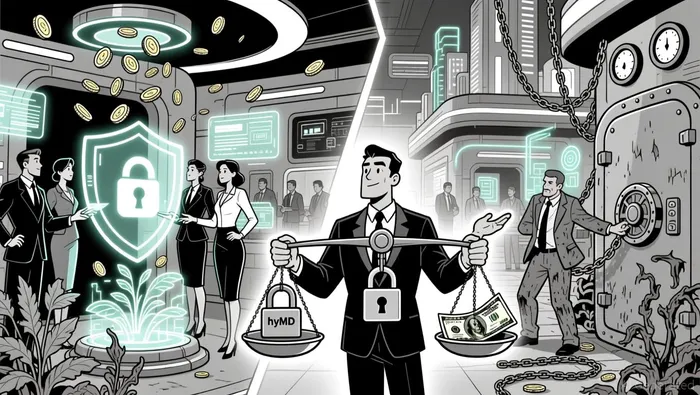
Hylo's Oracle-Neutral Design: Hylo's hyUSD stablecoin eliminates external oracles entirely by leveraging liquid staking tokens (LSTs) as collateral. Its dual-token system-hyUSD and xSOL-operates autonomously, using internal pricing mechanisms to avoid manipulation risks. This design not only mitigates oracle capture but also generates inherent yield from staking, addressing the yield competition directly.
Ethena's Hedging Strategy: Ethena's USDeUSDe-- stablecoin employs delta-neutral hedging and perpetual futures markets to maintain its peg. By opening equal and opposite short positions, USDe balances gains and losses while earning funding rate income. During the October 2025 crypto crash, USDe's backing ratio remained above 100%, and its sUSDe yield stayed competitive at 4.7–4.8% APY.
Regulatory and Market Validation: The sector's maturation is evident in adoption trends. Financial institutions now use stablecoins for cross-border payments and corporate treasuries, with 13% already adopting them and 54% planning to do so within 12 months. Regulatory clarity, such as the U.S. GENIUS Act, has further accelerated institutional adoption.
Investment Rationale: Resilience and Scalability
Investors should prioritize protocols that address the trilemma while demonstrating resilience during stress events.
- Market Stress Performance: During the November 2025 volatility, USDe's supply contracted by $2.26 billion but maintained a stable peg through emergency mechanisms like discount-purchase burns. Hylo's design, meanwhile, remains untested in extreme scenarios but offers a fundamentally different risk profile by removing oracle dependencies.
- Yield and Utility: Protocols like AaveAAVE-- and MorphoMORPHO-- Blue enable permissionless staking pools with isolated risk parameters, offering yields up to 10% APY. However, European MiCA regulations restrict direct yield on stablecoin holdings, creating a regulatory arbitrage opportunity for protocols operating in U.S. or Asian markets.
- Long-Term Viability: As Buterin notes, the future of stablecoins may lie in "indexes better than the U.S. dollar." Protocols integrating tokenized real-world assets (RWAs) or AI-driven risk models could redefine stability, offering pegs tied to diversified baskets of assets rather than fiat.
Conclusion: A New Monetary Layer
The stablecoin sector is at an inflection point. While systemic risks persist, next-gen protocols like Hylo and Ethena demonstrate that decentralized stability is achievable through innovation. For investors, the key is to back projects that solve the trilemma-resisting oracle capture, reducing dollar dependency, and generating sustainable yields. As stablecoins evolve from speculative tools to foundational infrastructure, early adopters stand to benefit from a financial system that is both programmable and resilient.







Comentarios
Aún no hay comentarios