
The Case for Income Stability in a Volatile Market
The Allure of High-Yield Short-Term Treasury ETFs
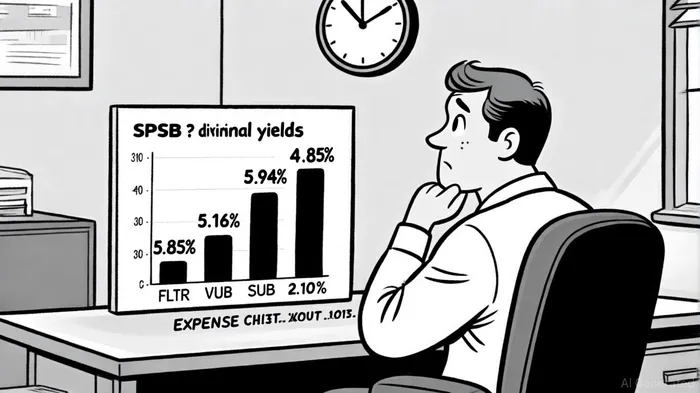
Short-term Treasury ETFs, such as the SPDR Portfolio Short Term Corporate Bond ETF (SPSB) and VanEck IG Floating Rate ETF (FLTR), offer yields exceeding 4.85% and 5.94%, respectively, with minimal credit risk, according to a Forbes Advisor roundup. These funds focus on investment-grade corporate bonds or floating-rate instruments, which adjust to prevailing interest rates, ensuring income resilience even in rising-rate environments. For instance, FLTR's 0.14% expense ratio and exposure to floating-rate loans make it an efficient vehicle for capital preservation and yield optimization, as noted by Forbes Advisor.
The current yield curve further amplifies the appeal of these ETFs. As of September 29, 2025, the 1 Month Treasury Bill yields 4.20%, while the 1 Year Note yields 3.67%, according to SOFRate's treasury rates. This inverted curve signals market expectations of economic slowdown, making short-term instruments less sensitive to rate hikes and more attractive for income-focused investors.
Risk Metrics: Balancing Yield and Stability
While yield is critical, risk-adjusted returns matter equally. The Sharpe ratio, a measure of excess return per unit of risk, highlights the efficiency of short-term Treasury ETFs. For example, the iShares Short Treasury Bond ETF (SHV) demonstrated a Sharpe ratio of 1.5 during the 2020–2025 period, outperforming portfolios with lower ratios like 0.8, according to SOFRate. This underscores the ability of these ETFs to deliver consistent returns with minimal volatility.
Maximum drawdowns also illustrate their resilience. SHV, for instance, experienced a peak-to-trough decline of just -0.30% during the 2020–2025 downturn, recovering in 30 months, according to Lazy Portfolio ETF. In contrast, riskier portfolios faced drawdowns exceeding 33.2%, per SOFRate. Such data reinforces the argument that short-term Treasury ETFs are better suited for preserving capital during market stress.
Tax Advantages and Diversification
For investors in higher tax brackets, the iShares Short-Term National Muni Bond ETF (SUB) offers a dual benefit: a 2.10% yield, according to Forbes Advisor, and tax-exempt income from municipal bonds. This makes it an ideal complement to taxable Treasury ETFs, enhancing after-tax returns without sacrificing liquidity.
Diversification across short-term Treasury ETFs further reduces risk. The Vanguard Ultra-Short Bond ETF (VUSB), with a 5.16% yield and an average duration of 0.91 years as reported by Forbes Advisor, balances yield with stability, while the Schwab Short-Term US Treasury ETF (SCHO) eliminates credit risk entirely by focusing solely on U.S. Treasuries, per SOFRate.
Strategic Implications for 2025 and Beyond
As stagflation fears persist, the demand for ultra-short-term Treasury ETFs like iShares 0-3 Month Treasury Bond ETF (SGOV) has surged, according to SOFRate. These funds allow investors to quickly reinvest in higher-yielding instruments as rates fluctuate, capitalizing on inflation while minimizing reinvestment risk. Morningstar notes that funds like Vanguard Short-Term Treasury ETF (VGSH) and SPDR Portfolio Short Term Treasury ETF (SPTS) have already delivered yields above 4.40% in 2024, reflecting the Federal Reserve's aggressive rate hikes, a trend also highlighted by Forbes Advisor.
Conclusion
High-yield short-term Treasury ETFs provide a rare combination of income stability, low risk, and tax efficiency in today's volatile markets. By leveraging these instruments, investors can secure predictable cash flows while navigating macroeconomic headwinds. As the yield curve remains inverted and inflationary pressures linger, the case for these ETFs grows stronger-offering a pragmatic path to financial resilience.





Comentarios
Aún no hay comentarios