
Carrier Incentives as a Catalyst for Apple's Post-iPhone 17 Demand: A Strategic Investment Outlook
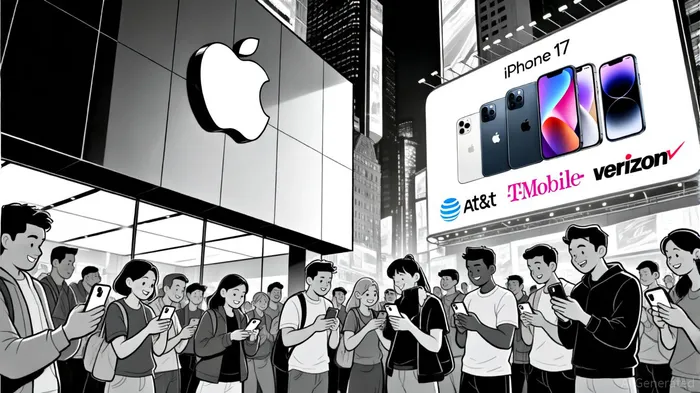
Apple's latest iPhone 17 lineup, launched in 2025, has ignited significant investor interest, particularly due to the aggressive carrier incentives driving consumer adoption. With major U.S. carriers offering up to $1,100 in bill credits, free devices with trade-ins, and bundled accessories like the AppleAAPL-- Watch SE 3, the post-launch demand potential for the iPhone 17 appears robust. This analysis explores how carrier-driven strategies are not only accelerating initial sales but also ensuring sustained consumer engagement, supported by historical precedents and market dynamics.
The 2025 Carrier Incentive Landscape: A Game Changer
Wireless carriers have historically been pivotal in Apple's sales strategy, accounting for 75% of U.S. iPhone sales through partnerships with AT&T, T-MobileTMUS--, and VerizonVZ--, according to an AppleInsider report. For the iPhone 17, these carriers have escalated their efforts. AT&T and T-Mobile now offer the iPhone 17 and 17 Pro for free with eligible trade-ins, while the iPhone Air is available for up to $830 off, as highlighted in a MacRumors guide. Verizon's promotions include $1,100 discounts on the iPhone 17 Pro Max and free Apple Watches when purchasing a new device on specific plans, per Verizon's announcement. These incentives are structured as 24- to 36-month bill credits, effectively making the devices "free" for qualifying customers.
Such aggressive pricing aligns with Apple's broader strategy to offset the iPhone 17 Pro's elevated starting price. By reducing upfront costs, carriers are incentivizing both existing iPhone users to upgrade and Android users to switch, a trend amplified by the inclusion of budget-friendly models like the iPhone Air, as noted in a LonelyBrand analysis.
Historical Precedent: Carrier Incentives and Sustained Demand
The effectiveness of carrier incentives in driving long-term demand is well-documented. From 2020 to 2025, carrier-driven financing plans and trade-in programs have consistently boosted post-launch retention for models like the iPhone 14 and 15. For instance, the iPhone 15 Pro Max accounted for 28.5% of all iPhone shipments in Q1 and Q2 2025, reflecting sustained demand for premium variants, according to SQMagazine statistics. This trend is partly attributed to Apple's ecosystem integration-users who adopt newer iPhones often remain locked into the Apple ecosystem due to seamless device interoperability and software updates, as shown in a Nature study.
Historical data also highlights the role of carrier promotions in retaining customers. While Apple's brand loyalty dips slightly when users switch carriers-from 92% to 79%-it still outperforms Android by a wide margin, according to another AppleInsider report. This suggests that carrier incentives not only attract new buyers but also reinforce loyalty through ongoing service commitments.
The 2025 Incentive Surge: A New Benchmark
The 2025 carrier incentives for the iPhone 17 represent a significant escalation compared to previous years. For example, the average promotional value for no-trade deals increased by 60% year-over-year in 2024, with previous-year iPhone deals offering up to $400 off, according to the Navi report. The iPhone 17's incentives, which include higher discounts and extended financing, are poised to further amplify this trend. Analysts predict that these offers could drive a 36% increase in shopping intent for the iPhone 17 compared to the iPhone 16 series, per a Yahoo Finance analysis.
Moreover, the inclusion of the iPhone Air-a budget model introduced in February 2025-has expanded Apple's reach in price-sensitive markets. By pairing this model with aggressive trade-in deals, carriers are making Apple's ecosystem more accessible without diluting brand prestige, as discussed in an AccountingInsights article.
Risks and Considerations
While carrier incentives are a powerful catalyst, they are not without risks. Apple's reliance on third-party distribution channels limits its control over marketing and customer experience. Additionally, the sustainability of these incentives depends on carrier profitability, which could be impacted by rising operational costs or regulatory changes. However, Apple's hybrid strategy-combining carrier partnerships with direct retail-has historically mitigated these risks by maintaining brand equity and customer trust, according to a NewswireJet piece.
Investment Implications
For investors, the iPhone 17's post-launch trajectory appears promising. The combination of aggressive carrier incentives, ecosystem loyalty, and Apple's product innovation creates a strong foundation for sustained demand. Historical data suggests that such incentives can drive both short-term sales spikes and long-term retention, particularly for premium models. Furthermore, Apple's trade-in and recycling programs-recovering over 13 million devices in 2025-underscore a growing consumer preference for sustainable upgrade cycles, aligning with broader market trends outlined in a MacRumors report.
Conclusion
The iPhone 17's success hinges on its ability to leverage carrier incentives as a dual-purpose tool: driving immediate sales while fostering long-term customer engagement. With carriers offering unprecedented discounts and bundled benefits, Apple is well-positioned to maintain its dominance in the smartphone market. For investors, this represents a compelling opportunity, provided the company continues to balance carrier-driven strategies with direct innovation and ecosystem expansion.





Comentarios
Aún no hay comentarios