
Carrefour's Strategic Franchise Expansion into Ethiopia: A Catalyst for Africa's Retail Growth
The global retail landscape is witnessing a transformative shift as multinational corporations increasingly pivot toward Africa's emerging markets. Carrefour's recent foray into Ethiopia through a franchise partnership with Queen's Supermarket PLC exemplifies this trend. This move is not merely a commercial venture but a strategic alignment with Ethiopia's broader economic reforms and the continent's evolving retail dynamics. By examining the interplay between Ethiopia's macroeconomic trajectory, Carrefour's franchise-driven value chain model, and the structural advantages of local partnerships, this analysis underscores the investment potential and risks inherent in this expansion.
Ethiopia's Macroeconomic Reforms: A Foundation for Retail Growth
Ethiopia's economy has demonstrated resilience amid significant challenges, growing by 7.1% in the 2022/23 fiscal year, driven by a 7.9% expansion in the services sector-a critical component of its retail ecosystem. Structural reforms, including fiscal consolidation and monetary tightening, have narrowed the fiscal deficit and reduced inflation from 34% in 2021/22 to 29.2% in 2022/23. These measures, coupled with IMF-supported debt restructuring programs, are projected to sustain growth at 6.7% in 2024–2025.
The African Development Bank (AfDB) has highlighted Ethiopia's proactive approach to economic liberalization, including the liberalization of raw coffee exports and the establishment of the Ethiopian Securities Exchange in 2025. These reforms are expected to attract foreign investment, enhance productivity, and create fiscal space for infrastructure and retail investments. For Carrefour, this environment offers a fertile ground for long-term value creation, as macroeconomic stability reduces operational uncertainties and supports consumer demand.
Carrefour's Franchise Strategy: Local Expertise Meets Global Standards
Carrefour's partnership with Midroc Investment Group-a local conglomerate with deep market knowledge-exemplifies a franchise model tailored to Ethiopia's unique context. By rebranding 13 existing Queen's Supermarket stores under the Carrefour name by mid-2026 and planning to open 17 additional stores by 2028, the company is leveraging Midroc's local networks while embedding its global retail standards. This approach mitigates entry barriers, such as regulatory complexities and cultural adaptation, which often hinder foreign direct investment in emerging markets.
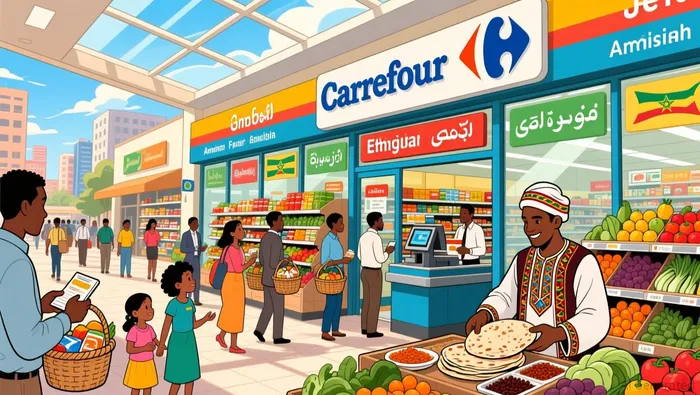
A key innovation in this strategy is the integration of Ethiopian agricultural products into Carrefour's global supply chain. Midroc's "farm-to-shelf" model aims to source coffee, tea, spices, and fresh fruits directly from local producers, enhancing Ethiopia's value-added export capabilities and food security. This not only strengthens Carrefour's supply chain resilience but also aligns with global consumer trends favoring ethically sourced and locally produced goods.
Franchise-Driven Value Chains: A Blueprint for African Retail Expansion
Carrefour's model mirrors broader trends in Africa's retail sector, where international brands increasingly collaborate with local partners to navigate market-specific challenges. For instance, similar strategies have been adopted by retailers like Shoprite and FrieslandCampina, which combine global operational efficiency with localized product offerings. This hybrid model reduces costs, accelerates market penetration, and fosters trust among consumers skeptical of foreign brands.
The Ethiopian case also highlights the role of franchising in democratizing access to capital and technology. By transferring Carrefour's retail expertise to Midroc, the partnership empowers local entrepreneurs while ensuring adherence to international quality benchmarks. This symbiosis is critical in markets where infrastructure gaps and regulatory fragmentation often deter standalone foreign investments.
Risks and Mitigants: Navigating a Complex Landscape
Despite the optimism, Ethiopia's retail expansion faces headwinds. Political instability, protracted debt negotiations, and a current account deficit pose risks to macroeconomic stability. Additionally, high inflation and supply chain disruptions could erode profit margins. However, Carrefour's phased expansion-prioritizing rebranding over rapid new store openings-allows for incremental risk management. The company's focus on local sourcing also insulates it from global supply chain volatility, a critical advantage in a post-pandemic world.
Conclusion: A Strategic Bet on Africa's Retail Future
Carrefour's Ethiopia venture is emblematic of a broader shift in global retail strategy, where success hinges on adaptability, local partnerships, and alignment with macroeconomic reforms. For investors, this expansion represents not just a bet on a single market but a glimpse into Africa's retail potential-a sector poised for growth as structural reforms and private sector innovation converge. While challenges persist, the franchise-driven model offers a scalable, resilient pathway to capitalize on Ethiopia's demographic and economic momentum.







Comentarios
Aún no hay comentarios