
Carrefour (CRRFY) – A Dividend Trap in Disguise: Why the 7.27% Yield is a Risk, Not a Reward
Carrefour (CRRFY), the French retail giant, boasts a dividend yield of 7.27%, making it an enticing target for income-focused investors. But beneath the surface lies a cautionary tale of unsustainable payouts, weak cash flow, and valuation risks that could turn this "high-yield gem" into a costly mistake. Let's dissect why Carrefour's dividend may be a trap, not a treasure, and why investors should think twice before chasing its income appeal.
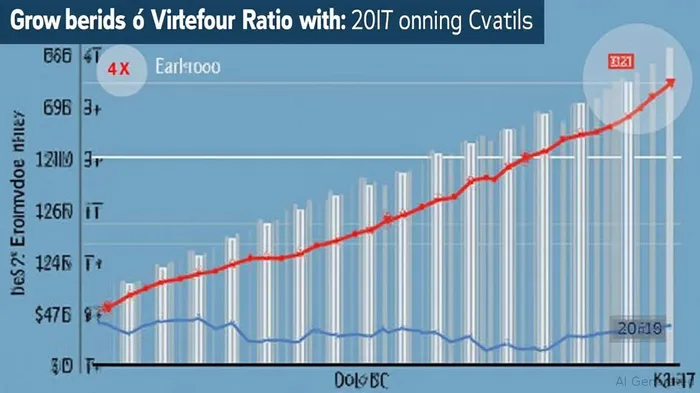
Red Flag #1: Payout Ratio at Risk of Collapse
Carrefour's dividend payout ratio has surged to a precarious 85% in 2025, up from 63% in 2024 (despite conflicting data points suggesting an 83% figure, likely a typo). While the company claims dividends are "well-covered by earnings," this assumes earnings won't falter.
- Earnings Volatility: Carrefour's diluted EPS for 2024 was €1.385, but its Q1 2025 results showed French sales declining by 1.7%, hinting at broader weakness. A payout ratio this high leaves no margin for error—any earnings dip could force a dividend cut.
- Historical Caution: Over the past decade, Carrefour's payout ratio has swung wildly between 22% and 67%. The current 85% is a 13-year high, yet its 3-year dividend growth rate has already slowed to 21.9%, down from 18.5% over five years.
Red Flag #2: Cash Flow Strains Under Rising Rates
Carrefour's Dividend & Capex Coverage Ratio of 1.77x sounds reassuring, but it's stretched thin. With €1.2 billion allocated to cost-cutting initiatives (to fund price wars), the company is prioritizing survival over shareholder returns.
- Debt Dynamics: While the equity ratio dipped to 21.76% in 2024, the true risk lies in its debt profile. Rising interest rates could squeeze margins further, especially if Carrefour's French sales slump continues.
- Weak Free Cash Flow: The company's free cash flow (not explicitly stated in data but implied by its cost-cutting focus) likely lags behind dividend payments. A dividend yield of 7.27% in a low-growth environment is a red flag—high yields often signal deteriorating fundamentals.
Red Flag #3: Valuation Risks – Undervalued or Overvalued?
Carrefour's Price-to-Book (P/B) ratio of 0.12 (vs. an industry average of 2.13 for grocery retailers) suggests it's a bargain. But this metric is misleading:
- Low P/B ≠ Safety: A P/B below 1 implies the stock trades below its book value. However, Carrefour's book value relies on assets that may not translate to liquid value (e.g., real estate in struggling markets).
- Industry Context: The grocery sector's average P/B of 2.13 reflects higher growth expectations. Carrefour's stagnant sales and declining French market share mean it doesn't merit even this low valuation.
The Bottom Line: A "Good Company, Bad Stock" Dividend Trap
Carrefour may still be a good company in terms of brand recognition and market reach, but as an investment, it's a trap.
- Dividend Cut Risk: The 85% payout ratio and slowing sales make a dividend reduction inevitable.
- Valuation Pitfalls: Even at a low P/B, the stock's undervaluation reflects investor skepticism about its ability to turnaround.
- Interest Rate Sensitivity: Rising borrowing costs will amplify pressure on its debt-laden balance sheet.
Investment Advice: Proceed with Extreme Caution
For income investors:
- Avoid Chasing Yield: A 7.27% dividend in a slowing retail sector is a warning, not an invitation.
- Focus on Cash Flow: Stick to companies with payout ratios below 60% and strong free cash flow.
For all investors:
- Wait for Earnings Clarity: The Q2 2025 results (due July 30) will reveal if cost-cutting is working.
- Consider Alternatives: Grocery peers like Kroger (KR) or Walmart (WMT) offer safer yields with stronger fundamentals.
Final Verdict: A Dividend Trap to Avoid
Carrefour's 7.27% yield is a siren song for income investors, but the risks—unsustainable payouts, weak cash flow, and valuation misalignment—outweigh the allure. In a rising-rate environment, this is a stock to avoid unless you're betting on a turnaround that may never materialize.
Stay vigilant, and remember: Not all dividends are created equal. Some are traps in disguise.







Comentarios
Aún no hay comentarios