
CarMax's Strategic Turnaround: Can Cost Cuts and Pricing Actions Restore Growth in a Tough Used Car Market?
In the face of a turbulent used car market and intensifying competition, CarMaxKMX-- has embarked on a strategic overhaul aimed at reigniting growth. The company's 2025 initiatives-centered on aggressive cost reductions, pricing adjustments, and digital enhancements-highlight a critical test of its ability to adapt amid shifting consumer demand and industry headwinds. For value investors, the question remains: Can these measures stabilize CarMax's fortunes and unlock long-term value?
A Market in Turmoil
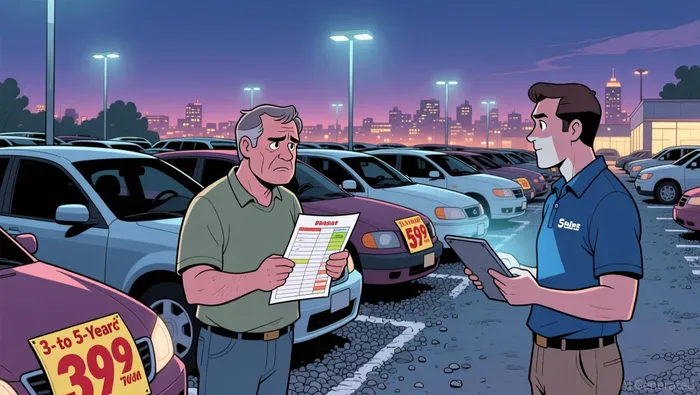
The used car market in 2025 continues to grapple with structural imbalances. Supply shortages of 3- to 5-year-old vehicles-a demographic highly sought after for affordability-have kept prices elevated despite broader economic pressures. Meanwhile, CarMax faces a dual challenge: declining sales volumes and margin compression. In Q3 2025, the company reported an 8% year-over-year drop in used unit sales, with revenue of $5.79 billion falling short of historical benchmarks. These trends underscore a bifurcated market where affordability constraints clash with persistent inventory gaps.
Strategic Shifts: Cost Cuts and Pricing Revisions
CarMax's response has been twofold. First, it announced a $150 million savings initiative targeting SG&A expenses, including a 30% reduction in its Customer Experience Center workforce. Second, the company deliberately lowered retail unit margins to enhance price competitiveness, a move designed to boost volume at the expense of short-term profitability. According to the earnings call, while these actions led to a Q3 2025 EPS of $0.43-surpassing analyst forecasts by 16.22%-they also reflected a stark acknowledgment of the company's weakened position.
The pricing strategy, however, is a double-edged sword. By prioritizing volume over margin, CarMax risks eroding profit pools in a market where depreciation rates for used vehicles remain sharp. Yet, the shift toward sourcing older, higher-mileage vehicles-now accounting for over 40% of retail sales-suggests a calculated effort to align inventory with buyer budgets. This pivot could prove pivotal if the company can balance cost efficiency with customer satisfaction.
Digital and Operational Overhauls
Beyond cost-cutting, CarMax has emphasized digital improvements to streamline the customer experience. Leadership has pledged to simplify its online platform to make it more "conversion-oriented" to compete with digital-first rivals like Carvana. Regional reconditioning centers are also being deployed to reduce per-unit costs and improve process efficiency according to analysts. These operational upgrades, if executed effectively, could enhance CarMax's agility in a market increasingly defined by convenience and transparency.
Valuation Metrics and Analyst Outlooks
From a value investing perspective, CarMax's current valuation appears compelling. The stock trades at a P/E ratio of 12.1 and a PEG ratio of 0.41, suggesting potential undervaluation relative to earnings growth expectations. According to analyst ratings, however, analysts remain cautious. Benchmark maintains a "Hold" rating, citing poor near-term earnings visibility, while TIKR's Guided Valuation Model projects a modest upside to $53/share by early 2028, contingent on improved operating efficiency and stabilized demand.
The key risk lies in CarMax's ability to execute its restructuring. While the $150 million SG&A savings target by 2027 is ambitious, the company's recent EPS decline-from $0.81 to $0.43 year-over-year-highlights the fragility of its financial model. Investors must weigh the potential for margin recovery against the likelihood of prolonged market turbulence.
Conclusion: A Calculated Bet
CarMax's strategic turnaround represents a high-stakes gamble. The cost-cutting measures and pricing adjustments aim to reposition the company as a price leader in a fragmented market, but their success hinges on CarMax's ability to navigate inventory challenges and maintain operational discipline. For value investors, the stock's attractive valuation metrics and projected upside offer a tantalizing opportunity-but one that demands patience and a tolerance for near-term volatility.
As the automotive retail landscape evolves, CarMax's ability to harmonize cost efficiency with customer-centric innovation will determine whether its strategic pivot becomes a catalyst for growth or a cautionary tale.







Comentarios
Aún no hay comentarios