
CarMax, Inc. and the Risks of Misleading Growth Projections: A Cautionary Tale for Investors
The Allegations and Their Immediate Impact
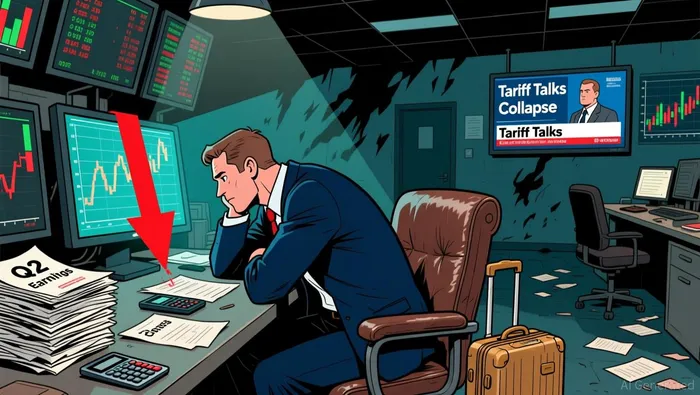
The lawsuit, filed by Kirby McInerney LLP, alleges that CarMax recklessly overstated its growth prospects between June and September 2025, capitalizing on customer speculation about U.S. tariffs to accelerate sales, according to a Morningstar report. This "pull forward" of demand, the suit claims, masked underlying weaknesses in the company's business model. When the temporary boost faded, CarMax's financial results faltered, culminating in a 24% drop in net earnings per diluted share and a $142 million loan loss provision in its Auto Finance segment, as noted in a Marex Group report. The stock's subsequent freefall-compounded by the abrupt departure of CEO Bill Nash and a weak Q3 outlook-illustrates how securities litigation can amplify market volatility, according to a Morningstar report.
According to a Morningstar report, the litigation has triggered a "loss of investor confidence," with CarMax's stock down over 15% in the wake of leadership instability. This aligns with academic findings that securities litigation correlates with heightened stock price crash risk, particularly when companies fail to maintain transparent disclosure practices, according to a ScienceDirect study.
Investor Trust and the Long-Term Cost of Litigation
Securities litigation does more than punish executives; it erodes the social contract between companies and their shareholders. A study of Chinese listed companies (2008–2022) found that litigation events significantly increase stock price crash risk, with transparency acting as a mitigating factor, according to a ScienceDirect study. CarMax's case exemplifies this dynamic. By allegedly overstating demand and downplaying risks in its loan portfolio, the company appears to have violated the "information disclosure quality" standards that sustain investor trust, according to a ScienceDirect study.
The auto retail sector's history offers further caution. Wells Fargo's $1 billion settlement over unethical auto insurance practices not only damaged its reputation but also led to prolonged stock underperformance, as detailed in a NERA report. Similarly, Kraft Heinz's $450 million settlement for misleading cost-saving claims coincided with a $15.4 billion impairment write-down and a years-long struggle to regain market credibility, as detailed in a NERA report. These precedents suggest that securities litigation can have enduring consequences, even for firms with strong balance sheets.
Broader Implications for the Auto Retail Sector
CarMax's troubles reflect a sector-wide vulnerability. The auto retail industry, already grappling with shifting consumer preferences and regulatory scrutiny, now faces heightened litigation risks as investors demand clearer differentiation between cyclical gains and structural growth. For example, Advance Auto Parts' CFO recently purchased shares despite a 53% stock decline, signaling cautious optimism, according to a NERA report. Yet this contrasts with the sector's exposure to litigation, as seen in Avantor, Inc.'s and Marex Group's pending securities fraud cases, as noted in a NERA report.
The rise of AI-related litigation also looms large. With nine AI-themed securities cases filed in 2025 alone, companies that overstate technological capabilities-whether in retail analytics or inventory management-risk facing similar scrutiny, according to a NERA report. For CarMax, this means its reliance on data-driven sales strategies could become a double-edged sword if investors perceive its AI tools as hype rather than substance.
Conclusion: A Test of Resilience
CarMax's current predicament serves as a case study in the fragility of investor trust. While the company's long-term prospects may hinge on its ability to adapt to tariff-driven market shifts, the litigation highlights a critical lesson: markets punish overpromising, especially when fundamentals fail to justify lofty projections. For investors, the takeaway is clear: scrutinize growth narratives not just for their optimism, but for their durability. In an era of aggressive litigation and AI-driven scrutiny, transparency is no longer optional-it is a competitive necessity.





Comentarios
Aún no hay comentarios