
Cargo Safety and Port Resilience in Global Supply Chains
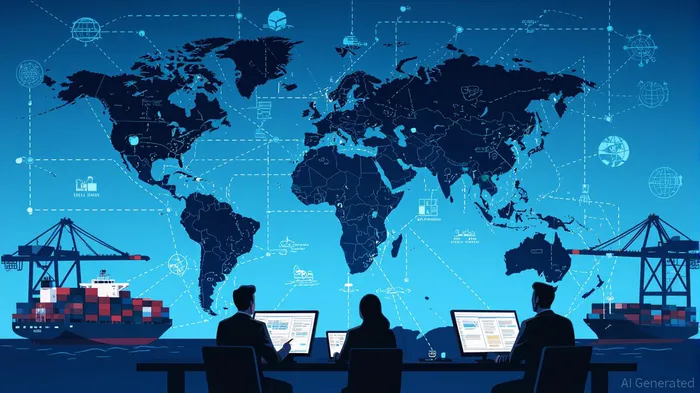
The global supply chain landscape has entered a new era of volatility, driven by geopolitical tensions, operational inefficiencies, and technological disruptions. For investors in port infrastructure and container shipping operations, the interplay of these factors creates a complex risk matrix. This analysis examines the evolving challenges and opportunities in cargo safety and port resilience, drawing on recent data and case studies to outline strategic considerations for stakeholders.
Geopolitical and Economic Risks: A Shifting Trade Landscape
The past five years have seen a dramatic reversal of globalization's trajectory, as rising maritime transport costs and supply chain disruptions have incentivized regionalization and short-shoring strategies[1]. Geopolitical conflicts, such as the Russia-Ukraine war and the Red Sea crisis, have exacerbated this trend. For instance, the Red Sea crisis forced vessels to reroute around the Cape of Good Hope, increasing transit times and operational costs[2]. By late 2025, freight rates on Asia-Europe lanes had dropped 7% to $2,841/FEU, reflecting a shift in demand toward alternative hubs like Southern Europe and the Asia-Pacific[2].
These disruptions highlight the vulnerability of economies reliant on single-source imports or exports. Regions with underdeveloped infrastructure face heightened risks, as they lack the flexibility to adapt to rerouted trade flows or sudden capacity constraints[1]. For investors, this underscores the importance of diversifying port portfolios and prioritizing locations with robust connectivity and geopolitical stability.
Operational Inefficiencies: The Cost of Underinvestment
Port efficiency remains a critical determinant of economic competitiveness. A 2023 study of APEC-region ports revealed an average technical efficiency score of 52%, with GDP per capita and skilled labor availability identified as key drivers[4]. Inefficient ports create bottlenecks that ripple through supply chains, increasing costs and reducing their attractiveness to shipping companies. For example, congestion at underperforming ports can delay cargo delivery by weeks, directly impacting consumer prices and business margins[4].
Investors must weigh the long-term returns of infrastructure upgrades against short-term capital outlays. Modernizing port operations—through automation, improved logistics networks, and workforce training—can enhance efficiency and reduce exposure to disruptions. However, such investments require careful alignment with regional economic growth trajectories to avoid overcapacity risks.
Technological Innovations: Opportunities and Barriers
Emerging technologies like AI and digital twins are reshaping maritime logistics. By 2028, AI is projected to influence nearly 25% of logistics KPIs, particularly in contract risk analysis and operational optimization[2]. Digital twin technology, which simulates real-world systems, allows ports to test strategic changes in response to supply chain risks[2]. These tools could reduce errors by up to 45% and improve delivery timelines[2].
Yet, adoption is not without hurdles. High capital costs, integration complexities, and labor shortages hinder the transition to smart port systems[3]. For instance, while smart ports promise fully automated operations and green infrastructure, their implementation requires coordinated efforts among policymakers, technology providers, and port operators[3]. Investors must assess whether stakeholders have the capacity to overcome these barriers or risk stranded assets.
Market Volatility: Navigating Freight Rate Fluctuations
Freight rates have exhibited extreme volatility since 2020. The Shanghai Containerized Freight Index (SCFI) more than doubled in 2024 due to route disruptions but fell 60-70% by mid-2025 as expanded fleet capacity offset longer transit times[1]. This volatility reflects the dual pressures of structural capacity changes and geopolitical crises. For example, transpacific freight rates declined despite ongoing Red Sea reroutings, indicating that market forces—not just crises—drive long-term trends[1].
Investors must build anti-fragile portfolios by hedging against rate fluctuations and prioritizing assets with adaptive capabilities. Ports with modular infrastructure and digital monitoring systems are better positioned to absorb shocks, offering a buffer against unpredictable market swings.
Strategic Recommendations for Investors
- Diversify Geographically: Prioritize ports in regions with stable geopolitical environments and diversified trade corridors.
- Invest in Smart Infrastructure: Allocate capital to AI-driven logistics systems and green port technologies to future-proof operations.
- Strengthen Resilience: Support workforce training programs and data-driven risk management frameworks to mitigate cyber and operational vulnerabilities[2].
- Monitor Capacity Trends: Track fleet growth and route shifts to anticipate market corrections and avoid overexposure to volatile assets.
Conclusion
The intersection of cargo safety and port resilience presents both challenges and opportunities for investors. While geopolitical tensions and operational inefficiencies heighten risks, technological advancements and strategic infrastructure upgrades offer pathways to long-term value creation. By adopting agile, data-informed strategies, stakeholders can navigate the uncertainties of the modern supply chain and position themselves for sustainable growth.







Comentarios
Aún no hay comentarios