
CareTrust REIT's Strategic Expansion in the UK Senior Housing Market: Assessing Long-Term Value and Resilience in Aging Societies
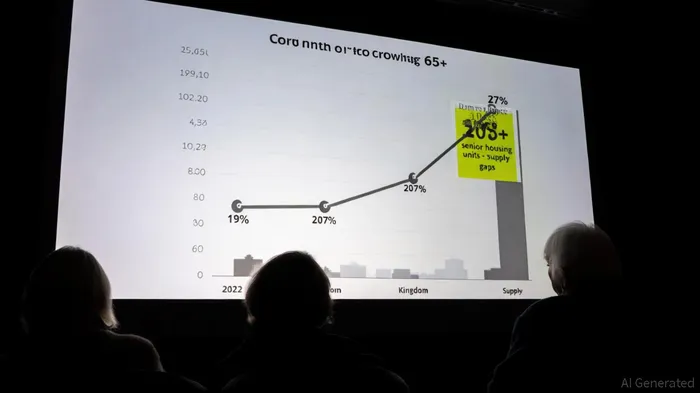
The UK's aging population is reshaping the real estate landscape, creating both challenges and opportunities for investors. By 2041, the 65+ demographic will account for 26% of the population, growing at 2% annually[1]. This demographic shift demands an additional 18,000 senior housing units yearly, yet supply remains insufficient, with estimates suggesting a 50,000-unit shortfall annually[1]. Against this backdrop, CareTrustCTRE-- REIT's 2025 acquisition of Care REIT plc—a UK-based healthcare REIT—marks a bold strategic move into a market poised for long-term growth.
A Market in Structural Imbalance
The UK's senior housing sector is defined by a persistent supply-demand imbalance. In 2023, 9,140 new senior housing units were constructed, a 19% increase from 2022, but still far below the required 50,000 units annually[1]. Regional disparities exacerbate the issue: North Norfolk, with a median age of 56, contrasts sharply with Manchester's 31, underscoring localized demand pressures[1]. Meanwhile, the number of older adults living alone has surged, with 4.2 million in England alone in 2023—a 66% rise for older men over two decades[1]. These trends create a fertile ground for investment, particularly in adaptable housing solutions and integrated care facilities.
CareTrust's Strategic Entry: A Triple-Net Play
CareTrust REIT's $840.5 million acquisition of Care REIT plc—a portfolio of 132 care homes with 7,500 beds—represents its first international foray and a calculated bet on structural demand[2]. The transaction, structured as a triple-net lease, locks in long-term, inflation-adjusted rental revenue with a weighted average lease term of 20.2 years[2]. This model insulates the company from operational risks, as operators bear responsibility for maintenance, insurance, and taxes.
The acquisition's financial metrics are equally compelling. With a conservative net debt-to-EBITDA ratio of 2.0x and $1.1 billion in liquidity[3], CareTrust has positioned itself to fund further expansion while maintaining fiscal discipline. The deal is projected to be 9.4% accretive to normalized funds from operations (FFO) per share and 5.7% accretive to normalized FAD per share[2]. These figures underscore the transaction's alignment with CareTrust's growth objectives, particularly as the UK's aging population is expected to drive demand for care services for decades.
Resilience Through Diversification
CareTrust's UK expansion is not merely a geographic diversification play but a strategic hedge against U.S. healthcare policy risks and regional economic volatility. By diversifying across payor sources (including NHS contracts) and operators, the company mitigates exposure to single-market disruptions[2]. The UK's fragmented senior housing market—characterized by limited capital availability and muted new inventory—further enhances the appeal of CareTrust's model[4].
The company's post-acquisition performance reinforces this resilience. In Q2 2025, CareTrust reported a 99.7% rent collection rate and raised full-year earnings guidance, citing a $600 million investment pipeline[5]. Historical backtesting of CareTrust's earnings events from 2022 to 2025 reveals an average cumulative excess return of +0.70 percentage points over 30 days, with a win rate improving to 68% by day 30[5]. While not statistically significant, these results suggest a potential positive trend that aligns with the company's strong operational performance and market positioning.
Long-Term Viability: Lessons from Global Aging Trends
CareTrust's UK strategy aligns with these macroeconomic trends. By leveraging its U.S. operational expertise and financial strength, the company is well-positioned to capitalize on the UK's fragmented market. For example, the acquisition of two additional care homes for $27 million in 2025—adding 265 beds under triple-net leases—demonstrates a disciplined approach to scaling its footprint[8]. Such incremental expansions, paired with inflation-linked rent escalators, create a durable cash flow stream.
Risks and Considerations
While the long-term outlook is positive, investors must remain cognizant of risks. Elevated general and administrative expenses from recent share offerings and integration costs could pressure margins[3]. Additionally, the UK's regulatory environment for healthcare real estate—particularly NHS contracts—requires careful navigation. However, CareTrust's conservative leverage and strong EBITDARM coverage ratio (2.2x post-acquisition)[2] provide a buffer against these headwinds.
Conclusion: A Model for Aging Societies
CareTrust REIT's UK expansion exemplifies how strategic real estate investments can address the dual challenges of aging populations and housing shortages. By securing long-term, inflation-adjusted cash flows in a structurally undersupplied market, the company is positioning itself to thrive in an era of demographic change. For investors, the acquisition underscores the importance of aligning capital with secular trends—particularly in sectors where demand is inelastic and supply constraints are inescapable.
As the UK's 65+ population nears 22 million by 2072[1], the need for innovative, scalable housing solutions will only intensify. CareTrust's triple-net model, combined with its disciplined capital structure, offers a blueprint for resilience in aging societies—a reminder that the most enduring investments are those that anticipate the future rather than merely react to it.





Comentarios
Aún no hay comentarios