
Cardinal Health's Q2 FY26 Earnings Outlook and Strategic Momentum: Assessing Growth Drivers and Supply Chain Resilience in a Post-Pandemic Era
The healthcare supply chain remains a critical battleground for corporate resilience in the post-pandemic era. For Cardinal HealthCAH--, a leader in pharmaceutical distribution and specialty services, the interplay between strategic acquisitions, operational modernization, and demand dynamics is shaping its trajectory. With Q1 FY2026 results underscoring robust performance and a raised full-year outlook, investors are turning their attention to Q2 FY26 and beyond. This analysis evaluates Cardinal Health's growth drivers and operational resilience, drawing on recent financial disclosures and infrastructure investments to assess its positioning in a sector still grappling with volatility.
Q1 FY26 Performance: A Foundation for Optimism
Cardinal Health's Q1 FY2026 results provided a strong baseline for optimism. The company reported earnings per share (EPS) of $2.55, a 36% year-over-year increase, and raised its full-year EPS guidance to $9.65–$9.85, signaling 17–20% growth. Revenue surged 22% to $64 billion, driven by all five operating segments, with operating earnings rising 37%. These figures reflect not only macroeconomic tailwinds but also the company's disciplined execution in scaling its core businesses.
The Pharmaceutical and Specialty Solutions segment, in particular, emerged as a standout performer. This segment's growth is underpinned by Cardinal Health's ability to navigate complex supply-demand imbalances, a skill honed during the pandemic. As CEO Jason Hollar emphasized in the Q1 earnings call, the company's "resilient business model" is now a competitive advantage.
Strategic Acquisitions: Fueling Long-Term Growth
Cardinal Health's strategic acquisitions are central to its growth narrative. The pending acquisition of Solaris Health, the largest urology management services organization (MSO), is a case in point. Expected to close shortly, this deal aligns with the company's focus on expanding its specialty services portfolio. Similarly, the acquisition of a majority stake in GI Alliance, the largest gastroenterology MSO in the U.S., reinforces Cardinal Health's multi-specialty strategy.
These moves are not merely about scale but about capturing value in high-growth niches. The integration of these MSOs into Cardinal Health's network enhances its ability to deliver tailored solutions, a critical differentiator in an industry where patient-centric care is increasingly prioritized. As CFO Aaron Alt noted, such acquisitions are "accelerating growth in specialty services" while strengthening margins.
Supply Chain Resilience: A Post-Pandemic Imperative
Operational resilience has become a non-negotiable in healthcare logistics. Cardinal Health's recent recognition with a Diamond rating-the highest accolade from the Healthcare Industry Resilience Collaborative (HIRC)-underscores its leadership in this domain. This achievement followed a rigorous third-party assessment of eight management domains, including inventory management, logistics, and risk mitigation.
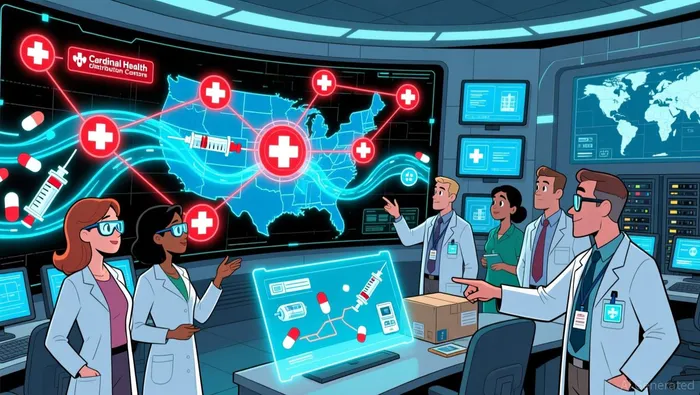
The company's infrastructure investments further solidify this resilience. A flagship pharmaceutical distribution center in Indianapolis, slated for completion by fall 2027, will integrate advanced robotics and automation to boost efficiency. Meanwhile, a new consumer-health logistics center in Groveport, Ohio has already expanded network capacity by 20%, reflecting Cardinal Health's proactive approach to capacity planning. These projects are part of a broader modernization effort that includes upgrades to regional distribution centers, enhancing capabilities for specialty-drug storage and last-mile delivery.
Q2 FY26 Outlook: Sustaining Momentum
While Q2 FY26 results have yet to be reported, the company's Q1 performance and strategic initiatives suggest a continuation of strong momentum. The at-Home Solutions division, bolstered by the integration of Adaptive Delivery Systems, is poised to benefit from the shift toward home healthcare. New distribution centers in Fort Worth, Texas, and planned facilities in Sacramento, California, are expected to further support this growth.
Financially, Cardinal Health's raised full-year guidance implies confidence in maintaining its current trajectory. With the Solaris Health acquisition nearing completion and GI Alliance integration progressing, the company is well-positioned to capitalize on specialty care demand. However, macroeconomic headwinds-such as inflationary pressures on logistics costs-remain a potential risk. Cardinal Health's emphasis on supply chain visibility and contingency planning suggests it is prepared to mitigate such challenges.
Conclusion: A Model of Resilience and Growth
Cardinal Health's Q2 FY26 outlook is best understood through the lens of its dual focus on strategic expansion and operational excellence. The company's ability to execute high-impact acquisitions, modernize its supply chain, and adapt to post-pandemic demand patterns positions it as a leader in a sector still navigating uncertainty. For investors, the combination of near-term earnings momentum and long-term resilience-building efforts makes Cardinal Health a compelling case study in healthcare innovation.
As the healthcare landscape evolves, Cardinal Health's investments in infrastructure and specialty services will likely determine its ability to sustain growth. With a Diamond-rated supply chain and a clear-eyed strategy for leveraging market opportunities, the company appears well-equipped to deliver value in the months ahead.





Comentarios
Aún no hay comentarios