
Cardinal Energy: Dividend Resilience Meets Thermal Growth – A Canadian Energy Play to Watch
In an era where energy companies face relentless pressure to balance dividends with capital discipline, Cardinal Energy Ltd. (TSX: OIL) has emerged as a standout performer. Since reinstating its monthly dividend in 2022, the company has not only maintained its payout but also grown it steadily while advancing a disciplined capital strategy. With operational improvements, a flagship thermal project nearing completion, and a fortress balance sheet, Cardinal's dividend sustainability and growth potential are now in sharp focus. Let's dissect the metrics and strategy behind this compelling investment case.
Dividend Policy: Stability Amid Sector Volatility
Since 2022, CardinalCAH-- has prioritized shareholder returns through a monthly dividend of $0.06 per share, a policy that has withstood commodity price swings and industry headwinds. In the first quarter of 2025, the dividend payout totaled $28.7 million, representing a 67% payout ratio—a 42% improvement over the same period in 2024. This reduction reflects stronger free cash flow generation, which now stands at $49.1 million (up 141% year-over-year).
The payout's sustainability is further bolstered by Cardinal's 90% reduction in bank debt to $8.3 million as of Q1 2025, supported by $105 million in debenture issuances. Its net debt-to-adjusted funds flow ratio of 0.7x underscores an enviable liquidity position, far superior to peers in a sector often burdened by leverage.
Operational Strength: Liquids Growth and Efficiency Gains
Cardinal's ability to fund dividends hinges on operational excellence. Key metrics highlight its progress:
- Production: First-quarter 2025 output averaged 22,005 boe/d, with liquids (crude oil and NGLs) making up 90% of total production—up 2% year-over-year.
- Cost Control: Net operating expenses fell 7% to $24.33/boe, driven by lower power costs and optimized workover activity.
- Free Cash Flow: Surged 141% to $49.1 million, enabling reinvestment in growth projects while maintaining dividends.
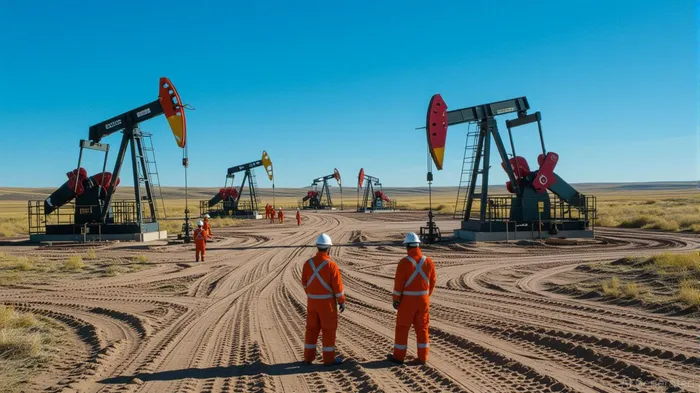
The company's focus on high-margin liquids and cost discipline has created a virtuous cycle: higher margins from liquids production fund both dividends and capital projects, while reduced expenses free up cash for reinvestment.
Growth Catalyst: The Reford SAGD Project
The crown jewel of Cardinal's strategy is its Reford SAGD (Steam-Assisted Gravity Drainage) project in Saskatchewan. As of Q1 2025, the project is 80% complete, on schedule and budget, with first oil expected in 2026. Key details include:
- Production Impact: Reford is projected to contribute 35% of total production at peak, with a flat or rising output profile for over 20 years.
- Capital Efficiency: Requires minimal sustaining capital post-completion, aligning with Cardinal's low-debt, dividend-friendly model.
- Future Upside: Additional thermal projects could expand this percentage, solidifying long-term reserves growth.
Reford's scalability and low decline rate make it a game-changer. Unlike conventional assets that require constant drilling to maintain production, SAGD's long-lived reserves reduce reinvestment needs, freeing cash for dividends and shareholder returns.
Financial Flexibility and Risk Management
Cardinal's balance sheet is a testament to its prudent management:
- Debt Reduction: Bank debt slashed to $8.3 million from $83 million in late 2024.
- Adjusted Funds Flow: Up 18% year-over-year to $62.2 million, underpinning its ability to fund both dividends and Reford's final stages.
Risks remain, however:
- Project Delays: Any setbacks at Reford could delay cash flow and dividend growth.
- Commodity Prices: Oil prices below $70/bbl could strain margins, though Cardinal's focus on low-cost assets mitigates this risk.
- Regulatory Headwinds: Carbon pricing and environmental regulations could add costs, though its Midale CCS EOR project—sequestering 62,000 tonnes of CO2 in Q1 2025—positions it well for ESG compliance.
Investment Thesis: A Dividend Machine with Growth Legs
Cardinal Energy's combination of consistent dividends, thermal-driven growth, and fortress balance sheet makes it a compelling investment in a sector often seen as high-risk. Key takeaways:
1. Dividend Safety: The 67% payout ratio leaves ample room for reinvestment, and free cash flow coverage of dividends is robust.
2. Upside Catalyst: Reford's completion in 2026 could lift production and margins, potentially enabling dividend increases.
3. Valuation: At current prices, Cardinal trades at a discount to its 5-year average EV/EBITDA multiple, offering asymmetrical risk-reward.
Recommendation: Hold or Buy Cardinal Energy. The company's blend of dividend sustainability, low debt, and a growth project nearing completion positions it to outperform peers in a rising oil price environment. Investors seeking steady income with long-term growth potential should consider this undervalued energy name.
Disclosure: The analysis above is based on publicly available information. Always conduct your own research or consult a financial advisor before making investment decisions.







Comentarios
Aún no hay comentarios