
Cardano's Strategic Move into Mass Adoption: The Cardano Card and Its Implications for ADA's Utility and Value
A New Era of Onchain Utility
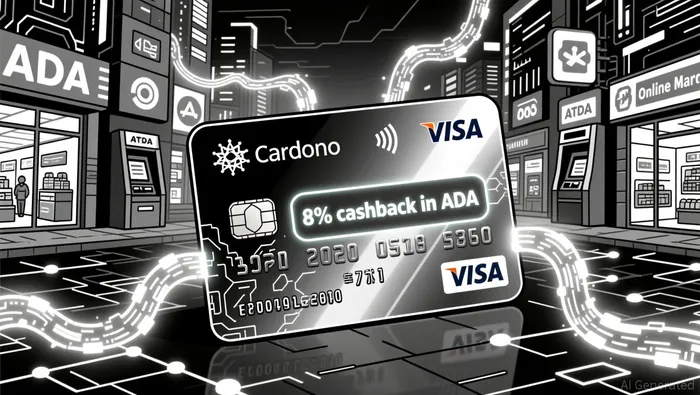
The CardanoADA-- Card, integrated into the Wirex app, supports over 685 cryptocurrencies and stablecoins-including ADA, BTC, ETH, and USDC-and enables users to spend them globally via the VisaV-- network, according to a Bitget report. For ADA holders, this means the token is no longer confined to speculative trading or staking; it now functions as a medium of exchange in everyday transactions. Users can earn up to 8% crypto cashback, access low-fee foreign exchange services, and leverage yield-generating X-Accounts and structured trading products, according to the same report.
This initiative aligns with Cardano's broader vision of "onchain utility," where blockchain assets are seamlessly integrated into real-world financial systems. By partnering with Wirex-a platform with six million users across 130 countries and over $20 billion in processed transactions, according to a CoinMarketCap article-Cardano gains access to a vast user base and a proven infrastructure for crypto adoption.
Institutional Credibility Through Strategic Partnerships
The partnership's institutional credibility is bolstered by Wirex's track record in digital finance. As a regulated fintech firm, Wirex has navigated compliance frameworks in multiple jurisdictions, addressing a critical barrier for institutional adoption of crypto. By embedding ADA into its ecosystem, Wirex signals confidence in Cardano's technology and governance model, according to the CoinMarketCap article.
Moreover, EMURGO has committed to directing a portion of the Cardano Card's profits to the Cardano Treasury, a fund dedicated to ecosystem growth, according to the Bitget report. This alignment of incentives between commercial ventures and the blockchain's development community reinforces Cardano's reputation as a sustainable, community-driven project. Experts argue that such partnerships are pivotal for cryptocurrencies to gain traction in institutional portfolios, where trust and long-term viability are paramount, as noted in the CoinMarketCap article.
Bridging Traditional Finance and Web3
The Cardano Card's design explicitly targets the intersection of traditional finance and decentralized systems. For instance, users can access loans and DeFi yield products while maintaining custody of their assets-a hybrid model that appeals to both crypto newcomers and institutional investors. A non-custodial version of the card, slated for 2026, will further empower users by granting full control over their digital assets and enabling direct DeFi participation, according to the Bitget report.
This dual approach mirrors broader industry trends, such as the rise of tokenized assets and cross-chain interoperability. However, Cardano's collaboration with Wirex stands out for its focus on mass-market accessibility. Unlike niche DeFi platforms or high-net-worth-focused solutions, the Cardano Card democratizes access to onchain financial tools, potentially accelerating ADA's adoption in everyday commerce, according to a Wirex announcement.
Implications for ADA's Value
The Cardano Card's launch has already triggered positive market reactions. ADA's price trend in late 2025 reflects renewed investor optimism, driven by tangible use cases and institutional validation, according to a Crypto-Economy article. Analysts project that the card's ability to convert ADA into a functional currency-rather than a speculative asset-could drive demand and reduce volatility.
Furthermore, the card's revenue-sharing model with the Cardano Treasury creates a flywheel effect: increased ADA usage generates more funds for ecosystem development, which in turn enhances the token's utility and value. This self-reinforcing cycle is a hallmark of successful blockchain networks, from Bitcoin's mining incentives to Ethereum's gas model.
Conclusion
Cardano's partnership with Wirex represents a strategic masterstroke in the quest for mass adoption. By transforming ADA into a spendable, yield-generating asset and partnering with a reputable fintech firm, Cardano addresses two of crypto's most persistent challenges: utility and credibility. As the non-custodial version of the Cardano Card rolls out in 2026, the project may well redefine how the world interacts with blockchain technology-proving that the future of finance is not just decentralized, but deeply integrated into daily life.





Comentarios
Aún no hay comentarios