
Cardano's Resilience Amid Regulatory Uncertainty: A Regulatory Arbitrage Playbook
In the ever-shifting landscape of blockchain regulation, projects that thrive are those that adapt to ambiguity while positioning themselves as bridges between innovation and compliance. CardanoADA-- (ADA) has emerged as a standout case study in this arena, leveraging its technical rigor, institutional partnerships, and strategic governance to navigate regulatory uncertainty as a competitive advantage. As 2025 draws to a close, the project's ability to exploit regulatory arbitrage-capitalizing on divergent frameworks across jurisdictions-has positioned it as a compelling long-term investment.
Institutional Adoption and the U.S. Regulatory Hinge
Cardano's trajectory in 2025 has been inextricably linked to the U.S. regulatory environment, where the potential approval of a spot ETF for ADAADA-- could redefine its market dynamics. According to a report by BraveNewCoin, the U.S. government's inclusion of Cardano in a National Digital Asset Reserve-alongside BitcoinBTC--, EthereumETH--, and Solana-has already spurred a 35% price surge for ADA in the month following the announcement. This institutional validation signals a shift in perception, framing ADA not as a speculative asset but as a foundational infrastructure component in a regulated ecosystem.
The anticipation of SEC approval for Grayscale's Cardano ETF, expected by August 2025, further amplifies this narrative. If granted, the ETF would remove the "security" label from ADA, aligning it with utility tokens and opening the floodgates for traditional institutional investors. This regulatory clarity is critical for blockchain projects seeking to scale, as it reduces the risk of enforcement actions and fosters trust in a market still grappling with volatility.
Regulatory Arbitrage: Navigating U.S. and EU Frameworks
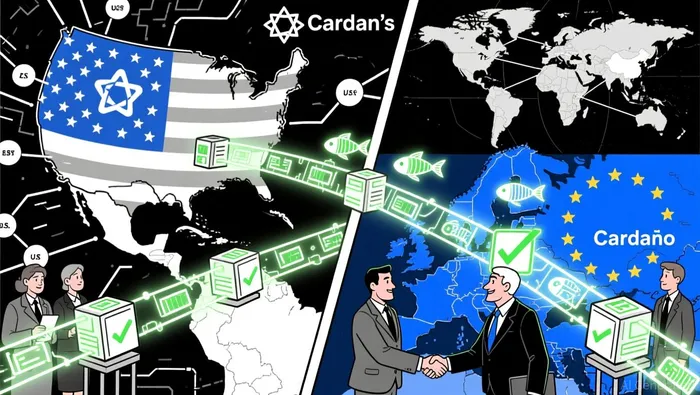
Cardano's dual strategy of engaging with both U.S. and EU regulatory frameworks exemplifies its arbitrage approach. In the U.S., the project has aligned with the Trump administration's crypto-friendly policies, with Charles Hoskinson's policy office actively shaping legislation to clarify digital asset classification. Meanwhile, in the EU, the Cardano Foundation has submitted formal policy proposals to the European Data Protection Board, advocating for a technologically neutral regulatory approach that supports public, permissionless blockchains.
This bifurcated strategy allows Cardano to hedge against jurisdictional risks. For instance, the EU's Markets in Crypto-Assets (MiCA) regulation, which took full effect in 2025, created a stringent but predictable framework for compliance. By contrast, the U.S. GENIUS Act's focus on stablecoin regulation has set a global benchmark, influencing other jurisdictions to adopt similar standards. Cardano's ability to operate within both frameworks-while avoiding the enforcement inconsistencies highlighted in the U.S. market-demonstrates its agility in a fragmented regulatory landscape.
Technical Resilience and Governance Innovation
Beyond regulatory navigation, Cardano's technical and governance advancements have solidified its appeal. The project's transition to community-led governance, including the formation of a fully elected Constitutional Committee and a smart contract-based Treasury framework, has enhanced transparency and accountability. This decentralized governance model not only aligns with regulatory expectations for accountability but also fosters long-term stakeholder trust.
Moreover, Cardano's technical resilience has been put to the test. A rare network incident in November 2025 showcased the robustness of its Ouroboros consensus mechanism, reinforcing confidence in its infrastructure. Simultaneously, the growth of its DeFi ecosystem-led by platforms like Liqwid Finance- has demonstrated real-world utility, with total value locked outpacing decentralized exchanges. These developments underscore Cardano's capacity to deliver both security and scalability, critical factors for institutional adoption.
Strategic Partnerships and Global Expansion
Cardano's institutional partnerships have further amplified its regulatory arbitrage potential. Collaborations with entities like Petrobras-focused on blockchain applications in education, sustainability, and proof of attendance- highlight its ability to deliver tangible value beyond speculative trading. Events such as the Cardano Summit 2025, which attracted 1,000 in-person participants from 70 countries, have also strengthened its global footprint, fostering cross-border collaboration in a market increasingly defined by jurisdictional fragmentation.
Conclusion: A Model for Regulatory Arbitrage
Cardano's 2025 playbook offers a masterclass in leveraging regulatory uncertainty. By securing institutional validation, engaging proactively with evolving frameworks, and prioritizing technical and governance innovation, the project has positioned itself as a resilient contender in a market where regulatory clarity is both a challenge and an opportunity. As the SEC's ETF decision looms and global regulations continue to mature, Cardano's ability to navigate this landscape-while delivering real-world applications-makes it a compelling investment for those seeking to capitalize on regulatory arbitrage.






Comentarios
Aún no hay comentarios