
Cardano's Resilience Amid Market Volatility: A Deep Dive into Technical Innovation and Long-Term Value
In the tumultuous crypto landscape of 2025, where macroeconomic headwinds and sector-wide liquidations have tested even the most established projects, CardanoADA-- (ADA) has emerged as a standout performer. Despite a $1.05 billion liquidation wave impacting top assets, ADAADA-- has demonstrated remarkable resilience, defying broader market trends and signaling growing institutional and on-chain support, according to TS2 Tech. This resilience is not accidental but rooted in a meticulously executed technical roadmap and governance evolution that positions Cardano as a long-term value proposition.
Technical Roadmap: Building a Scalable and Sustainable Ecosystem
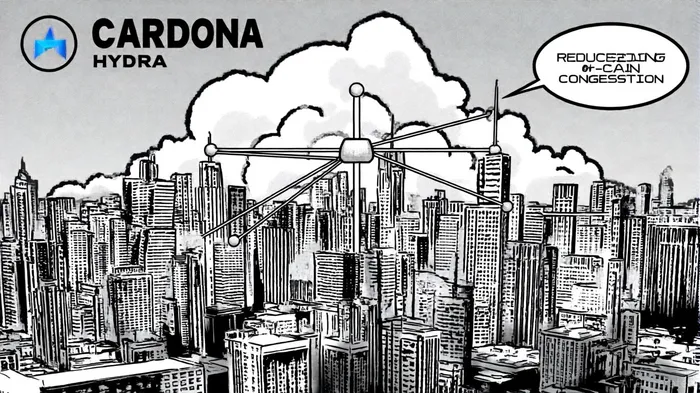
Cardano's 2025 roadmap has prioritized scalability, governance, and sustainability-three pillars critical to its long-term viability. The release of Hydra Node 1.0.0 in October 2025 marks a watershed moment, transitioning the project from experimental development to production readiness, as reported by CryptoBasic. Hydra, an L2 scaling solution, leverages "Hydra Heads" to enable parallel processing of off-chain transactions, theoretically supporting millions of transactions per second (TPS) with minimal fees, as noted in an OKX guide. This innovation directly addresses one of blockchain's most persistent challenges: scalability. By reducing on-chain congestion, Hydra not only enhances user experience but also lowers operational costs for developers and enterprises, making Cardano an attractive alternative to EthereumETH-- and SolanaSOL--, as highlighted in an EconoTimes analysis.
Governance upgrades have further solidified Cardano's decentralized framework. The Chang hard fork ushered in the Voltaire era, granting ADA holders on-chain governance rights, according to TS2 Tech. This shift was cemented by the Plomin hard fork, which enabled the first community-verified hard fork in blockchain history-a milestone underscoring Cardano's commitment to decentralized decision-making, as noted by TS2 Tech. The successful election of a seven-member Constitutional Committee in Q2 2025 was reported by EconoTimes and has institutionalized a governance model where stakeholders directly influence protocol upgrades and treasury allocations. With a community-driven treasury budget of 275.3 million ADA allocated to ecosystem development, according to a Messari report, Cardano's governance structure now mirrors the self-sustaining ecosystems of leading DeFi platforms.
Environmental sustainability remains a cornerstone of Cardano's appeal. Its proof-of-stake (PoS) model consumes 99.9% less energy than proof-of-work alternatives, as noted in the OKX guide, aligning with global ESG (Environmental, Social, Governance) investment trends. This has attracted institutional interest from ESG-focused funds, including Franklin Templeton, which now manages $1.2 billion in ADA, according to the OKX guide.
Market Resilience: How Institutional Adoption and On-Chain Metrics Signal Confidence
Cardano's technical advancements have translated into tangible market resilience. On-chain data reveals 2.6 million daily transactions and a staking rate of 60.1%, according to the Messari report, metrics that highlight both network utility and user retention. The V2 ADA protocol, which introduced zero-knowledge smart contracts and decentralized governance, has further diversified Cardano's use cases, appealing to enterprise clients and developers, as covered by TS2 Tech.
Institutional adoption has been a key driver of ADA's price stability. Grayscale's increase of ADA allocation to 20% in its Smart Contract Platform Ex-Ethereum Fund, reported in the OKX guide, signals growing confidence in Cardano's infrastructure. Meanwhile, Franklin Templeton's $1.2 billion ADA holdings, also noted in the OKX guide, underscore the asset's inclusion in mainstream portfolios. These developments are critical in a market where retail sentiment often overshadows fundamentals.
Analysts project ADA's price could surge between $1.50 to $6.00 by 2025–2026, driven by technical tailwinds and institutional inflows, according to TS2 Tech. This optimism is further supported by Cardano's upcoming integration of zero-knowledge rollups and Mithril certificates, which will enable lightweight transaction verification and enhance accessibility for non-technical users, as described in the Messari report.
Conclusion: A Foundation for Long-Term Growth
Cardano's 2025 roadmap has not only addressed scalability and governance but also repositioned the project as a sustainable, enterprise-ready blockchain. The combination of Hydra's production readiness, decentralized governance, and ESG alignment has created a flywheel effect: technical innovation attracts institutional capital, which in turn reinforces network security and adoption. As the crypto market continues to consolidate, projects with robust fundamentals-like Cardano-are likely to outperform speculative assets. For investors seeking long-term value, Cardano's resilience is not just a short-term anomaly but a testament to its strategic vision and execution.






Comentarios
Aún no hay comentarios