
Cardano's Project Catalyst Fund14: Decentralized Governance as a Catalyst for Sustainable Blockchain Adoption
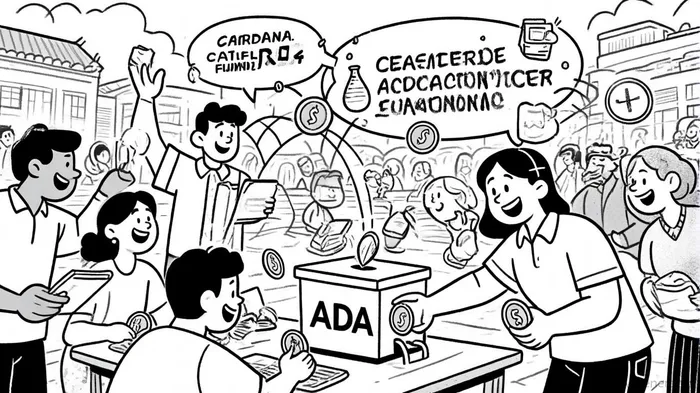
In the ever-evolving blockchain landscape, sustainable adoption hinges on two pillars: technical robustness and community-driven governance. Cardano's Project Catalyst Fund14, launched on July 23, 2025, exemplifies how decentralized governance can serve as both a mechanism and a multiplier for long-term blockchain integration. By empowering stakeholders to shape the ecosystem's future, Fund14 not only aligns with Cardano's Voltaire-era vision but also demonstrates a scalable model for sustainable innovation.
A Refined Governance Framework: Structure and Process
Project Catalyst Fund14 operates within a meticulously designed governance framework. The initiative began by collecting proposals from July 24, 2025, with no immediate reviews or voting until the Treasury Withdrawal Governance Action is approved by Delegated Representatives (DReps) [1]. This phased approach ensures that the community refines ideas before formal decision-making, reducing inefficiencies and fostering higher-quality submissions.
The Community Review stage, active until September 17, 2025, includes two critical phases: Proposal Review (August 22–September 5) and Quality Control (September 10–17). During these periods, reviewers and moderators assess proposals for fairness, feasibility, and alignment with Cardano's vision [1]. For instance, in the DeFi category, only 14.3% of proposals pass initial screening due to vague problem statements or misalignment with Cardano's long-term goals [2]. This rigorous evaluation process prioritizes projects that create real-world value, such as scalable solutions for financial inclusion or enterprise partnerships.
The CardanoADA-- Foundation's role in Fund14 is intentionally limited. It holds a single wallet with 20 million ADAADA--, voting exclusively on the “Cardano Use Cases: Partners & Products” track, which has an allocated budget of ₳8.5M [3]. This shift from direct participation to supporting community expertise reflects a broader trend: institutions acting as enablers rather than gatekeepers. Additionally, the introduction of Generalized Quadratic Voting (GQV) encourages thoughtful participation by balancing influence across diverse stakeholders [4].
Decentralized Governance as a Driver of Sustainable Adoption
Project Catalyst's success lies in its ability to transform governance from a theoretical ideal into a practical tool for innovation. Since its inception in 2020, Catalyst has facilitated over 9,950 proposals and 3 million votes, distributing millions of ADA to initiatives that align with Cardano's mission [5]. By 2025, the platform had supported 60 active projects, including real-world applications like blockchain-based education systems in Ethiopia and clean water access in Kenya [5]. These case studies underscore how decentralized funding can address global challenges while advancing blockchain adoption.
The economic model of Catalyst further reinforces sustainability. Fund14's 20 million ADA allocation is distributed across four categories:
1. Cardano Open: Developers
2. Cardano Open: Ecosystem
3. Cardano Use Cases: Concepts
4. Cardano Use Cases: Partners & Products (8.5M ADA) [3].
This structure prioritizes high-impact partnerships and scalable solutions, ensuring that funded projects contribute to Cardano's broader utility. For example, the “Partners & Products” track focuses on enterprise collaborations and high-volume applications, which are critical for mainstream adoption [3]. By aligning incentives between developers, businesses, and the community, Catalyst creates a self-reinforcing cycle of innovation and value creation.
Strategic Implications for Investors
For investors, Fund14 represents more than a funding round—it is a litmus test for Cardano's governance maturity. The initiative's emphasis on transparency (publicly available voting data and financials) and accountability (rigorous proposal evaluation) reduces risks associated with speculative projects. Furthermore, the early launch of Fund14—before final DRep approval—demonstrates the ecosystem's agility in maintaining momentum, a trait critical for long-term success in the blockchain sector [5].
Data from prior Catalyst funds also provides a compelling narrative. By 2025, Catalyst had allocated over 290 million ADA to nearly 2,100 projects, with a focus on real-world use cases [3]. This track record suggests that Fund14 could catalyze similar outcomes, particularly in sectors like DeFi, supply chain management, and identity verification. Investors who align with Cardano's governance-first approach may find Fund14's outcomes indicative of the ecosystem's ability to adapt and scale.
Conclusion: Governance as the New Infrastructure
Cardano's Project Catalyst Fund14 is more than a funding mechanism—it is a blueprint for sustainable blockchain adoption. By decentralizing decision-making, prioritizing real-world impact, and fostering community ownership, Catalyst aligns with the core principles of Web3. For investors, the initiative underscores a critical insight: governance is not just a feature; it is the infrastructure of trust. As Fund14 progresses through its voting phase (closing October 6, 2025), the outcomes will serve as a barometer for Cardano's ability to balance innovation with accountability—a rare and valuable trait in the blockchain space.






Comentarios
Aún no hay comentarios