
Cardano News Today: Cardano Chain Split: Insider Attack Sparks Founder vs. Foundation Feud
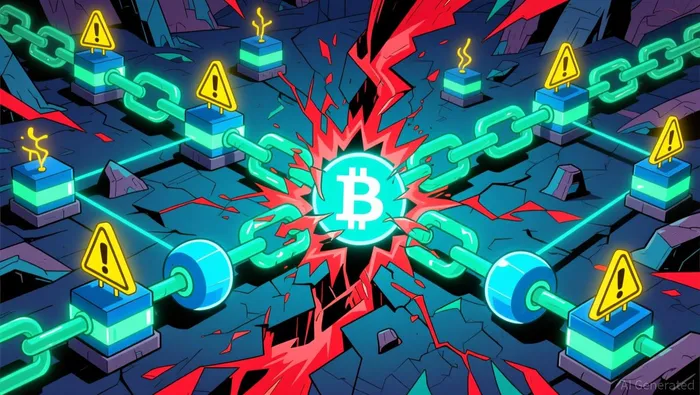
Cardano (ADA) experienced a brief but significant chain split on November 21, 2025, triggered by a dormant code vulnerability exploited through a malformed delegation transaction. The incident, which caused temporary network fragmentation, was swiftly resolved by engineers, with founder Charles Hoskinson praising the blockchain's resilience in a post-recovery statement. The disruption stemmed from a premeditated attack linked to a disgruntled stake pool operator (SPO) who had spent months planning the exploit, according to Hoskinson, who cited activity in the Fake Fred Discord group as part of a broader effort to damage the network's reputation.
The chain split occurred when newer versions of the CardanoADA-- node software failed to process the malicious transaction, creating a fork between node versions. Older node iterations continued validating blocks, ensuring the network remained operational albeit at a slower pace. Stake pool operators rushed to upgrade to version 10.5.3, which stabilized the network by the end of the day. Hoskinson emphasized that funds remained secure and no blocks were lost, though users reported front-end inconsistencies and delayed transaction confirmations. The incident highlighted the risks of undetected vulnerabilities in blockchain protocols, particularly those with prolonged inactivity, as the flaw had lain dormant until exploited.
 The attack sparked renewed debates about Cardano's governance and internal divisions. Hoskinson publicly criticized the Cardano Foundation (CF) for its handling of community oversight, clashing with CF community lead Nicolas Cerny over accusations of "useful idiots" and resistance to accountability. Cerny defended the foundation's evolving role, noting its expanded mandate to support DeFi and real-world adoption, while Hoskinson called for structural reforms and leadership changes at the CF. This public rift underscores ongoing tensions between Cardano's founding entities-IOHK, Emurgo, and the CF-over governance and strategic direction, despite the ecosystem's technical advancements.
The chain split also raised concerns about the security of decentralized networks. Analysts noted that while Cardano's design mitigated the attack's impact, the incident exposed the potential for targeted disruptions by malicious actors with insider knowledge. Crypto commentator CryptoRus attributed the fork to a software bug in newer node versions, emphasizing that the blockchain's continuity was maintained by older nodes. Meanwhile, the attack plan's sophistication-orchestrated by an SPO with apparent familiarity with IOHK's operations-has prompted calls for enhanced security protocols and community vigilance.
As the Cardano ecosystem recovers, the event serves as a cautionary tale for blockchain projects. Hoskinson's acknowledgment of the attack's reputational toll highlights the broader challenge of maintaining trust in decentralized systems. With ADAADA-- trading at $0.458 as of November 22, market participants will be watching for further developments in Cardano's governance reforms and technical upgrades.






Comentarios
Aún no hay comentarios