
Cardano Founder Calls for Fourth Generation Blockchain Collaboration
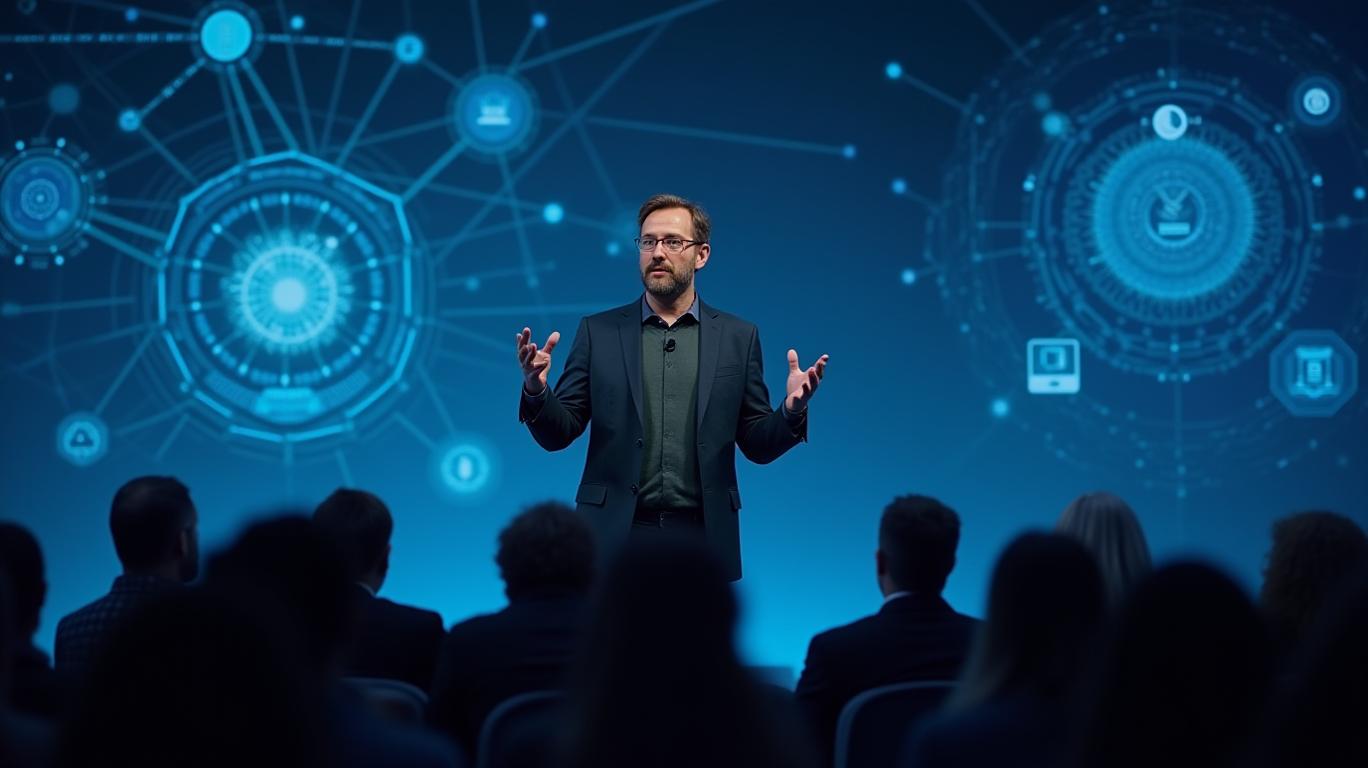
Cardano founder Charles Hoskinson delivered a keynote address at Paris Blockchain Week, emphasizing the need for blockchain technology to evolve into its “fourth generation.” This phase, according to Hoskinson, requires collaboration among competing protocols rather than rivalry. He believes that only through inclusive, cross-chain cooperation can decentralized finance (DeFi) genuinely replace traditional financial structures.
Hoskinson announced plans for an upcoming airdrop designed to distribute tokens to users of eight different networks. He stated, “In the coming months, we’re gonna do an airdrop—37 million people in eight networks. If you hold Bitcoin or Ether or Cardano or XRP, Solana and a few others, you’ll get a drop. Everybody gets a taste.” This initiative aims to foster a more interconnected blockchain ecosystem, encouraging users to engage with multiple networks.
Hoskinson traced the historical roots of cryptography and the emergence of Bitcoin as the “first generation” of blockchain. He highlighted the ongoing challenges of centralization risks and regulatory uncertainties, arguing that these issues underscore the need for blockchain and cryptocurrencies. He asserted that power should be decentralized and distributed to “the edges” rather than concentrated in a small circle of economic actors. This decentralization, he believes, will lead to a boomBOOM-- in real-world assets entering the crypto space, with compliance and privacy being key factors.
Hoskinson further examined the limitations of today’s blockchain ecosystem, calling for a new focus on privacy and identity. He argued that privacy must be “baked in” at the protocol level rather than handled by third-party servers, an approach he feels undermines decentralization. He described the fourth generation of blockchains as a unifying model, where cooperation supersedes the hostility of competing protocols. This model aims to achieve interoperability across multiple chains, tackling compliance and privacy challenges without forcing users to switch from their existing networks.
Hoskinson introduced Midnight, a project that aims to achieve interoperability across multiple chains. The underlying consensus protocol for Midnight, known as Minotaur, brings multiple networks into a shared security environment. Minotaur is designed to let Bitcoin miners, Ethereum validators, and other network participants secure the new system without abandoning their home chains. This approach avoids “an intrinsically adversarial” scenario, suggesting that many of the inefficiencies within crypto arise from zero-sum thinking among token communities.
Hoskinson closed his address by reflecting on the formidable competition that big tech firms could present if they decide to “bundle” crypto wallets and services into their devices and platforms. He pointed out that the only way forward is to build inclusive technologies that both encourage mass adoption and preserve decentralized values. This vision aligns with his long-term goal of fostering a more collaborative and interconnected blockchain ecosystem.







Comentarios
Aún no hay comentarios