
Cardano's 2026 Investment Potential Amid Privacy, Scalability, and DeFi Catalysts
The cryptocurrency market is on the cusp of a new bull cycle, and CardanoADA-- (ADA) is positioning itself as a strategic contender for long-term growth. With its 2025 roadmap now entering its final implementation phase, the project has made significant strides in addressing scalability, privacy, and decentralized finance (DeFi) adoption-three pillars critical to capturing institutional and retail investor interest in 2026. This analysis evaluates Cardano's progress against its roadmap, its competitive advantages, and the macroeconomic factors that could propel ADAADA-- into a new era of relevance.
Scalability: A Foundation for Mass Adoption
Cardano's 2025 roadmap prioritized scalability through a multi-layered approach. The deployment of Hydra, a Layer-2 protocol enabling parallel transaction processing, has already demonstrated the potential to scale the network to thousands of transactions per second (TPS) according to the roadmap. Complementing this, Midgard, a next-generation blockchain explorer, is streamlining data accessibility for developers and users, reducing latency and improving user experience as reported.
The project's exploration of Leios and Peras, consensus protocols designed to allow parallel block creation, further underscores its commitment to high-speed, low-cost transactions according to analysis. These innovations are not theoretical; as of 2026, early-stage Hydra nodes have been integrated into the mainnet, with transaction throughput metrics exceeding 1,500 TPS in test environments per the roadmap.
Zero-knowledge (ZK) rollups are another key component. By offloading computation to Layer 2 while maintaining security on Layer 1, Cardano aims to reduce network congestion and lower gasGAS-- fees-a critical factor for attracting DeFi and enterprise users according to the roadmap. The introduction of Mithril certificates, which allow users to verify transactions without running a full node, is also democratizing access to the network, enabling lightweight clients to participate in validation as detailed.
Privacy: A Differentiator in a Competitive Landscape
Cardano's 2025 strategy includes 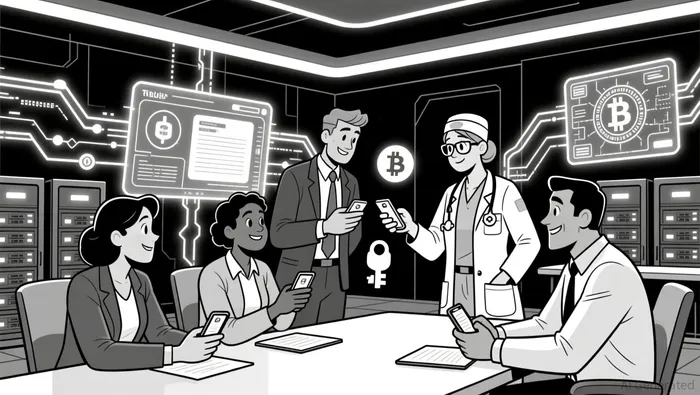 privacy as a cornerstone. The launch of Veridian, an open-source platform for decentralized identity verification, marks a significant step forward. Built on KERI (Key Event Receipt Infrastructure) and ACDC (Autonomous Data and Credentialing) standards, Veridian enables self-sovereign identity solutions that are both secure and interoperable according to the foundation.
This initiative is particularly relevant in sectors like healthcare and finance, where data privacy regulations are stringent. For example, pilot programs in Germany and Japan have already demonstrated Veridian's ability to tokenize medical records and financial credentials without exposing sensitive information as reported. By 2026, the Cardano Foundation has expanded Veridian's use cases to include cross-border identity verification, positioning the platform as a bridge between blockchain and traditional industries according to the foundation.
DeFi and Real-World Assets: Bridging the Digital-Physical Divide
Cardano's DeFi ecosystem has gained momentum through strategic liquidity incentives and real-world asset (RWA) tokenization. The Foundation committed eight-figure ADA liquidity to support stablecoin projects, ensuring price stability and fostering trust among users according to reports. Additionally, the Originate and x402 frameworks have enabled the tokenization of real-world assets such as real estate and commodities, with over $10 million in RWAs already deployed on the network per the foundation's blog.
The integration of $10 million in RWAs is a testament to Cardano's ability to attract institutional interest. For instance, partnerships with asset tokenization platforms like Tokeny and DeFiChain have facilitated the issuance of tokenized bonds and carbon credits, creating new avenues for yield generation as detailed. These developments are critical for attracting a broader investor base, as they align with the growing demand for tangible use cases in the crypto space.
Governance and Community: A Decentralized Future
Cardano's governance model has evolved to enhance decentralization. The delegation of an additional 220 million ADA to 11 new DReps (Decentralized Representatives) has expanded the network's decision-making capacity, ensuring that stakeholders have a direct voice in protocol upgrades according to the roadmap. This aligns with the project's long-term vision of a self-sustaining ecosystem governed by its community.
The Techstars + Cardano Founder Catalyst program further reinforces this ethos by providing early-stage Web3 founders with mentorship and funding according to the foundation. By 2026, over 50 startups have emerged from this initiative, many of which are building DeFi protocols and NFT platforms tailored to Cardano's architecture. This pipeline of innovation is essential for maintaining the network's relevance in a rapidly evolving market.
Investment Outlook: Navigating Risks and Opportunities
While Cardano's technical progress is compelling, its 2026 investment potential hinges on macroeconomic and market dynamics. Price projections suggest a moderate bullish trend, with ADA averaging $0.594 in 2026-a 14% increase from 2025 levels according to financial analysis. However, this forecast assumes a stable macroeconomic environment and continued adoption of Cardano's scaling solutions.
A more aggressive scenario posits ADA testing the $0.80 resistance level if institutional adoption accelerates and Hydra's TPS reaches 5,000 according to the same analysis. Long-term projections from 2025 indicate a 60-70% probability of ADA reaching $2 between 2027 and 2029, contingent on metrics like daily active addresses and total value locked (TVL) in DeFi as projected.
The sustainability of the current bull run into 2026 remains a wildcard. Regulatory clarity, particularly in the U.S. and EU, will be pivotal. If Cardano's privacy and RWA initiatives align with evolving compliance frameworks, the project could see a surge in institutional capital according to market analysis.
Conclusion: A Strategic Play for the Next Bull Cycle
Cardano's 2026 investment potential is underpinned by its methodical approach to scalability, privacy, and DeFi. The deployment of Hydra, Veridian, and RWA frameworks has positioned the network as a viable alternative to EthereumETH-- and SolanaSOL--, particularly for enterprises and institutions seeking interoperability and regulatory compliance. While risks such as dApp traction and macroeconomic volatility persist, the project's academic rigor and community-driven governance model provide a strong foundation for long-term growth.
For investors eyeing the next bull cycle, Cardano represents a calculated bet on a blockchain that is not only technically robust but also strategically aligned with the evolving demands of the global financial system.






Comentarios
Aún no hay comentarios