
Cardano's 2025 Developer Survey and Its Implications for Long-Term Ecosystem Growth
Developer sentiment has long been a leading indicator of blockchain investment potential, as active, engaged communities drive innovation and adoption. In 2025, the Cardano Foundation's Developer Ecosystem Survey has emerged as a critical barometer of the platform's health, revealing a surge in developer activity and a strategic focus on tooling improvements. This analysis explores how Cardano's 2025 survey results position it as a compelling long-term investment, outpacing competitors like EthereumETH-- and SolanaSOL-- in key metrics while addressing ecosystem bottlenecks.
Cardano's Developer Ecosystem: A Surge in Activity and Collaboration
The 2025 Cardano Foundation's survey, now in its fourth iteration, gathered over 190 responses from developers, protocol teams, and dApp builders. Participants highlighted a strong positive sentiment toward the CardanoADA-- community and its collaborative ethos, with feedback emphasizing the need for broader tool adoption and enhanced documentation, according to a Coinotag report. Key priorities identified include integrating a Command Line Interface (CLI) into the open-source Cardano Signer and expanding language localizations for global accessibility, as noted in a CryptoView article. These improvements aim to streamline automation and reduce barriers for new developers, aligning with the Foundation's goal of refining resources to accelerate dApp and protocol growth, as shown in TheBitJournal analysis.
The survey also coincided with a 37% increase in DeFi Total Value Locked (TVL) on Cardano, surpassing $350 million in Q2 2025, according to Currency Analytics. Protocols like Liqwid, which accounts for over 30% of TVL, have driven this growth, signaling rising user trust and attracting developer attention to Cardano's ecosystem (the Coinotag report also highlights this trend). Strategic partnerships, such as the collaboration with NEAR Protocol to explore AI-native instruments, further underscore Cardano's ambition to expand its technical capabilities and remain competitive in the Web3 space (as covered by CryptoView).
Developer Activity: Cardano Outpaces Ethereum and Solana
When benchmarked against major competitors, Cardano's developer activity in 2025 reveals a significant edge. According to a report by TheBitJournal, Cardano recorded 21,439 GitHub commits across 550 core repositories in 2025, surpassing Ethereum's 20,962 commits. Solana, despite its reputation for speed and low fees, lagged far behind with just 100 active developers, according to a Market Periodical piece. This data underscores Cardano's momentum, driven by projects like Hydra (Layer 2 scaling), Mithril (multi-signature staking), and Voltaire (decentralized governance), which reflect a methodical, research-driven approach to development (see the Cardano Foundation's report).
Ethereum, while maintaining dominance in market capitalization and smart contract adoption, faces challenges with scalability and fragmentation. Its ongoing upgrades, such as EIP-4844 (Proto-Danksharding), aim to reduce gas fees but have yet to match Cardano's developer growth rate, as noted in a 3verseTV analysis. Solana, on the other hand, has bolstered its appeal with updates like JavaScript SDK 2.0 and the upcoming Firedancer upgrade, reported in an Analytics Insight piece, yet its reliance on a limited number of validators raises centralization concerns (3verseTV also discusses this risk).
Implications for Long-Term Investment Potential
Developer sentiment and activity are critical predictors of a blockchain's long-term viability. Cardano's 2025 survey results suggest a robust, community-driven ecosystem poised for sustained growth. The platform's focus on formal verification, decentralized governance, and scalability aligns with institutional and enterprise adoption trends, as evidenced by partnerships with EMURGO and the Brazilian government in the Soodjoo report. Additionally, the Cardano Foundation's commitment to open-source collaboration-releasing survey reports and code under open licenses-further strengthens trust and transparency (refer to the Cardano Foundation's survey).
For investors, Cardano's strategic roadmap and developer momentum present a compelling case. While Ethereum remains a "blue-chip" asset due to its established ecosystem, Cardano's academic rigor and governance-first model offer a unique value proposition for long-term infrastructure. Solana's performance-driven appeal may attract speculative investors, but its centralization risks and lower developer activity make it a less stable bet compared to Cardano (as noted in TheBitJournal analysis).
Conclusion
The 2025 Cardano Developer Survey underscores the platform's growing influence in the blockchain space, driven by active developer engagement, strategic partnerships, and a focus on tooling improvements. As the DeFi TVL and GitHub activity metrics demonstrate, Cardano is not only keeping pace with Ethereum and Solana but outperforming them in critical areas. For investors prioritizing long-term growth and institutional adoption, Cardano's ecosystem appears well-positioned to deliver value, making it a standout asset in the 2025 blockchain landscape.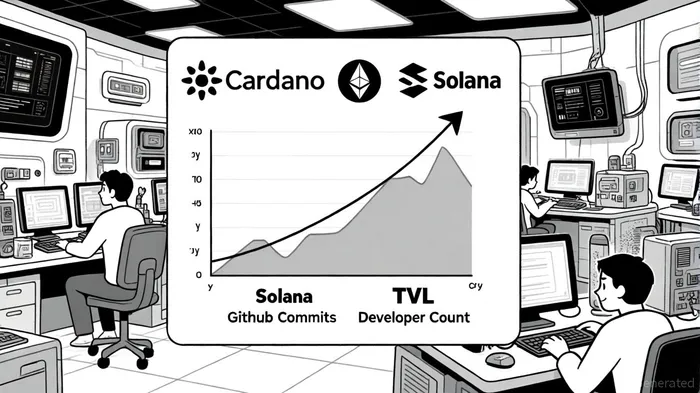







Comentarios
Aún no hay comentarios