
Low-Carbon Ammonia: A Strategic Catalyst for Decarbonizing Global Fertilizer Supply Chains
The global agricultural sector stands at a crossroads. As the world's population surges toward 10 billion by 2050, demand for nitrogen-based fertilizers-rooted in ammonia production-will grow by 2.8–3.7% annually, according to a Nature article. Yet, this critical input for food security remains a climate liability. Conventional ammonia synthesis via the Haber-Bosch process emits 2.4 metric tonnes of CO2 per tonne of ammonia produced, according to a McKinsey analysis, contributing 1.3% of global greenhouse gas (GHG) emissions. When factoring in use-phase emissions like nitrous oxide from fertilizer application and transportation, the total carbon footprint balloons to 1,100–1,300 million metric tonnes of CO2-equivalent annually. For investors, the transition to low-carbon ammonia is not just an environmental imperative-it is a strategic opportunity to reshape a $200 billion fertilizer market.
The Carbon Intensity of Conventional Ammonia
Ammonia production is inherently energy-intensive. In 2020, global output reached 183 million metric tonnes, with 70% allocated to agriculture. The Haber-Bosch process, which synthesizes ammonia from atmospheric nitrogen and hydrogen derived from fossil fuels, accounts for 2% of global final energy consumption. China, India, and the U.S. dominate production, with fossil fuels supplying over 90% of the hydrogen required, according to a ScienceDirect article. According to a report by Nature, the cradle-to-grave lifecycle of nitrogen fertilizers-including production, application, and food system integration-contributes 41% of global food system emissions, totaling 7,400 million metric tonnes of CO2-equivalent annually.
The EU's sluggish progress underscores the sector's inertia. Despite stringent regulations, ammonia emissions from agriculture have only declined by 16% since 2005, according to an EEA dashboard, reflecting the difficulty of decoupling agricultural productivity from carbon output.
The Rise of Low-Carbon Ammonia: Green and Blue Pathways
Low-carbon ammonia offers a dual solution: reducing emissions while enhancing supply chain resilience. Two primary pathways are gaining traction:
1. Green Ammonia: Produced via renewable energy-powered electrolysis, green ammonia emits no direct CO2. A McKinsey analysis estimates that widespread adoption could reduce carbon emissions by 5% in a typical basket of agricultural end products.
2. Blue Ammonia: This method combines fossil fuels with carbon capture and storage (CCS), cutting emissions by up to 90%.
Pilot projects are accelerating. For instance, the Gulf Coast Ammonia and Woodside Beaumont projects in the U.S. aim to add 17.7 million tonnes of merchant ammonia capacity by 2026, while Europe's Yara and CF IndustriesCF-- are testing blue ammonia at scale. The EU's Carbon Border Adjustment Mechanism (CBAM) further incentivizes low-emission alternatives, favoring producers who adopt CCS or renewable energy.
Investment Opportunities and Challenges
The transition to low-carbon ammonia demands significant capital. Green ammonia, in particular, requires 3–5 times more energy than conventional methods, necessitating robust renewable energy infrastructure. However, the market is primed for disruption. By 2030, global green ammonia capacity is projected to reach 10 million tonnes annually, driven by policy mandates and corporate sustainability goals.
Key investment levers include:
- Electrolyzer Manufacturing: Scaling green hydrogen production is critical. Companies like Plug Power and ITM Power are positioning themselves as enablers.
- Carbon Capture and Storage (CCS): Firms such as Carbon Engineering and Aker Carbon Capture are developing blue ammonia-compatible technologies.
- Supply Chain Resilience: Decentralized ammonia production, enabled by modular reactors, could reduce reliance on fossil fuel price volatility.
Yet challenges persist. High upfront costs, regulatory uncertainty, and the need for cross-sector collaboration remain barriers. For example, green ammonia's current cost premium of 30–50% over conventional ammonia must be bridged through subsidies or carbon pricing.
Conclusion: A Net-Zero Imperative
The fertilizer industry's carbon footprint is incompatible with global net-zero targets. Low-carbon ammonia is not merely a technological fix-it is a systemic reimagining of agriculture's energy and material flows. For investors, the stakes are clear: early movers in green hydrogen, CCS, and modular ammonia production stand to capture market share as regulations tighten and consumer demand for sustainable food systems grows.
As the IEA's Ammonia Technology Roadmap emphasizes, "Decarbonizing ammonia is a linchpin for achieving net-zero agriculture." The window to act is narrowing, but the rewards for aligning capital with this transition are immense.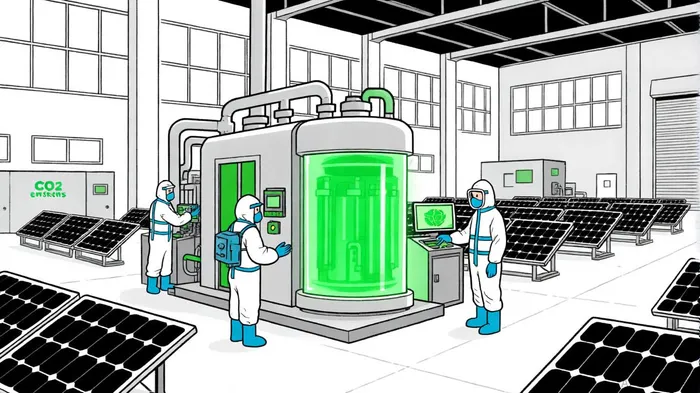





Comentarios
Aún no hay comentarios