
Capturing the Future of Robotics: A Guide to Investing in Humanoid Robotics
PorAinvest
viernes, 11 de julio de 2025, 9:35 am ET2 min de lectura
AMZN--
The Case for Humanoid Robots
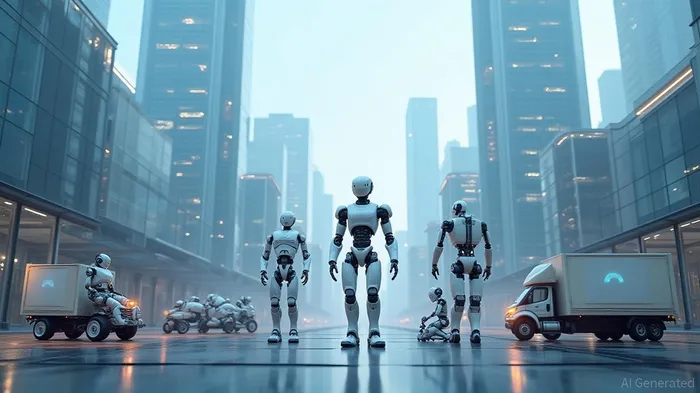
Humanoid robots are rapidly moving from science fiction to practical reality, with companies like Amazon, Tesla, and BYD piloting them in warehouses and envisioning them as future home assistants. In healthcare, humanoids are being considered to support aging populations and deliver essential care. As adoption accelerates, humanoid robots are expected to reshape the workforce, improve safety and efficiency, and address critical labor shortages across multiple industries [1].
Market Projections
The market for humanoid robots is projected to grow significantly. Morgan Stanley estimates that the global humanoid robot market could reach nearly $5 trillion by 2050, assuming steady improvements in cost efficiency, mobility, and general-purpose AI [1]. Goldman Sachs, on the other hand, forecasts that the global humanoid robot market could surpass $150 billion in revenue annually by 2035, with commercial adoption accelerating sharply after 2025 [1].
Investment Opportunities
Investors can capture the humanoid robotics investment opportunity by focusing on several key areas:
1. Enablers: These are the providers of core technologies and manufacturing capabilities. As humanoid robotics intensifies, the early phases of this technological surge are anticipated to see these enablers capture a significant portion of the value.
2. The Brain: This refers to the cognitive capabilities of humanoid robots, enabling them to perceive, decide, and interact. Investment in custom semiconductor solutions, such as AI chips and vision processors, is crucial for enabling the onboard intelligence humanoids require.
3. The Body: This encompasses the physical form and capabilities of humanoid robots, including actuators, mechanical systems, sensing, and vision systems. Companies like Regal Rexnord and Melexis NV are key players in this area.
4. Critical Materials: Rare earth elements like neodymium and dysprosium are essential for the powerful, precise actuators in humanoid robots. MP Materials, the only domestic producer of rare earth metals and magnets in the U.S., is a critical player in this segment.
5. Integrators: These are the companies at the forefront of designing, developing, and manufacturing complete humanoid robots. Tesla, XPeng, UBTech, and Rainbow Robotics are notable examples.
Conclusion
The rise of humanoid robotics presents a significant investment opportunity for those who understand the potential for robots to integrate with the global economy. By focusing on key areas such as enablers, the brain, the body, critical materials, and integrators, investors can capture the value of this burgeoning market.
References
[1] https://kraneshares.com/how-can-investors-capture-the-humanoid-robotics-investment-opportunity/
GS--
MP--
MS--
RRX--
Investors can capture the humanoid robotics investment opportunity by understanding the potential for robots to integrate with the global economy, particularly in industries such as delivery, factory assembly, and warehousing. The next wave of robotics promises even greater integration, with robots poised to take on more complex tasks and enter new sectors.
The integration of humanoid robots into the global economy is a burgeoning trend, poised to transform various sectors including delivery, factory assembly, and warehousing. These robots, designed to mimic human form and function, offer unique advantages by being able to operate in environments already built for people, thus requiring minimal adjustments to existing infrastructure.The Case for Humanoid Robots
Humanoid robots are rapidly moving from science fiction to practical reality, with companies like Amazon, Tesla, and BYD piloting them in warehouses and envisioning them as future home assistants. In healthcare, humanoids are being considered to support aging populations and deliver essential care. As adoption accelerates, humanoid robots are expected to reshape the workforce, improve safety and efficiency, and address critical labor shortages across multiple industries [1].
Market Projections
The market for humanoid robots is projected to grow significantly. Morgan Stanley estimates that the global humanoid robot market could reach nearly $5 trillion by 2050, assuming steady improvements in cost efficiency, mobility, and general-purpose AI [1]. Goldman Sachs, on the other hand, forecasts that the global humanoid robot market could surpass $150 billion in revenue annually by 2035, with commercial adoption accelerating sharply after 2025 [1].
Investment Opportunities
Investors can capture the humanoid robotics investment opportunity by focusing on several key areas:
1. Enablers: These are the providers of core technologies and manufacturing capabilities. As humanoid robotics intensifies, the early phases of this technological surge are anticipated to see these enablers capture a significant portion of the value.
2. The Brain: This refers to the cognitive capabilities of humanoid robots, enabling them to perceive, decide, and interact. Investment in custom semiconductor solutions, such as AI chips and vision processors, is crucial for enabling the onboard intelligence humanoids require.
3. The Body: This encompasses the physical form and capabilities of humanoid robots, including actuators, mechanical systems, sensing, and vision systems. Companies like Regal Rexnord and Melexis NV are key players in this area.
4. Critical Materials: Rare earth elements like neodymium and dysprosium are essential for the powerful, precise actuators in humanoid robots. MP Materials, the only domestic producer of rare earth metals and magnets in the U.S., is a critical player in this segment.
5. Integrators: These are the companies at the forefront of designing, developing, and manufacturing complete humanoid robots. Tesla, XPeng, UBTech, and Rainbow Robotics are notable examples.
Conclusion
The rise of humanoid robotics presents a significant investment opportunity for those who understand the potential for robots to integrate with the global economy. By focusing on key areas such as enablers, the brain, the body, critical materials, and integrators, investors can capture the value of this burgeoning market.
References
[1] https://kraneshares.com/how-can-investors-capture-the-humanoid-robotics-investment-opportunity/
Divulgación editorial y transparencia de la IA: Ainvest News utiliza tecnología avanzada de Modelos de Lenguaje Largo (LLM) para sintetizar y analizar datos de mercado en tiempo real. Para garantizar los más altos estándares de integridad, cada artículo se somete a un riguroso proceso de verificación con participación humana.
Mientras la IA asiste en el procesamiento de datos y la redacción inicial, un miembro editorial profesional de Ainvest revisa, verifica y aprueba de forma independiente todo el contenido para garantizar su precisión y cumplimiento con los estándares editoriales de Ainvest Fintech Inc. Esta supervisión humana está diseñada para mitigar las alucinaciones de la IA y garantizar el contexto financiero.
Advertencia sobre inversiones: Este contenido se proporciona únicamente con fines informativos y no constituye asesoramiento profesional de inversión, legal o financiero. Los mercados conllevan riesgos inherentes. Se recomienda a los usuarios que realicen una investigación independiente o consulten a un asesor financiero certificado antes de tomar cualquier decisión. Ainvest Fintech Inc. se exime de toda responsabilidad por las acciones tomadas con base en esta información. ¿Encontró un error? Reportar un problema




Comentarios
Aún no hay comentarios