
Capitalizing on Q3 2025 Market Dislocations: Tactical Asset Allocation and Risk-Managed Exposure
The Q3 2025 market landscape is defined by a paradox: a surging artificial intelligence (AI) boom and aggressive Federal Reserve rate-cut expectations coexist with a slowing economy and inflationary headwinds. According to a FutureStandard report, the S&P 500's performance became increasingly reliant on technology and media sectors, which accounted for over 40% of the index's market capitalization and a third of its earnings during the quarter. However, this concentration has raised concerns about overvaluation and cash flow sustainability, as AI-driven capital expenditures began to erode free cash flow for major tech firms, a point the FutureStandard report also noted. Meanwhile, weak employment data and inflationary pressures from tariffs clouded the economic outlook, creating a volatile environment for investors, according to J.P. Morgan.
Strategic Sector Positioning: Balancing Growth and Risk
Tactical asset allocation in Q3 2025 demands a nuanced approach to sector exposure. J.P. Morgan recommends overweighting U.S. technology and communication services equities, given their dominance in the S&P 500 and resilience to macroeconomic shocks. However, investors must also diversify into less U.S.-centric opportunities, such as Japan, Hong Kong, and emerging markets, where valuations appear more attractive amid global trade policy uncertainties. Facet's performance review underscores the importance of underweighting unprofitable tech companies and favoring those with robust profit margins to mitigate recession risks, as MSCIMSCI-- explains in its analysis on hedging macro risk.
For fixed income, the focus shifts to credit-sensitive strategies. As inflation peaks in the U.S. due to tariffs, bond portfolios should prioritize high-conviction credit investments-such as Italian BTPs and UK Gilts-over duration-sensitive assets, per J.P. Morgan's asset-allocation view. MetLife Investment Management highlights the need for fixed-income allocations to hedge against prolonged volatility, as sticky inflation may delay Fed rate cuts into 2026 (noted in the FutureStandard overview).
Macroeconomic Hedging: Navigating Policy and Inflation Risks
The Q3 2025 dislocations underscore the urgency of macroeconomic hedging. VanEck's analysis suggests allocating to real assets like gold and bitcoinBTC-- to counter inflationary pressures and de-dollarization trends, a strategy the FutureStandard report also highlights. These assets act as dual hedges against both trade policy risks and currency devaluation. Additionally, MSCI emphasizes the importance of measuring interest-rate exposure in equity portfolios, particularly for growth strategies vulnerable to rate hikes. For instance, hedging rate sensitivity through derivatives or sector rotation can enhance returns during periods of high macro volatility, as MSCI discusses.
A critical challenge lies in the market's mispricing of Fed rate-cut timing. While initial cuts have boosted investor sentiment, ECR Research cautions that persistent inflation and strong economic performance could delay further easing. This uncertainty necessitates dynamic portfolio adjustments, such as reducing exposure to rate-sensitive sectors and increasing cash reserves for tactical rebalancing.
Private Markets and Alternative Opportunities
Private equity's shift toward public company acquisitions in Q3 2025 reflects a departure from traditional value-creation models, a trend noted in the FutureStandard report. Investors should monitor this trend, as it may signal a reevaluation of risk-return profiles in private markets. Meanwhile, alternative assets like infrastructure and real estate offer diversification benefits, particularly in a high-inflation environment.
Conclusion: A Pro-Risk, Risk-Managed Approach
Q3 2025 presents a unique inflection point for investors. While the AI boom and Fed easing offer growth opportunities, the interplay of inflation, trade policies, and economic slowdowns demands disciplined risk management. A tactical asset allocation strategy should prioritize:
1. Sector-specific positioning in high-margin tech and diversified equities.
2. Credit-sensitive fixed-income allocations and macroeconomic hedges (e.g., gold, bitcoin).
3. Dynamic rebalancing to address evolving Fed policy and inflation dynamics.
By adopting a pro-risk stance tempered by rigorous risk controls, investors can navigate the Q3 2025 dislocations while capitalizing on emerging opportunities.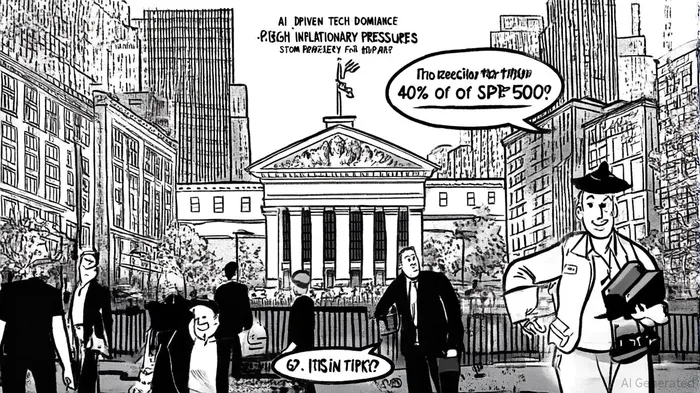





Comentarios
Aún no hay comentarios