
Capitalizing on Q2 2025's Outperforming Sectors: A Strategic Guide to Sector ETFs for Sustained Growth
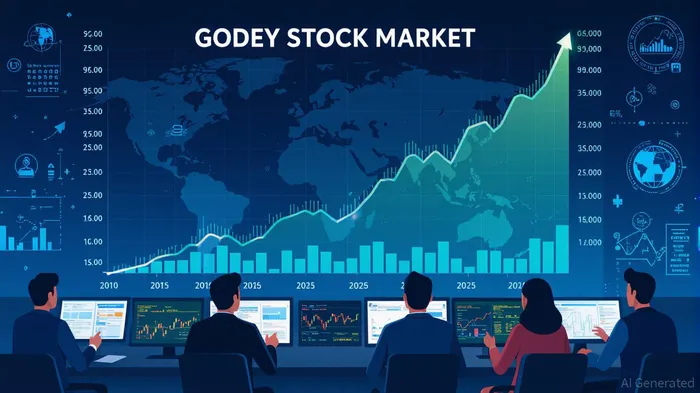
In the aftermath of the pandemic and amid a shifting inflationary landscape, investors are increasingly turning to sector-specific ETFs to navigate market volatility and capitalize on high-growth opportunities. Q2 2025 has delivered a clear roadmap for where capital is flowing: large-cap growth sectors like Information Technology and Communication Services, alongside industrials and financials, have outperformed, driven by macroeconomic resilience and sector-specific tailwinds. For investors seeking to position for sustained growth, leveraging these sector ETFs offers a disciplined, data-driven approach.
The Case for Sector ETFs in Q2 2025
The S&P 500 and Nasdaq 100 hit record highs in Q2 2025, but the story wasn't evenly distributed. While Energy and Healthcare lagged, the top-performing sectors—Information Technology (23.7%), Communication Services (18.5%), Industrials (12.9%), and Financials (10.9%)—highlighted the power of growth-oriented investing. These sectors benefited from a combination of strong fundamentals, policy tailwinds (despite Trump-era tariff uncertainties), and structural shifts in global demand.
For example, the Information Technology Select Sector SPDR Fund (XLK) surged 23.7% in Q2, driven by the “Magnificent 7” companies (Apple, NVIDIANVDA--, MicrosoftMSFT--, etc.). XLK's 0.08% expense ratio and 1.12 Sharpe ratio underscore its efficiency in delivering risk-adjusted returns. Meanwhile, the iShares U.S. Aerospace & Defense ETF (ITA)—focused on industrials—posted a 12.9% return, with a Sharpe ratio of 1.92, reflecting its ability to outperform despite a 0.42% expense ratio.
Key ETFs and Their Strategic Value
- Information Technology (XLK)
- Why Invest? The tech sector remains a cornerstone of global innovation, with AI-driven upgrades and cloud infrastructure driving demand. XLK's heavy weighting in NVIDIA (15.62%) and Microsoft (14.10%) positions it to benefit from these trends.
Risk Profile: XLK's Beta is likely above 1, reflecting tech's volatility, but its 1.12 Sharpe ratio indicates strong risk-adjusted performance.
Communication Services (IGM)
- Why Invest? With 37% of holdings in software and subscriptions, IGM captures the shift toward recurring revenue models. Despite a 10% Q1 2025 dip, it rebounded with a 13.61% YTD return.
Risk Profile: IGM's 0.41% expense ratio is competitive, though its Beta is likely elevated due to exposure to advertising and media.
Industrials (ITA)
- Why Invest? Aerospace and defense companies are riding a wave of government contracts and supply chain modernization. ITA's 25.7% Q3 earnings growth projection makes it a high-conviction play.
Risk Profile: A Beta of ~1.2 and a 1.92 Sharpe ratio suggest ITA balances growth with risk management.
Financials (VFH)
- Why Invest? Rising interest rates and improved credit metrics have boosted financial sector earnings. VFH's 17.3% Q2 earnings growth and 1.12 Sharpe ratio highlight its appeal.
- Risk Profile: With a Beta near 1, VFH offers a more stable, income-oriented option for diversified portfolios.
Strategic Portfolio Construction
To harness these opportunities, investors should adopt a layered approach:
- Core Holdings: Allocate to XLK and VFH for broad exposure to growth and income.
- Satellite Holdings: Use ITA and IGM for concentrated bets on industrials and communication services, balancing volatility with high Sharpe ratios.
- Diversification: Counterbalance with international ETFs (e.g., MSCIMSCI-- EM) to mitigate U.S. dollar risks.
Avoid overexposure to underperforming sectors like Energy, which fell 8.6% in Q2 due to demand uncertainties and geopolitical headwinds.
Conclusion: Positioning for the Long Term
Q2 2025's market dynamics underscore the importance of sector agility. By leveraging low-cost, high-sharp ETFs like XLK, ITA, and VFH, investors can align with structural trends while managing risk. As global economies adjust to inflation and trade policies, these ETFs offer a clear path to sustained growth—a testament to the power of strategic, data-informed investing.







Comentarios
Aún no hay comentarios