
Capitalizing on Energy Transition and Financial Sector Volatility in 2026
The global economic landscape in 2026 is defined by two interwoven forces: the accelerating energy transition and the persistent turbulence in the financial sector. For investors, these dynamics present both challenges and opportunities. Strategic positioning in high-conviction energy plays, coupled with a disciplined approach to defensive financial sector opportunities, can yield resilience and growth in an era of uncertainty.
Energy Transition: Vistra's Strategic Momentum
The energy transition remains a cornerstone of long-term investment theses, with companies like Vistra Corp.VST-- (Vistra) exemplifying how strategic financing and operational agility can drive progress. In 2025, VistraVST-- announced plans to expand its natural gas power generation capacity in Texas, including two advanced gas units totaling 860 MW at its Permian Basin Power Plant. This initiative aligns with its broader capital plan to add over 2,000 MW of new generation capacity by 2028, addressing grid reliability and surging energy demand.
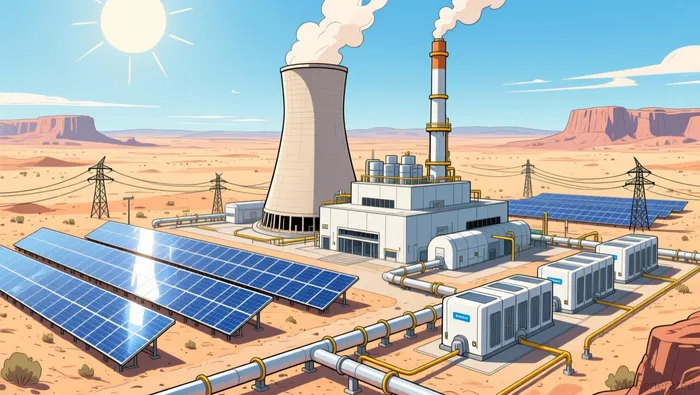 Simultaneously, Vistra is scaling zero-carbon resources, such as the Newton and Deer Creek Solar & Energy Storage Facilities, underscoring its commitment to balancing affordability, sustainability, and reliability. These dual-track investments-leveraging natural gas as a transitional bridge while accelerating renewables-position Vistra as a model for navigating the complexities of decarbonization. For investors, this hybrid approach mitigates regulatory and technological risks while capitalizing on the long-term tailwinds of the energy transition.
Financial Sector Volatility: Navigating Trump-Era Deregulation
The financial sector in 2025 has been shaped by the Trump administration's deregulatory agenda, which has introduced both opportunities and risks. According to analysis, regulatory rollbacks, such as the overturning of CFPB rules on overdraft and credit card fees, have created a more permissive environment for banks but also heightened systemic uncertainty. The Federal Reserve, under Vice Chair for Supervision Michael Barr, has responded by introducing supervisory operating principles to address liquidity and interest rate risks, aiming to enhance resilience post-crisis.
Investors have adapted by favoring defensive financial sectors, including insurance, asset management, and capital markets, which have outperformed banks in Q4 2025. ETF inflows into US-domiciled and UCITS Financials ETFs exceeded $2.5 billion, driven by expectations of lower operational costs and reduced regulatory burdens. However, the sector's volatility remains elevated, with concerns about potential rescission of climate-related and Basel III regulations adding to uncertainty.
Strategic Positioning: Balancing Conviction and Caution
For 2026, a risk-managed approach requires balancing high-conviction energy plays with defensive financial sector allocations. In energy, companies like Vistra that combine transitional fuels with zero-carbon innovation offer a hedge against regulatory and technological shifts. Their capital plans, supported by robust financing strategies, provide visibility into long-term returns while addressing near-term grid demands.
In the financial sector, defensive plays-such as diversified financial services firms and asset managers-offer stability amid regulatory flux. These entities benefit from deregulation's cost-reduction potential while avoiding the idiosyncratic risks of individual banks. Tax-efficient strategies, including ETFs and alternative investments, further enhance resilience in a volatile environment.
Conclusion
The interplay of energy transition and financial sector volatility in 2026 demands a nuanced investment strategy. By aligning with companies like Vistra that are redefining energy infrastructure and allocating capital to defensive financial sectors, investors can navigate uncertainty while capturing growth. As regulatory and technological landscapes evolve, adaptability and discipline will remain paramount.







Comentarios
Aún no hay comentarios