
Capitalizing on AI's Next Frontier: Why Nvidia and Alphabet Lead the Charge in 2026
The artificial intelligence (AI) revolution is accelerating at an unprecedented pace, reshaping industries and redefining global economic dynamics. As we enter 2026, two tech giants-Nvidia and Alphabet-stand at the forefront of this transformation, leveraging strategic investments, infrastructure dominance, and ecosystem expansion to cement their leadership. For investors, understanding their distinct yet complementary approaches to AI infrastructure and sustainable competitive advantages is critical to navigating this high-stakes landscape.
Nvidia: The Unshakable Foundation of AI Hardware
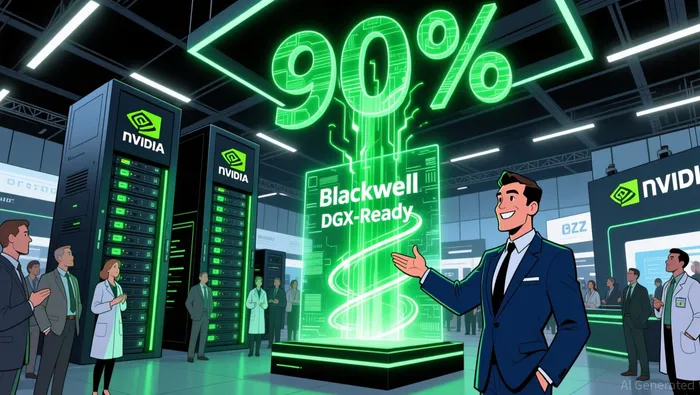
Nvidia's dominance in AI hardware remains unparalleled, with its Blackwell and DGX-Ready technologies capturing 90% of the AI GPU market in 2025. This leadership is underpinned by a combination of cutting-edge silicon design, proprietary software, and strategic infrastructure investments. The company's recent acquisition of SchedMD and its NVLink interconnect technology have further solidified its position, enabling AI clusters to achieve unprecedented performance scalability.
A key differentiator for NvidiaNVDA-- is its CUDA software platform, which has historically created high switching costs for developers and enterprises. While frameworks like PyTorch and JAX are abstracting hardware dependencies, CUDA's ecosystem remains the de facto standard for AI training and inference. Additionally, Nvidia's $500 billion plan to bolster U.S. AI infrastructure and its partnerships with power companies to build modular AI factories position it as a critical enabler of the global AI transition.
Looking ahead, demand for Nvidia's hardware is expected to surge as data centers expand to meet the needs of generative AI and large-scale machine learning. The U.S. approval to sell its H200 chip to commercial Chinese customers and anticipated orders from OpenAI further underscore its growth trajectory.
Alphabet: The Cost-Effective Ecosystem Powerhouse
While Nvidia dominates the hardware layer, AlphabetGOOGL-- is emerging as a formidable challenger through its Tensor Processing Units (TPUs) and vertically integrated AI ecosystem. Alphabet's TPU v7 Ironwood chips have demonstrated competitive performance with Nvidia's Blackwell in specific workloads, offering up to four times better performance-per-dollar in inference tasks-a critical metric for enterprises deploying AI models at scale.
Alphabet's strategic advantage lies in its ability to leverage its vast data assets and cloud infrastructure to deliver cost-effective AI solutions. Google Cloud's TPU rental model is projected to generate $13 billion in annual revenue in 2026, driven by demand from AI startups and established players like Apple and Anthropic. Notably, Apple trained its foundation models for Apple Intelligence using Google TPUs, highlighting the platform's enterprise readiness.
Beyond hardware, Alphabet's ecosystem spans consumer tools (Google Search, YouTube, Android) and enterprise services (Google Cloud), creating a "surface advantage" that allows it to integrate AI seamlessly into user experiences. Its Gemini AI models, trained and run on TPUs, further amplify this edge by reducing reliance on third-party infrastructure. Analysts argue that Alphabet's business model is less cyclical than Nvidia's, as it benefits from recurring revenue streams and network effects across its ecosystem.
Strategic Synergies and Competitive Tensions
Despite their rivalry, Nvidia and Alphabet are also collaborating to advance AI's next frontiers. In early 2025, the two companies partnered on agentic AI, robotics, and drug discovery, with Google Cloud adopting Nvidia's GB300 NVL72 rack-scale solution. Such alliances reflect the industry's shift toward hybrid ecosystems, where hardware and software leaders combine strengths to tackle complex challenges.
However, tensions persist. Nvidia's dominance in high-performance computing (HPC) and its first-mover advantage in AI software remain significant barriers for Alphabet. Conversely, Alphabet's cost efficiency and vertical integration threaten Nvidia's market share in inference workloads, where price-performance metrics are paramount.
Investment Implications for 2026
For investors, both companies represent compelling opportunities, albeit with distinct risk profiles. Nvidia's trajectory is tied to infrastructure spending and data center growth, making it a high-growth play in the AI era. Alphabet, meanwhile, offers a more diversified bet, with its cloud and consumer businesses providing stability amid potential hardware market fluctuations.
According to a report by Intellectia.ai, both stocks are expected to deliver strong returns in 2026, driven by their complementary roles in the AI value chain. However, Alphabet's structural cost advantages and ecosystem breadth may position it as a more durable long-term winner, particularly as AI adoption matures.
Conclusion
As AI reshapes the global economy, Nvidia and Alphabet are leading the charge through distinct yet overlapping strategies. Nvidia's hardware innovation and infrastructure investments ensure its continued dominance in compute-intensive tasks, while Alphabet's cost-optimized ecosystem and vertical integration offer a compelling alternative for enterprises and consumers alike. For investors, the key lies in balancing exposure to both leaders, capitalizing on their strengths while navigating the evolving competitive landscape.







Comentarios
Aún no hay comentarios