
Capitalizing on the 2025 Travel Recovery: Luxury Real Estate and Hospitality Opportunities in Bangkok, Singapore, and Sydney
The Asia-Pacific region is witnessing a transformative surge in tourism-driven real estate and hospitality markets, driven by a confluence of event-driven travel recovery and evolving luxury demand. As cities like Bangkok, Singapore, and Sydney emerge as high-demand New Year's Eve (NYE) destinations, investors are increasingly eyeing opportunities in hotels, short-term rentals, and event infrastructure. This analysis explores how these markets are capitalizing on shifting traveler preferences and strategic developments to unlock value in 2025.
Bangkok: Event-Driven Recovery and Strategic Resilience
Bangkok has long been a magnet for luxury travelers, but 2025 marks a pivotal shift toward event-driven tourism. The city's calendar of music festivals, international sporting events, and cultural celebrations has attracted younger, experience-seeking travelers, boosting luxury bookings. For instance, the 2024 Taylor Swift concerts in Singapore-a neighboring competitor-generated $225–370 million in economic activity, underscoring the potential for similar events in Bangkok to drive demand. However, challenges persist: weaker traveler safety perceptions and comparisons to 2024's record-breaking performance have led to softer demand forecasts for 2025.
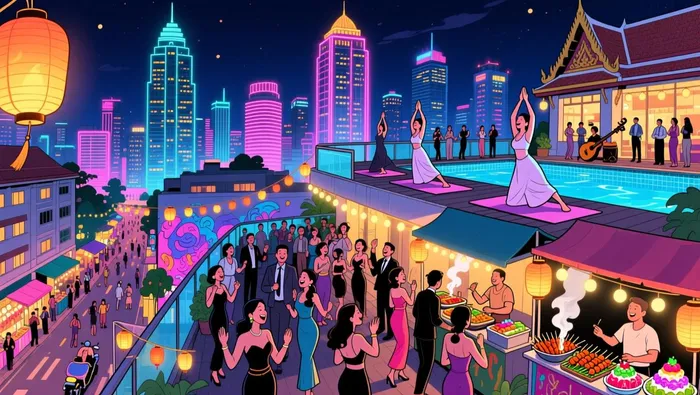 Investors should focus on infrastructure projects that enhance Bangkok's event readiness. While specific 2025 developments are not detailed in current reports, the city's cultural festivals and international conferences remain critical to its appeal. For hospitality, niche luxury properties offering curated experiences-such as wellness retreats or heritage-focused stays-align with 2025's trend of value-driven, small-group travel.
Singapore: Luxury Property Booms and Policy Tailwinds
Singapore's luxury real estate market is thriving, fueled by investor confidence, limited supply, and policy easing. The Core Central Region (CCR), home to developments like Marina View and One Holland Village, has become a hotspot for high-net-worth individuals seeking mixed-use properties that blend residential, retail, and commercial spaces. Government measures, such as the relaxation of Additional Buyer's Stamp Duty (ABSD) for foreign investors, have further catalyzed demand.
The city-state's event-driven tourism is equally compelling. The 2024 Taylor Swift concerts demonstrated Singapore's ability to generate substantial economic activity, a trend likely to continue with future global events. For investors, short-term rentals in luxury residential developments offer a dual-income stream: rental yields from high-end tenants and potential capital appreciation from limited supply.
Sydney: Infrastructure-Driven Growth and Logistics Opportunities
Sydney's hospitality sector is experiencing a renaissance, driven by infrastructure investments and new luxury hotel openings. The $7.4 billion Western Harbour Tunnel and Circular Quay redevelopment are enhancing connectivity, while the Park Hyatt Melbourne and Sir Stamford at Circular Quay signal investor confidence in premium assets. As of August 2025, Sydney's hotel transaction volume has already surpassed 2024's total, reflecting robust demand.
For short-term rentals, Sydney's luxury market faces a nuanced landscape. While logistics and industrial real estate yields remain resilient, luxury office properties are under pressure due to subdued leasing demand. Investors should prioritize logistics-focused assets or hybrid-use properties that cater to both tourism and corporate needs. Additionally, Australia's rebounding international tourism and new hotel openings in Queensland suggest growing demand for premium short-term rentals.
Event Infrastructure: A Cross-City Opportunity
Event infrastructure is a critical enabler of tourism recovery. In Sydney, the $220 million Circular Quay redevelopment and Sydney Airport's 2045 Masterplan are enhancing the city's capacity to host large-scale events. Singapore, though lacking specific 2025 projects in current data, is positioning itself as a sustainable event hub, with green certifications and waste-reduction practices gaining traction. Bangkok, despite softer demand, retains its cultural cachet for international conferences and festivals.
Strategic Investment Takeaways
- Bangkok: Target event-ready infrastructure and niche luxury properties that emphasize cultural immersion and wellness.
- Singapore: Focus on CCR mixed-use developments and short-term rental assets in high-growth areas.
- Sydney: Prioritize logistics and industrial real estate, alongside hybrid-use luxury properties aligned with infrastructure projects.
As the Asia-Pacific leads global tourism recovery, investors must align with the region's evolving demand for personalized, sustainable, and event-driven experiences. By leveraging city-specific strengths, the path to value creation in 2025 and beyond is clear.







Comentarios
Aún no hay comentarios