
Capital Structure Resilience in Private Equity-Backed Industrial Firms: Navigating 2023–2025 Market Volatility
The past three years have tested the resilience of private equity-backed industrial firms as sustained high interest rates and prolonged holding periods reshaped capital structure strategies. According to PwC's midyear outlook, the required annual earnings growth to achieve a 20% internal rate of return (IRR) under a 7% interest rate and seven-year holding period has nearly doubled to 4.2%-up from 1.7% under a 3% rate. This has forced sponsors to prioritize operational performance and strategic reinvention over traditional value creation models.
Capital Structure Adaptations: Covenant Flexibility and Hybrid Instruments
Private equity firms have increasingly turned to non-bank lenders to navigate volatile conditions. Covenant-lite loans, unitranche debt, and hybrid instruments like preferred equity have become critical tools for maintaining flexibility. As noted in a 2025 ABF Journal analysis, non-bank lenders now dominate middle-market financing, offering floating-rate terms tied to SOFR and less restrictive covenants compared to traditional banks. For instance, preferred equity instruments-offering returns of 10–14%-allow sponsors to preserve ownership stakes without dilution. Unitranche debt, which combines senior and subordinated debt into a single tranche, has streamlined capital structures in sectors like healthcare and SaaS.
Hybrid solutions have also gained traction in managing interest rate risks. Akin Gump's 2025 report highlights the rise of junior capital instruments with protective provisions such as anti-short circuits and cross-default triggers, enabling sponsors to reduce leverage while safeguarding downside risks. These innovations reflect a broader shift toward bespoke financing tailored to macroeconomic uncertainty.
Debt-to-Equity Dynamics and Liability Management
The industrial sector's reliance on capital-intensive operations has made debt-to-equity (D/E) ratios a focal point. With average D/E ratios around 1.5 in stable markets, firms have faced pressure as interest rates surged. By 2025, U.S. private equity-backed industrial firms saw interest coverage ratios drop to 2.4x EBITDA-the lowest since 2007, according to Bain & Company's 2024 report. To address this, sponsors have doubled down on liability management exercises (LMEs), with a 36-trailing-month count in 2025 nearly doubling the 2019–2022 average. These exercises focus on extending loan terms and restructuring maturities rather than reducing rates, a strategy to avoid defaults amid constrained refinancing options.
Exit Strategies and Liquidity Solutions
The first half of 2025 marked a turning point, with 215 significant exit transactions totaling $308 billion-the highest level in three years. Sponsors have shown willingness to accept 5–10% valuation discounts to monetize long-held assets, reflecting a pragmatic approach to liquidity. Looking ahead, the industry is pivoting toward continuation funds, secondaries, and strategic sales to return capital to limited partners (LPs) as traditional exit avenues remain limited.
Sectoral Shifts and Future Outlook
Resilient sectors like enterprise software, healthcare platforms, and tech-enabled services are gaining favor for their scalable, capital-light models. Meanwhile, take-private transactions have surged, leveraging depressed public market valuations. Creative structuring-such as earn-outs, seller notes, and dual-track exits-has bridged valuation gaps and mitigated macro risks. As Bain & Company notes, the industry's ability to adapt capital structures will remain pivotal in an environment where operational reinvention and liquidity innovation are non-negotiable.
Conclusion
The 2023–2025 period has underscored the importance of agile capital structures in private equity-backed industrial firms. By leveraging hybrid instruments, covenant flexibility, and strategic exits, sponsors have navigated a high-rate environment while maintaining value creation trajectories. As market volatility persists, the focus on operational resilience and innovative liquidity solutions will likely define the next phase of private equity's evolution.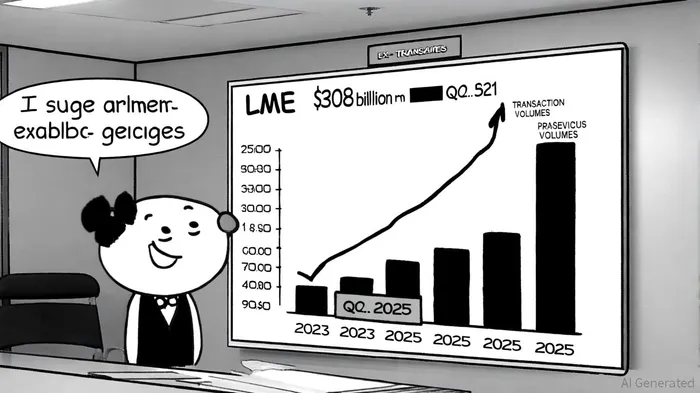







Comentarios
Aún no hay comentarios