
Capgemini's EUR4 Billion Bond Issue: A Strategic Move or a Warning Signal?
, or a red flag signaling overleveraging in a volatile market? Let's dissect the numbers and context to determine where the truth lies.
The Bond: A Calculated Financing Play
Capgemini priced four tranches of bonds on September 18, 2025, . , a testament to investor confidence in the company's credit profile and strategic direction. Proceeds will finance the acquisition of WNSWNS--, refinance existing debt, and support corporate initiatives, with the bridge loan for the WNS deal now cancelled [2].
At first glance, this appears to be a well-structured refinancing strategy. , Capgemini is hedging against potential interest rate hikes while reducing short-term liquidity risks. The BBB+ rating from S&P, consistent with its corporate credit rating, further underscores that the move is seen as prudent by credit agencies [1].
Capital Structure: Leverage in Context
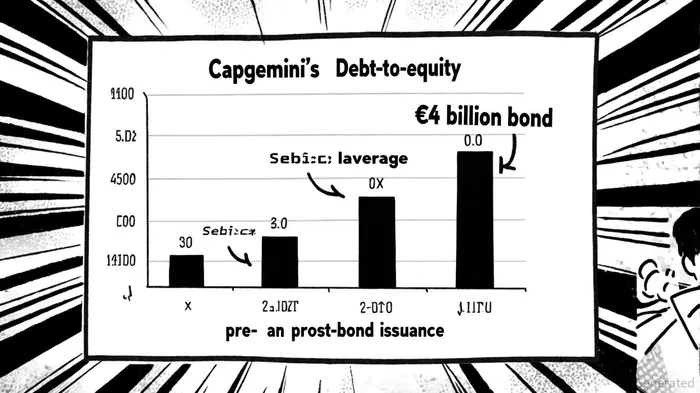
To assess the bond's impact, we must examine Capgemini's capital structure. As of December 31, 2024, , . Post-issuance, assuming no material changes in equity, . This represents a reduction in leverage compared to the year-end 2024 level, suggesting the bond is more of a refinancing tool than a risky expansion play [3].
However, this calculation hinges on the assumption that equity remains static. , the debt-to-equity ratio could creep higher. Additionally, the acquisition of WNS, while strategically sound, carries integration risks that could strain cash flow if not managed effectively.
Strategic Rationale: Aligning with Market Trends
Capgemini's move aligns with broader industry trends. According to its 2025 Investment Trends Report, , . By acquiring WNS, Capgemini is expanding its capabilities in process automation and digital transformation, positioning itself to capitalize on these trends. The bond's proceeds also allow the company to retire higher-cost debt, improving its interest expense profile during a period of economic uncertainty [1].
Moreover, the oversubscription of the bond indicates that investors view Capgemini's growth story as credible. In a market where 37% of executives express pessimism about the global economy [4], such confidence is rare and valuable.
Investor Implications: Balancing Risk and Reward
For investors, the key question is whether Capgemini can generate returns that outpace its increased debt burden. , demonstrating operational resilience. However, the success of the will be critical. If the integration goes smoothly and synergies materialize, the debt could be a catalyst for growth. Conversely, integration missteps or a prolonged economic downturn could amplify risks.
The bond also highlights Capgemini's proactive approach to liquidity management. , the company is reducing refinancing risks. Yet, investors should monitor its free cash flow generation and debt service coverage ratios in upcoming quarters.
Conclusion: A Strategic Bet with Conditions
Capgemini's €4 billion bond issue is best viewed as a strategic, calculated move rather than a warning signal. By leveraging favorable financing conditions to fund accretive growth and refinance debt, the company is positioning itself to navigate a challenging macroeconomic landscape. .
However, the path forward is not without risks. Investors must keep a close eye on the WNS integration, free cash flow trends, and broader economic headwinds. For now, the oversubscribed bond and S&P's BBB+ rating suggest that the market is betting on Capgemini's ability to execute its vision.





Comentarios
Aún no hay comentarios