
Canadian Small Business Recovery: Navigating Challenges and Unlocking Growth Potential
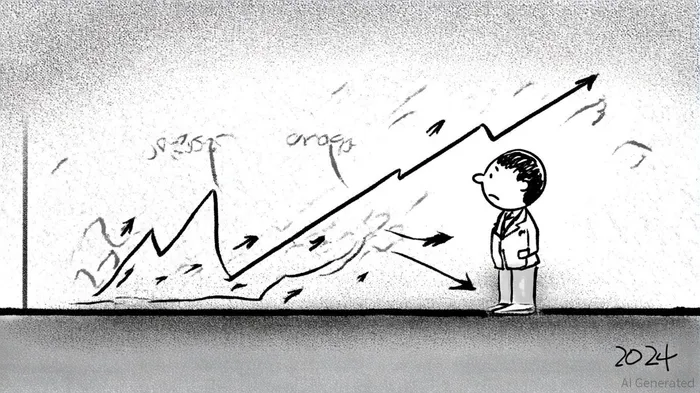
The Canadian small business sector is at a pivotal juncture. While recent data underscores a sharp decline in business confidence, the seeds of recovery are beginning to take root. For investors, understanding the interplay between business optimism, consumer behavior, and macroeconomic trends is critical to identifying opportunities in this evolving landscape.
The Current Climate: A Confidence Crisis
According to a report by Zensurance, confidence among Canadian small business owners plummeted to 58% in 2025, a 10-point drop from 69.9% in 2024[1]. This decline reflects a perfect storm of challenges: 43.2% of businesses cite rising operational costs as their top concern, outpacing worries about economic slowdowns (34.5%) and shrinking profit margins (22.4%)[1]. The Conference Board of Canada's Index of Business Confidence, which remains below 80 points as of July 2025, further signals weak investment sentiment[3].
The root of this pessimism lies in the dual pressures of trade tensions with the U.S. and domestic cost inflation. Nearly 62% of small business owners report that the economy is harming their operations, with 38.9% exploring new markets to offset these challenges[1]. Yet, the path to adaptation is fraught. For instance, businesses exporting to the U.S. face a high-impact threat from tariffs, with 32.2% anticipating significant operational disruptions[1].
Consumer Confidence: A Lagging but Critical Indicator
Consumer behavior, often a barometer for business recovery, remains cautious. The Bank of Canada's Canadian Survey of Consumer Expectations reveals that trade tensions have eroded confidence, particularly in sectors reliant on cross-border trade. Consumers in construction and logistics, for example, report heightened job insecurity and pessimism about financial health[1]. In Q2 2025, only 50% of Canadians plan to increase discretionary spending over the next 12 months—a 600-basis-point drop from January 2025[2].
However, there are glimmers of hope. The Bank of Canada notes that lower inflation and interest rate cuts have provided some relief to businesses, particularly those in non-trade-sensitive sectors[2]. Meanwhile, the Canadian economy's resilience in Q3 2025—marked by rising export volumes and manufacturing sales—suggests that trade-sensitive sectors may stabilize if U.S. tariff threats abate[2].
The Road to Recovery: Innovation and Resilience
Despite the challenges, Canadian small businesses are demonstrating adaptability. The Float Report highlights a “two-speed economy,” where established businesses project 10%+ profit growth, while newer ventures grapple with cash flow issues[1]. Yet, 49% of SMBs plan to boost marketing investments in 2025, and 51% are prioritizing digital transformation[1]. This shift toward innovation—particularly in social media and content marketing—could unlock new revenue streams and customer bases.
Sustainability is another emerging strength. With 72% of suppliers expected to publish ESG criteria by 2025, Canadian SMBs are positioning themselves to meet evolving consumer demands[1]. This alignment with global sustainability trends could enhance competitiveness, especially as domestic markets prioritize “Buy Canadian” initiatives[1].
Policy and Market Dynamics: A Tipping Point?
While the government has yet to unveil targeted policies to bolster small business confidence, indirect measures—such as efforts to diversify trade partnerships—are gaining traction. The Canadian Small Business Health Index, though down 1.6% in Q2 2025, hints at a potential rebound if trade tensions ease[2]. Moreover, the Bank of Canada's projected 1.6% growth rate for 2026 suggests that a technical recession, if it materializes, may be short-lived[2].
For investors, the key lies in identifying sectors poised to benefit from these dynamics. Retail, hospitality, and construction—industries that reported modest confidence improvements in the CFIB Business Barometer—could see renewed momentum as consumer spending stabilizes[1]. Conversely, agriculture and wholesale, which experienced declining confidence, may require more time to recover.
Conclusion: A Calculated Optimism
The Canadian small business sector is navigating a complex web of challenges, but its resilience and adaptability offer a compelling case for cautious optimism. While rising operational costs and trade tensions remain headwinds, the tentative steps toward innovation, digital transformation, and sustainability suggest a path to recovery. For investors, the lesson is clear: the road ahead will be bumpy, but the long-term potential for growth is substantial—provided businesses and policymakers continue to prioritize agility and strategic adaptation.







Comentarios
Aún no hay comentarios